



A little before sunset on 17 August, the long curve of Shichiri Mihama Beach in Mie Prefecture begins to feel less like a shoreline and more like a stage. Tonight is the Kumano Fireworks Festival, an annual hanabi night held on the beach beside the World Heritage cliffs of Onigajo, where sea, stone, and summer ritual all share the same horizon.[ref:1][ref:2]
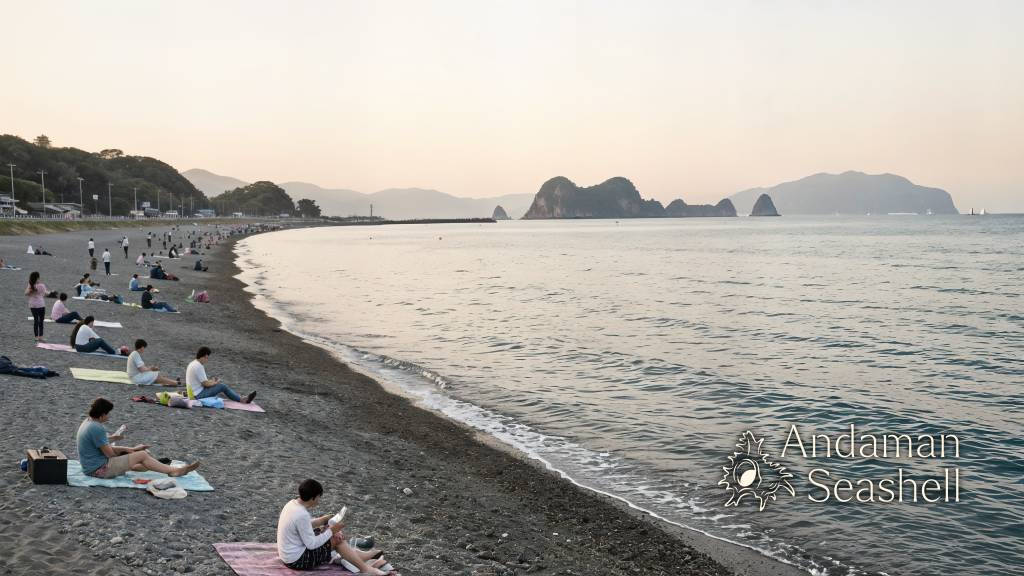
What makes Kumano special is not simply scale, though scale is certainly part of the thrill. Shichiri Mihama stretches for more than 20 kilometres from Kumano City to Kiho Town and is described by JR Central as Japan’s longest sand-and-gravel beach.[ref:4] The shore is known for colorful stones shaped by the Kumano River system and collected by hand as "Mihama pebbles," a local detail that gives the place a tactile identity even before the first shell rises.[ref:4] In other words, this is not a generic festival ground. It is a precise coastal landscape with its own materials, textures, and memory.
That sense of memory matters. According to Mie’s tourism editors, the festival has a history of more than 300 years and grew from simple fireworks set off for the first Bon memorial rites, followed by lantern burning for the departed.[ref:3] Even now, the event keeps that connection to remembrance within a larger public celebration. It is one of the reasons Kumano feels so distinctly Japanese: festive, yes, but also reflective in the way many Obon-season gatherings are. Summer joy and family memory sit side by side.
The festival’s signature scenes are wonderfully specific. One of the great local specialties is the kaijō jibaku — marine self-detonating fireworks — where lit shells are tossed from a fast-moving boat toward the sea, opening in half-circle blooms close to the water.[ref:3] Then there is the more famous sanshakudama kaijō jibaku, a giant three-shaku shell exploded offshore. Mie tourism describes the shell as weighing 250 kilograms and spreading into a dramatic 600-metre semicircle.[ref:3] Japan 47 Go, an official regional tourism platform, also highlights that 600-metre marine effect as one of Kumano’s defining signatures.[ref:5]
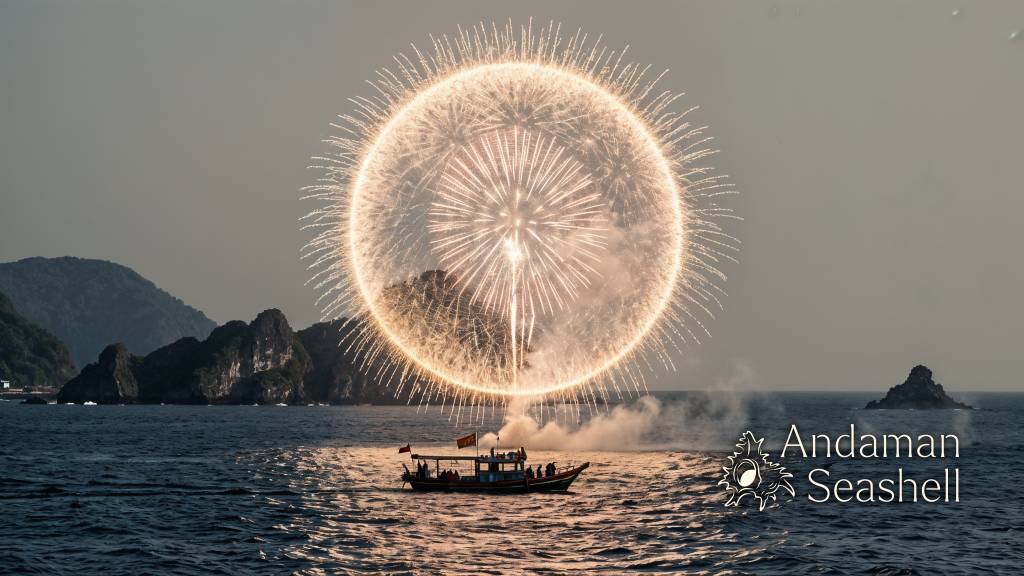
Kumano’s finale is just as distinctive. The Onigajo Grand Setup, or Onigajō daishikake, uses the rocky World Heritage coastline itself as part of the spectacle.[ref:3][ref:5] Kankomie notes that this signature element dates back to 1932, while the giant marine three-shaku blast entered the program in 1993.[ref:3] In Kumano, the geography is not a backdrop added after the fact; it is part of the choreography. Cliffs, caves, reflections on the water, and the returning echo of sound all shape the experience.
Practical details add another layer of charm. Japan 47 Go lists the 2026 event for Monday, 17 August, from 19:10 to 21:30, with alternate dates on 21, 24, and 27 August if weather or high waves interfere.[ref:5] The same listing places the venue at Shichiri Mihama Beach, about a five-minute walk from JR Kumanoshi Station.[ref:5] Kumano City Tourism Association confirmed on the day of the event that the festival would proceed as planned and also posted livestream links for viewers who could not make it to the shore.[ref:2] That last detail feels very 2026 in the best way: an old summer ritual meeting modern access without losing its character.
There is also a lovely Japanese idea hidden in all this: ichigo ichie — a once-in-a-lifetime meeting. Fireworks are built for that feeling. They arrive, bloom, echo, and disappear. Kumano simply gives the moment a stronger frame than most places can. A beach more than 20 kilometres long, pebbles polished by river and sea, memorial roots that reach back three centuries, and cliffs that throw the sound back into the night — together they make this festival feel less like an event you tick off and more like a place you briefly inhabit.[ref:3][ref:4]
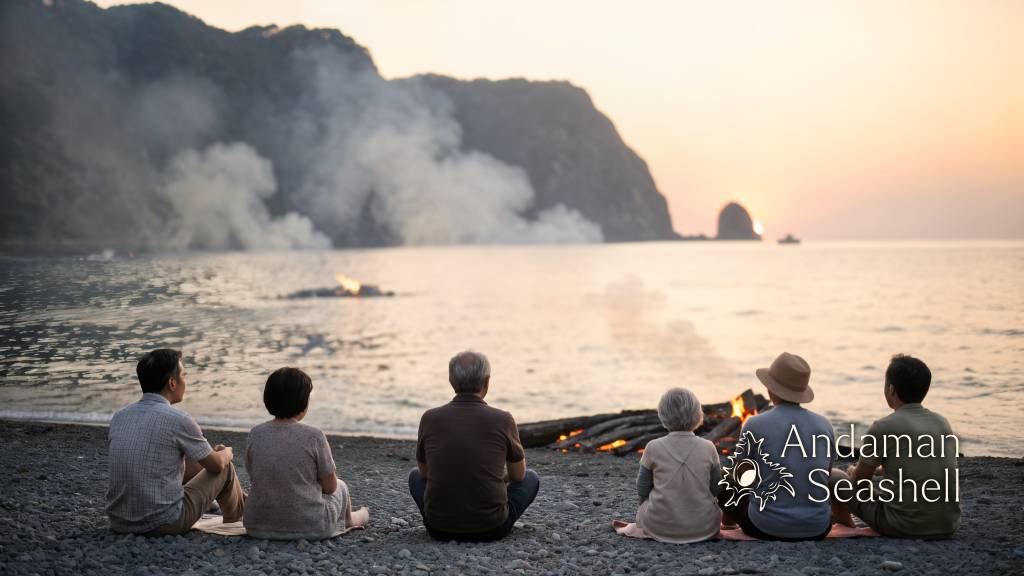
If you ever wanted a hanabi night that explains why Japanese summer festivals stay in people’s hearts, Kumano makes a beautiful case. It is bright without being generic, grand without losing its local texture, and moving without ever needing to shout. On this stretch of Mie coast, the night sky does not just light up. It answers the beach below it.


No comments yet. Be the first to share a thought.