



A child in Kamakura lifts a shell to the morning light, and for a second the whole beach seems to join the game: sandals in the sand, towels under one arm, blue water bright enough to make everyone smile. That is the spirit of Umi no Hi — Marine Day — Japan’s cheerful summer pause to say thank you to the ocean. In 2026, the holiday falls on Monday, July 20 [ref:2].
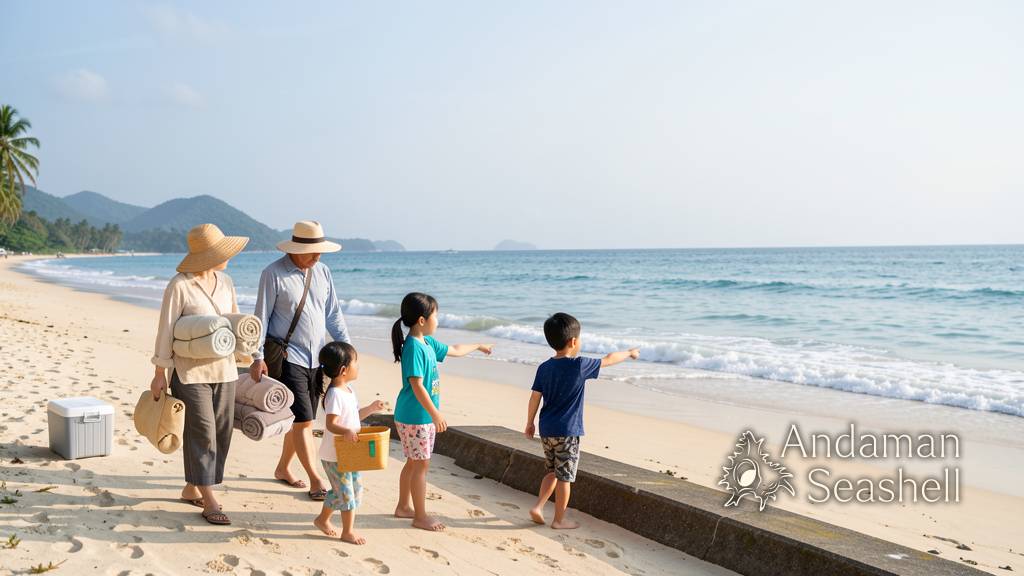
The phrase Umi no Hi means “Day of the Sea.” It is observed on the third Monday of July, creating a long weekend when many families travel, visit beaches, enjoy sea-themed events, or simply rest near water [ref:1]. For readers on the Andaman coast, the feeling is instantly familiar. We may not use the same calendar name, but we know the rhythm: the boat leaving early, the shell rinsed clean, the tide deciding the day’s pace.
A public holiday with a sea-heart
Marine Day is unusual in the loveliest way: it is a national holiday dedicated to appreciating the sea. Nippon.com describes its purpose as giving thanks for the blessings of the sea and wishing for the prosperity of maritime Japan [ref:1]. Kanpai Japan notes that the holiday became a national public holiday in 1996 and later moved to the third Monday in July under Japan’s “Happy Monday” system, which helps create long weekends [ref:3].
That practical detail matters. A holiday becomes more meaningful when people can actually use it. A long weekend gives parents time to pack towels, children time to collect shells, grandparents time to sit under shade and watch the waves. It turns ocean appreciation from a phrase into a small lived ritual.
The story behind July 20
Marine Day also carries a precise historical thread. Its earlier form, Umi no Kinenbi — Marine Memorial Day — was connected to Emperor Meiji’s 1876 sea journey. On the return from a northern tour, he traveled aboard the lighthouse inspection ship Meiji Maru, arriving in Yokohama on July 20 [ref:1].
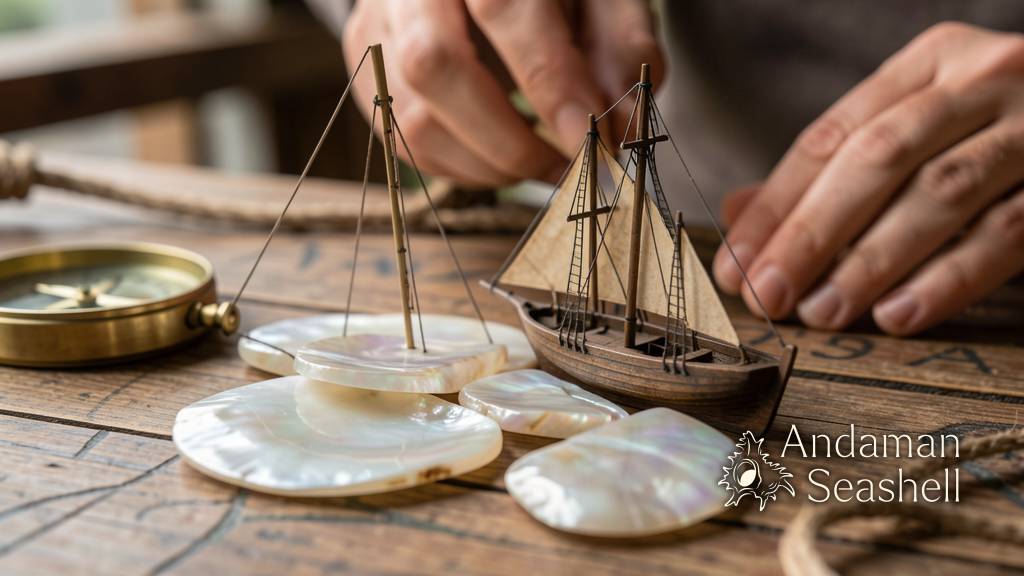
That ship still gives the holiday a tangible object to remember. Nippon.com notes that the Meiji Maru survives today and became Japan’s first ship designated as an Important Cultural Property in 1978 [ref:1]. It is a wonderful reminder that maritime history is not only dates; it is wood, iron, rope, polished fittings, careful hands, and the patient maintenance of memory.
This is where Japan and the Andaman coast naturally meet. In Japan, the word shokunin means a craftsperson devoted to skill and care. In Phang Nga and Phuket, shell artisans understand that same devotion when they polish mother-of-pearl, match colors, or choose a shell whose curve already feels complete. A souvenir becomes more than an object when it carries the sea’s texture and a maker’s patience.
How people celebrate
Because Marine Day arrives near the opening of full summer feeling in Japan, celebrations are often simple and joyful: beach visits, swimming, port events, ocean-themed activities, and local festivals. Kanpai Japan mentions seaside destinations such as Kamakura and Zushi near Tokyo, Izu and Ise-Shima, Wakayama, Amanohashidate, and Okinawa as places associated with beach-going and summer sea culture [ref:3].
The exact celebration changes by place, which makes the holiday feel alive. A port city may hold music and fireworks. A family may choose a quiet beach lunch. A child may learn a new Japanese word: omotenashi, often translated as thoughtful hospitality, but best felt as care offered before someone needs to ask. On Marine Day, the sea itself receives that care — through appreciation, beach manners, cleanups, and attention.
A bridge back to the Andaman coast
From the Andaman side, Marine Day is a beautiful invitation to notice what the ocean already gives us. It gives pearl color to shell craft. It gives shape to fishing mornings. It gives visitors a reason to slow down, look closely, and carry home something small but meaningful.
The best souvenir from a sea place is not always the biggest object. Sometimes it is the memory of warm sand under your heel, the curve of a shell in your palm, or the moment you realize that people in Japan and Thailand can celebrate the same blue planet in different languages.
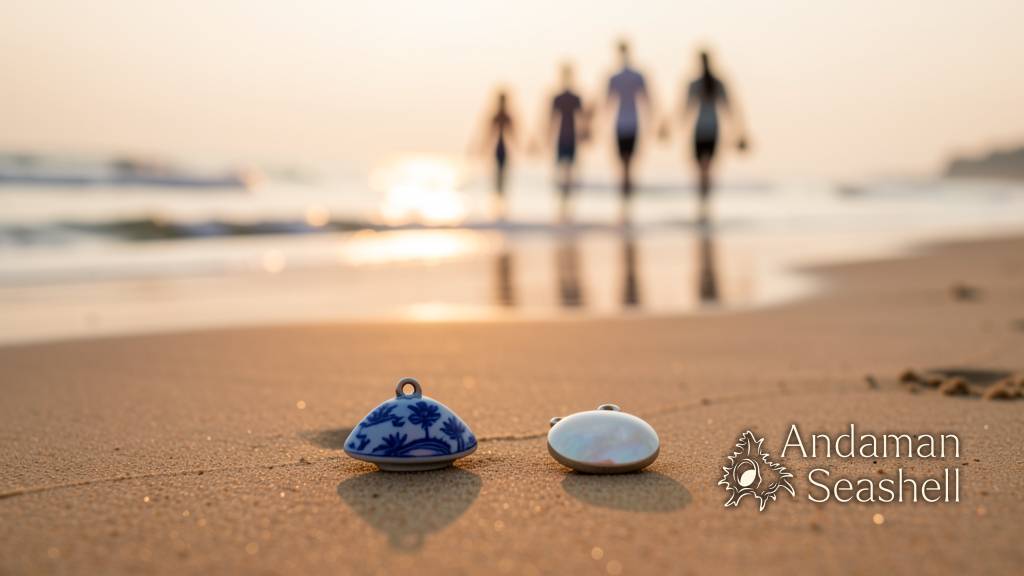
So when July 20 arrives, try a tiny Umi no Hi ritual wherever you are. Rinse one shell. Watch one tide. Thank one boat, one maker, one beach, one bright morning. The sea connects more than coastlines; it connects habits of gratitude.


No comments yet. Be the first to share a thought.