



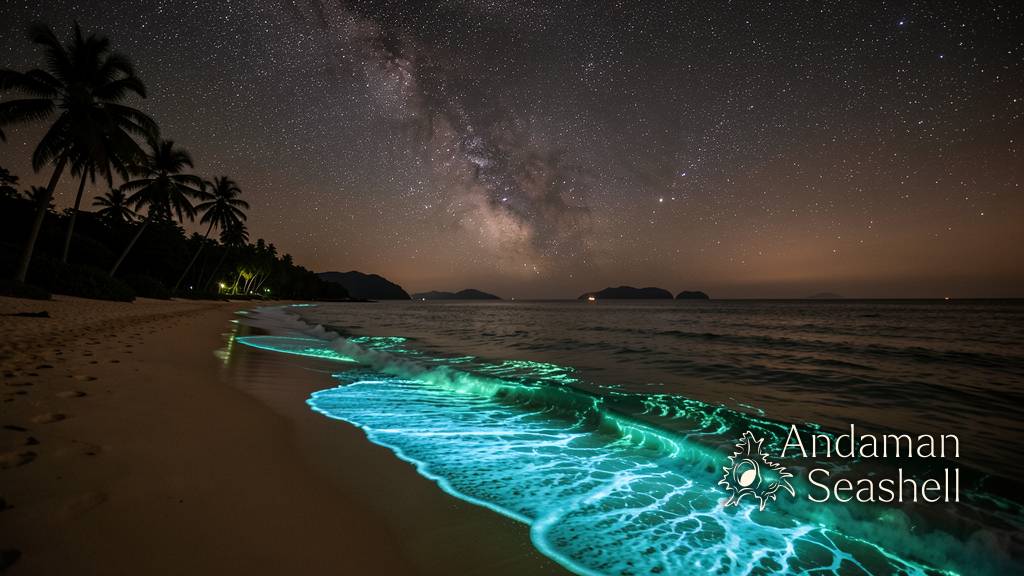
At two o'clock in the morning, off the western shore of Koh Phra Thong, the sea begins to glow. It starts at the wave line — a flash of electric blue-green where the water meets the sand — then spreads outward in shimmering concentric rings until the entire shore break looks like it's been plugged into a power grid. Walk along the beach and every footprint you leave in the wet sand sparkles. Drag a stick through the waterline and you paint a line of light that holds for two full seconds before fading.
This is bioluminescence — living light produced by living creatures — and the Andaman coast is one of the best places on Earth to witness it. It is not a reflection. It is not phosphorus. It is not a trick of the moonlight. It is a chemical reaction happening inside microscopic organisms, and it is one of the most beautiful things you can see without leaving Thailand.
What Makes the Andaman Sea Glow
The organism responsible for most of the nighttime glow along the Andaman coast is a single-celled dinoflagellate called Noctiluca scintillans. The name literally means "night-shining spark" — and that is exactly what it does. Each cell is less than a millimetre across, roughly the size of a grain of sand, but when millions of them gather in warm coastal waters, the effect is breathtaking [ref:1].
Here is how it works. Inside each Noctiluca cell, a chemical compound called luciferin reacts with an enzyme called luciferase in the presence of oxygen. This reaction releases energy as a photon of blue-green light — the wavelength that travels furthest through seawater. When a wave crashes, a fish swims past, or you drag your hand through the water, the mechanical disturbance triggers the reaction, and the cell flashes. It is the same chemistry that makes fireflies glow, but happening in the ocean, at a scale you can see from space.
Noctiluca scintillans is a heterotrophic dinoflagellate, which means it doesn't photosynthesize like its plant-like cousins. Instead, it feeds on other plankton, diatoms, and even small fish eggs. It thrives in warm, nutrient-rich waters — exactly the conditions that the monsoon-season Andaman Sea provides from May through October, when runoff from Phang Nga's rivers carries minerals into the coastal waters [ref:2].
The glow is brightest on dark nights — ideally a few days around the new moon — when there is no competing moonlight. The warm, calm conditions of the green season (June through September) are often the best time to see it, because warm water holds more of the plankton that Noctiluca feeds on.
The People Who Read the Glow
Here is where the story gets deeper. For the Moken — the indigenous sea-nomad people of the Andaman coast, who have lived around the Surin Islands and the Mergui Archipelago for centuries — the glowing sea was never just a pretty sight. It was information.
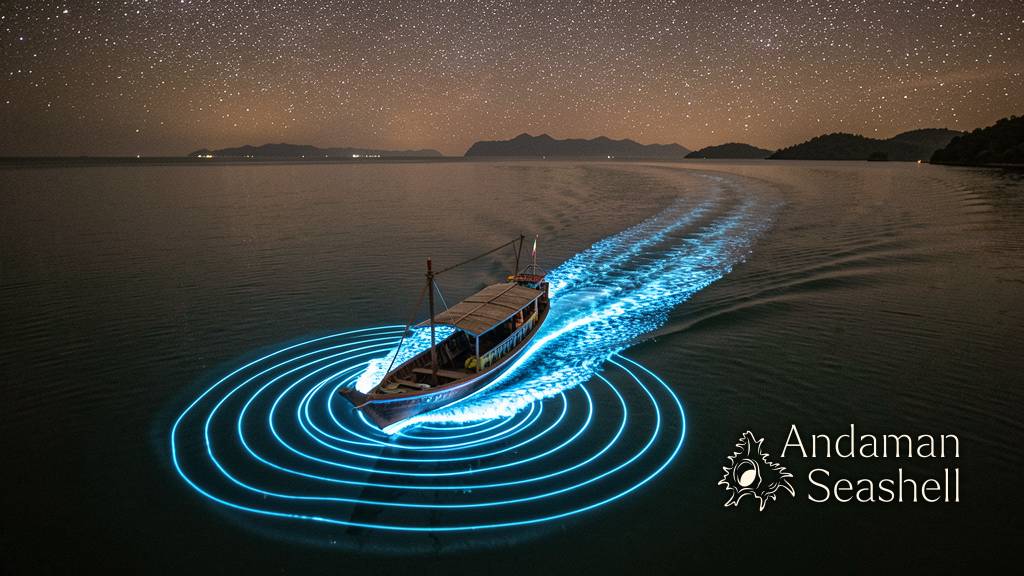
Moken fisherfolk have long understood that when the sea glows in certain patterns, it tells you what is happening beneath the surface. A bright, concentrated line of glow moving through the water often signals a school of fish pushing through the plankton layer. A sudden widespread flash might mean a large predator — a shark or a tuna — has startled a school below. The brightness and movement of the glow functions, in effect, as a living radar map of the ocean at night [ref:3].
This kind of reading is part of what researchers now call traditional ecological knowledge — the deep, place-based understanding of natural systems passed down through generations. The Moken are perhaps most famous for their extraordinary free-diving ability, which has been documented by researchers studying how their bodies adapt to extended underwater time. But their observational knowledge of the sea extends far beyond breath-hold diving. It includes reading currents, predicting weather from cloud formations, navigating by star positions, and — yes — interpreting bioluminescent patterns as signals of marine life movement.
Western marine science has only recently begun to formally document and validate these kinds of traditional knowledge systems. What researchers are finding is that knowledge passed down through oral tradition and daily practice often contains sophisticated ecological intelligence — the product of centuries of close observation that no single research expedition can match [ref:4].
How to See It Yourself
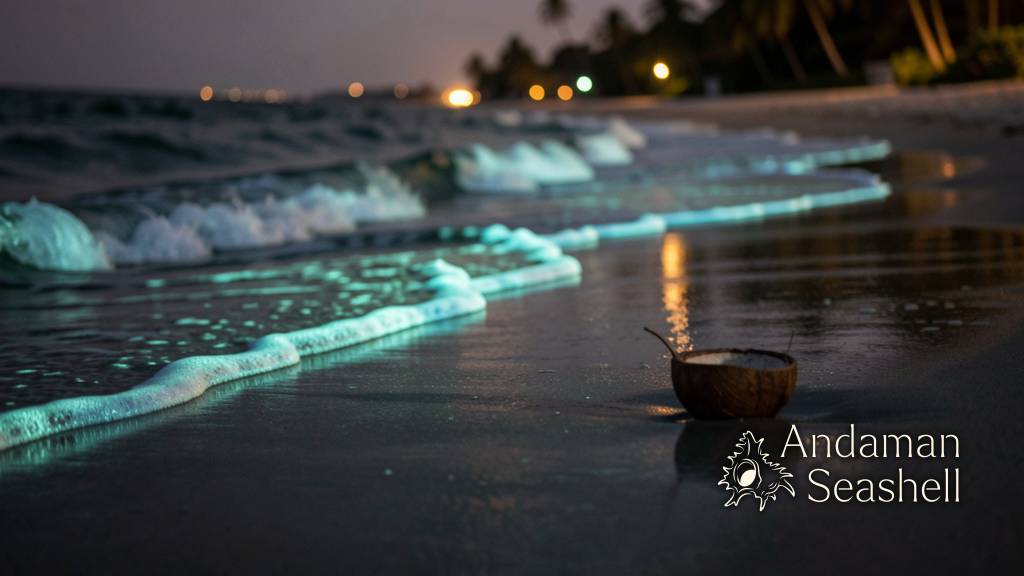
If you want to witness the Andaman glow, the green season — roughly June to September — is your window. Head to a dark beach on Koh Phra Thong, Koh Yao Yai, or any stretch of undeveloped coastline away from resort lights. Check the moon phase: the darkest nights give the most dramatic glow. Arrive an hour after sunset, let your eyes adjust, and walk the tide line. Every wave, every footprint, every disturbance in the water becomes a flash of blue-green light.
The glow is unpredictable — it depends on plankton concentrations, water temperature, and calm conditions — which is part of what makes it feel like a gift when you see it. There is no app that guarantees it. You simply have to be there, on the right beach, on the right night.
A Light That Lives
There is something deeply moving about standing on a dark beach in Phang Nga and watching the ocean light up with living fire. It connects you to something ancient — the same phenomenon that Moken fisherfolk have been reading for centuries, the same chemistry that has been glowing in the world's oceans for hundreds of millions of years.
Bioluminescence is not rare in the ocean. Scientists estimate that the vast majority of deep-sea creatures produce light. But to see it at the surface, in warm tropical water, on a beach you can walk to — that is a particular kind of wonder. It is the kind of thing that makes you want to tell someone, which is why this story exists.
So next time you're on the Andaman coast during the green season, find a dark beach. Turn off your torch. Wait. And if you're lucky, the sea will light up for you — just as it has been lighting up for the people of this coast since long before anyone wrote the word bioluminescence.


No comments yet. Be the first to share a thought.