



The Penguin That Hid for a Hundred Years
On the Kerguelen Islands — a wind-scoured archipelago in the southern Indian Ocean that the French call the Desolation Islands, lying nearly 3,200 kilometres from any permanently inhabited landmass — a quiet scandal has finally been solved. A whole species of penguin has been standing in plain sight for more than a century, photographed by expedition after expedition, counted by researchers, admired by every passing naturalist — and never once given its own name [ref:1].
That changed in September 2026, when an international team led by biologists in Chile and at the University of California, Berkeley confirmed what the birds' genes had been whispering all along: the gentoo penguin is not one species but four — and one of them, the southeastern gentoo, Pygoscelis kerguelensis, is entirely new to science. It is the first new penguin species to be named in more than 100 years [ref:1][ref:2].
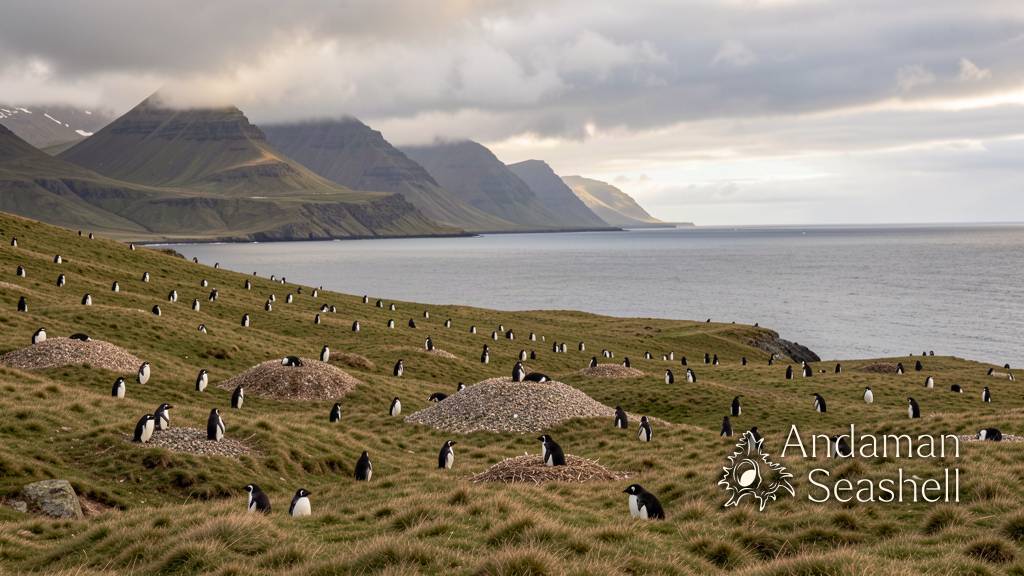
The bird that matched every description — except its own
Here is the delicious part of the mystery: the southeastern gentoo looks almost exactly like every other gentoo. Same tuxedo jacket, same white bonnet-stripe sweeping over the eyes, same orange-red bill. Only subtle differences in body size and its voice set it apart in the field [ref:1]. Scientists call this a cryptic species — an organism hiding inside another's silhouette, distinguishable not by its feathers but by its DNA.
Finding it took the modern equivalent of detective work. The team sequenced whole genomes from 64 penguins across 10 breeding colonies, sampling almost the entire geographic range of the gentoo for the first time. They then compared colouration, calls, breeding schedules, diet and feeding behaviour. The verdict, published as a consensus in the journal Communications Biology, settled a debate that had run for over a century — penguin experts had proposed as many as six different gentoo subspecies without ever agreeing [ref:1].
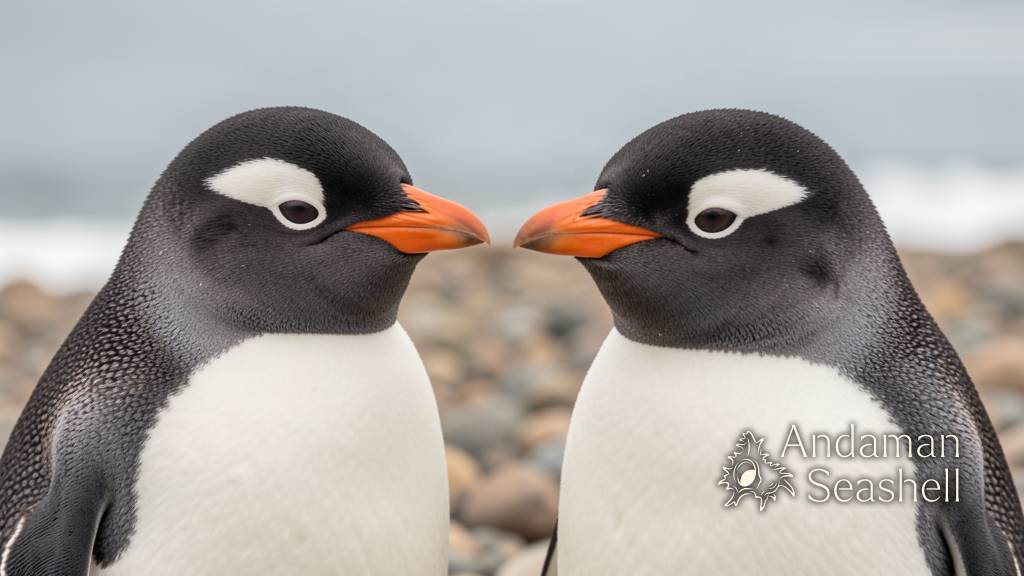
Four penguins where there was one
The genetic evidence rearranged the gentoo family into four species, each adapted to its own corner of the Southern Ocean:
- Southern gentoo (Pygoscelis ellsworthi) — the most numerous, living on the Antarctic Peninsula, coastal Antarctica and South Georgia Island, south of the Antarctic Polar Front.
- Southeastern gentoo (Pygoscelis kerguelensis) — the newly named species, sitting right on the Polar Front, evolved on Kerguelen Island and likely nearby Heard Island.
- Eastern gentoo (Pygoscelis taeniata) — north of the Front, on the Crozet, Marion and Macquarie Islands, carrying extra genes for efficient carbohydrate metabolism and stronger diving performance.
- Northern gentoo (Pygoscelis papua) — the original papua of the group, restricted to the Falkland/Malvinas and Martillo Islands off South America [ref:1].
The researchers estimate the four lineages diverged between 300,000 and 500,000 years ago, driven apart by island isolation and the Antarctic Polar Front — a sharp boundary where ocean temperature and salinity change so abruptly that it also restricts animal movement [ref:1].
Why it matters, and why it's hopeful
Naming a species is not paperwork — it is protection. A population invisible inside another species cannot have its own conservation plan; a named one can. The southern gentoo, thriving in Antarctica, carries extra genes for heat generation, fat storage and light perception — adaptations to polar light and ice glare — and climate models suggest it may even expand its range by 2050 [ref:1].
The team's genomic library will also be used to study how penguins resist diseases such as avian influenza, helping conservationists identify which populations are most at risk [ref:1].
There is a lesson in it for every shoreline on Earth, tropical or polar: the natural world is still full of species waiting for their names — sometimes hiding on the most photographed beaches imaginable, distinguishable only by the patient reading of their DNA. Wonder, it turns out, rewards those who look twice.
References
- UC Berkeley News — Scientists split gentoo penguins into four species, one totally new to science
- ScienceDaily / UC Berkeley — Scientists discover first new penguin species in more than 100 years
- Communications Biology — Integrative evidence reveals adaptive divergence and speciation in gentoo penguins


No comments yet. Be the first to share a thought.