



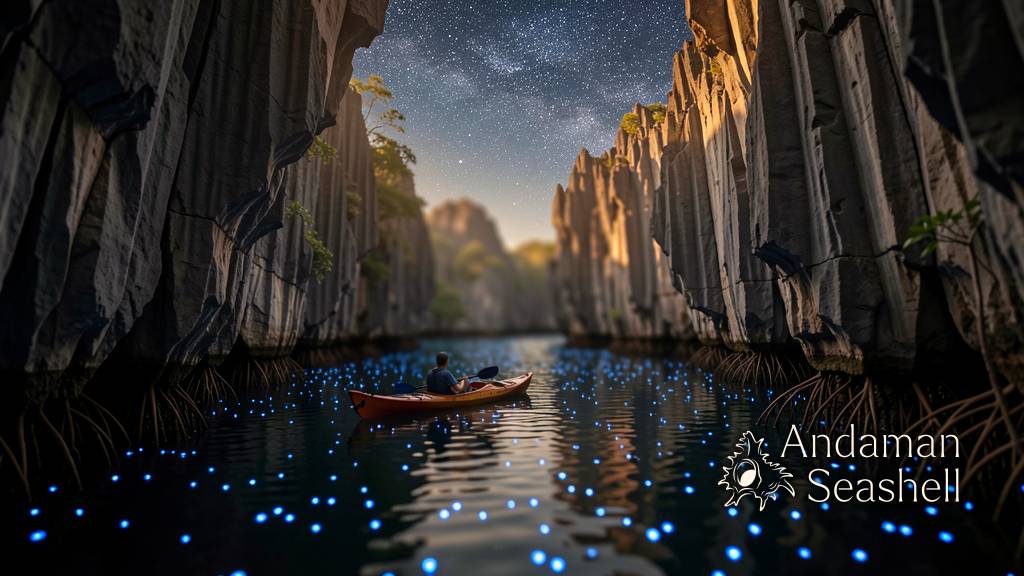
A paddle blade slices into black water inside Koh Panak's Diamond Cave, and the darkness answers. Electric blue light blooms from the point of contact, spreading outward in liquid ribbons that cling to each ripple and drip from the paddle's edge like molten sapphire. The cave walls catch the glow and throw it back. For a few seconds, the entire chamber is lit by nothing but disturbed seawater.
This is not a light show rigged for tourists. It is not a myth. It is bioluminescence — living light — and in the sheltered caves and hidden lagoons of Phang Nga Bay, it happens every night [ref:1].
Billions of Tiny Lanterns
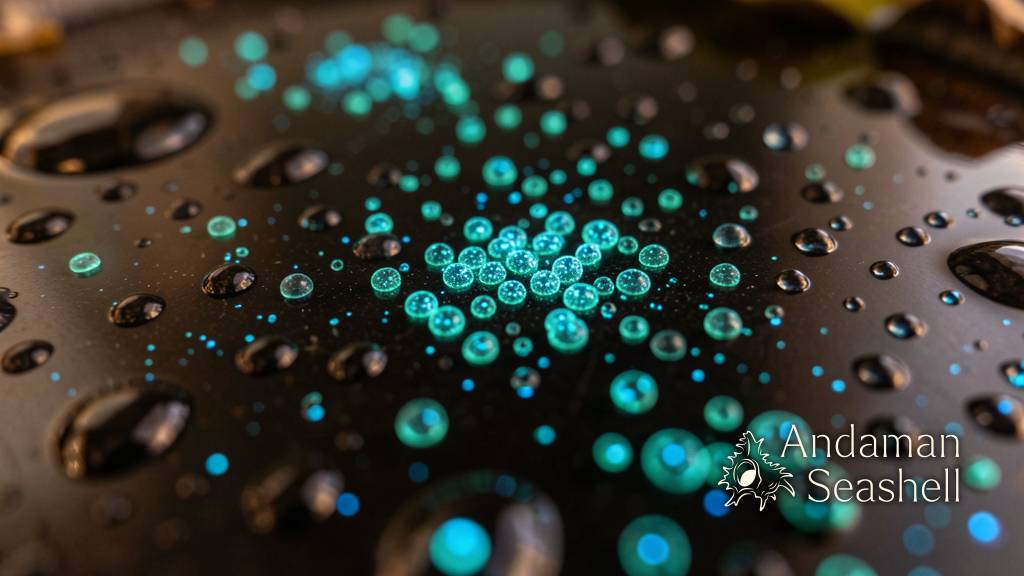
The architects of this spectacle are dinoflagellates — single-celled organisms smaller than a grain of sand. Each one carries its own chemical flashlight: a molecule called luciferin that, when it meets oxygen in the presence of the enzyme luciferase, releases energy as blue-green light [ref:2]. No heat, no electricity — just chemistry refined over hundreds of millions of years.
The reaction is triggered by mechanical disturbance. A wave breaking. A fish darting through. A kayaker's paddle entering the water. The flash lasts a fraction of a second per cell, but when billions fire at once, the result is an underwater aurora.
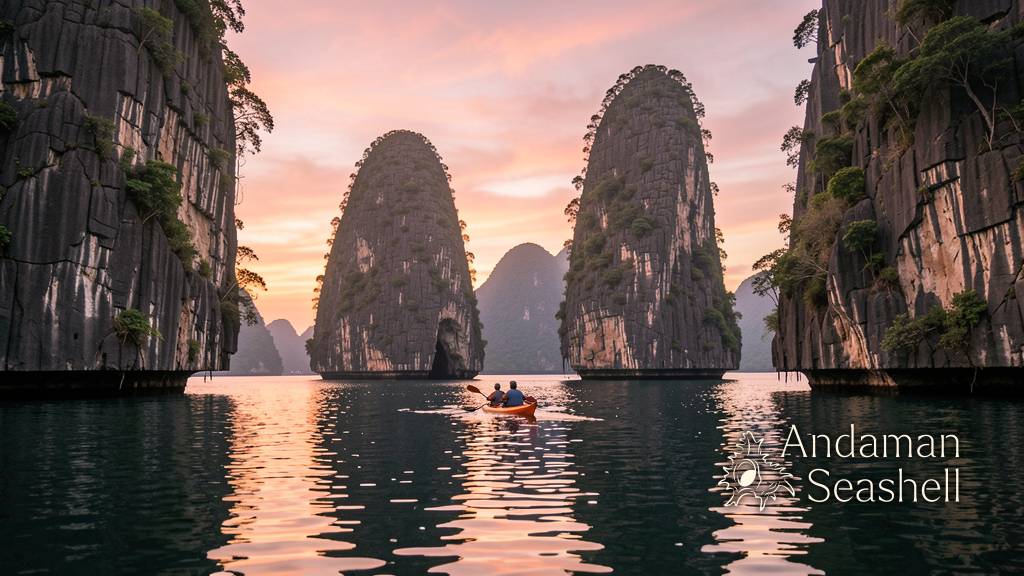
What makes Phang Nga Bay extraordinary is its geography. The limestone karsts that tower above the waterline extend below it too, forming enclosed lagoons — called hongs — that are accessible only through narrow cave passages at certain tides. Inside these hongs, the water is calm, dark, and sheltered from wind and current. Dinoflagellate populations concentrate in these still pockets, and without competing light sources, even a gentle hand-wave across the surface produces a vivid blue flash [ref:1].
Forty Times Over
Here is a number that reshapes how you think about this glow: bioluminescence has evolved independently at least 40 separate times across different branches of the tree of life [ref:2]. Bacteria do it. Jellyfish do it. Deep-sea sharks, firefly squid, even certain fungi — they all arrived at the same trick through entirely different chemical pathways.
For dinoflagellates, the flash serves as a burglar alarm. A small copepod grazes on the plankton; the plankton lights up. That flash attracts a larger predator — a fish, a shrimp — which eats the copepod instead. The prey signals its own attacker's presence to something bigger and meaner. It is a defence strategy that has worked for longer than most mountain ranges have existed.
In Phang Nga Bay, local fishermen have known this for generations. Long before marine biologists described luciferin pathways, Andaman coast fishers read the glow as a signal — bright patches of bioluminescent water often indicate dense concentrations of plankton, which in turn attract baitfish and the larger species that follow them. The glowing sea was not a mystery to be solved but a map to be read [ref:3].
When the Bay Lights Up Best
Bioluminescence in Phang Nga Bay is visible year-round, but conditions matter.
- Moon phase is the single biggest factor. New-moon periods deliver the darkest skies, and the contrast makes even faint bioluminescence vivid. Plan within a few days of the new moon for the best display.
- Season plays a role too. The dry season (November to April) offers calmer water and clearer visibility. But the green season — right now, June through October — can produce brighter blooms, because warmer water temperatures and monsoon-driven nutrient runoff fuel plankton growth [ref:1].
- Time of day: tours typically depart in the afternoon and wait for full darkness, usually between 7 and 9 PM, when twilight has fully faded.
The prime locations remain Hong Island's interior lagoons and the sea caves of Koh Panak, both within Ao Phang Nga National Park. Guided kayak tours from Phuket or Phang Nga reach these spots by speedboat, then switch to sea kayaks to slip through the narrow cave entrances. Inside, you paddle in near-total darkness — and every stroke paints the water blue.
A Light That Belongs to No One
The beauty of Phang Nga's bioluminescence is that it cannot be owned, bottled, or scheduled. It happens when the chemistry is right, when the water is still, when the moon cooperates. It rewards patience and dark-adapted eyes. Smartphones rarely capture it — the glow is too dim for quick exposures — which means the best way to experience it is to put the phone down and move your hand slowly through the water.
Watch the blue fire follow your fingertips. That light has been doing this since before humans walked upright. And here, inside a limestone cave on the Andaman coast, it is doing it just for you.


No comments yet. Be the first to share a thought.