



A mother-of-pearl tray can change a room in a single flash of light. On a teak shelf, its surface moves between silver, pink, and pale sea-green, and suddenly a quiet corner feels alive. In 2026, that kind of detail feels especially timely: designers are moving toward calmer rooms, truer materials, and objects that earn their place slowly rather than loudly.[ref:1]
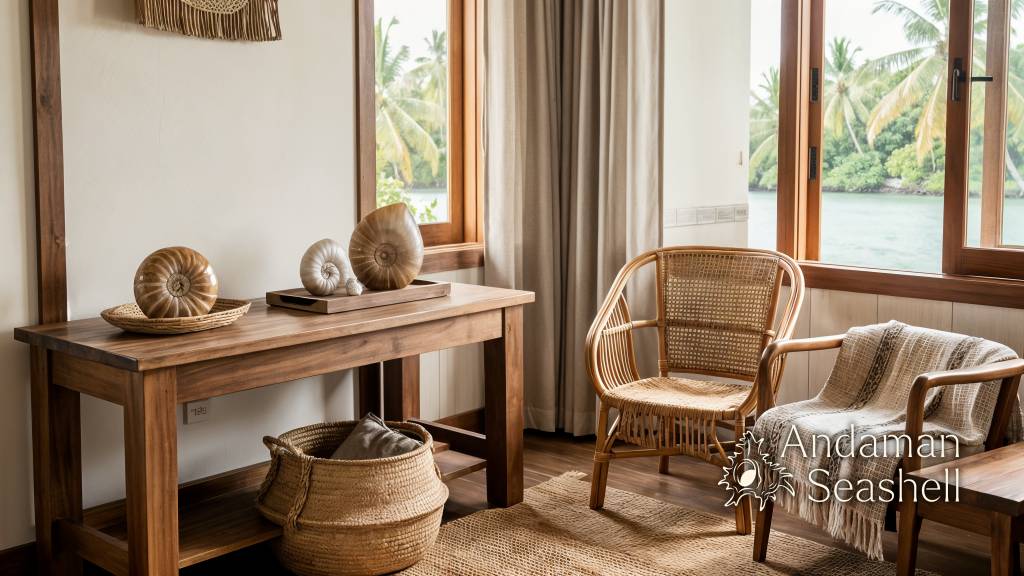
That shift helps shell decor feel fresh again. Not as a beach-shop cliché, but as a material story—one shaped by craft, patience, and the sea. Designers speaking to Dezeen’s 2026 forecast pointed to dark woods, aged metals, textured stone, lime render, and “less processed, more honest materials” chosen for meaning and longevity.[ref:1] In Thailand, that instinct meets a much older tradition: mother-of-pearl inlay, or pradab muk, a craft lineage preserved through lacquerwork and royal craftsmanship for generations.[ref:2][ref:3]
A trend that is really about materials
The most interesting interiors this year are not chasing spectacle. They are choosing restraint, tactile surfaces, and pieces that feel as if they will still matter five years from now. Dezeen’s 2026 survey describes the mood as “curated calm over superficial opulence,” with designers favouring materials left in their truest form and allowed to age naturally.[ref:1]
That language matters for shell and mother-of-pearl. These are not flat finishes. They carry tiny shifts of tone, reflective depth, and irregularity that industrial surfaces often try to erase. A shell object does not read the same at 9am and 5pm. It responds to light, nearby wood tones, and even the colour of the wall around it. That makes it ideal for rooms built on texture contrast rather than excess.
There is also a practical reason the material feels current. Public-facing design collaborations are now framing shell work through reuse and thoughtful sourcing. In July, Centara Grand at CentralWorld’s Sea Soul Afternoon Tea introduced Avalon’s Sea Soul Collection as a line that “reimagines reclaimed seashells” into handcrafted pieces while encouraging “a more mindful appreciation of natural resources.”[ref:4] Bangkok Post also noted that selected pieces from the collection were on display until 31 August 2026, giving the idea visibility beyond jewellery alone.[ref:5]
Thailand already knows how to make shell feel timeless
Long before shell became part of the 2026 conversation, Thai artisans had already developed a sophisticated language for it. Thailand Foundation’s overview of Thai lacquerware places lacquering within Chang Sip Moo, the 10 disciplines of royal craftsmanship, and explains that Ton Rak resin from the Burmese lacquer tree was valued because, once dry, it becomes shiny and resistant to heat and moisture.[ref:3] That is more than a historic footnote. It shows that beauty and durability have long belonged together in Thai decorative arts.
Mother-of-pearl inlay sits inside that larger lacquer tradition. The Thailand Foundation describes pradab muk as a technique that uses the iridescent layer of mussel shells, priming wood or rattan before patterns are formed.[ref:3] The same source notes that mother-of-pearl inlay appears on the gates of Bangkok’s Temple of the Emerald Buddha, built in the reign of King Rama I from 1782 to 1809, and also on the gates of Phra Si Rattana Mahathat Temple in Phitsanulok from the Ayutthaya period.[ref:3] That heritage gives today’s shell decor an important upgrade: when used well, it belongs to a serious craft tradition, not a passing motif.
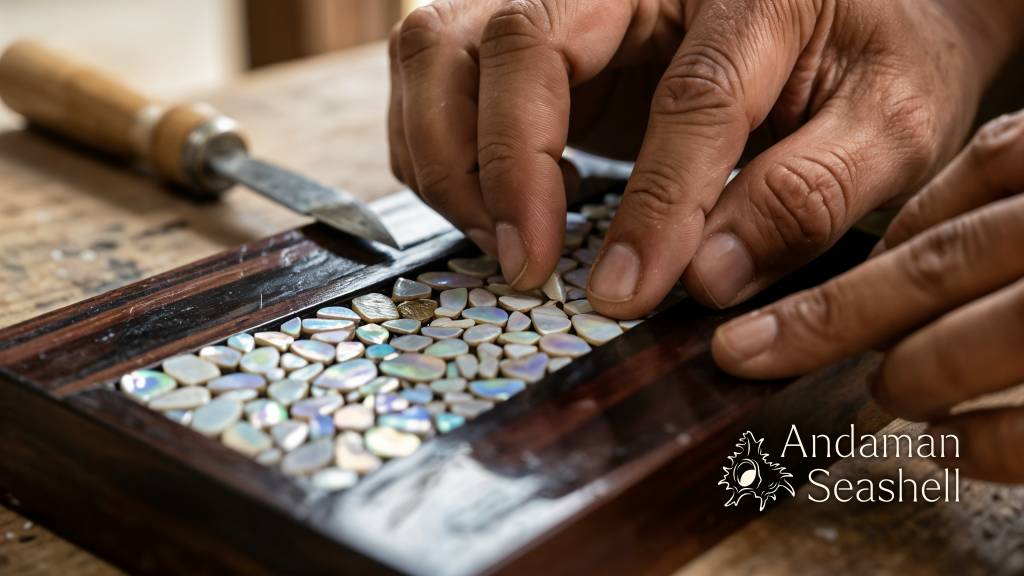
A second Thailand Foundation resource published in 2024 adds that SACIT’s 2019 craft forum was created to help readers understand the history and processes behind mother-of-pearl inlay and to support Thai craftspeople in preserving and developing the tradition.[ref:2] In other words, this is not frozen museum knowledge. It is a living skill base.
How to use shell at home without making the room feel themed
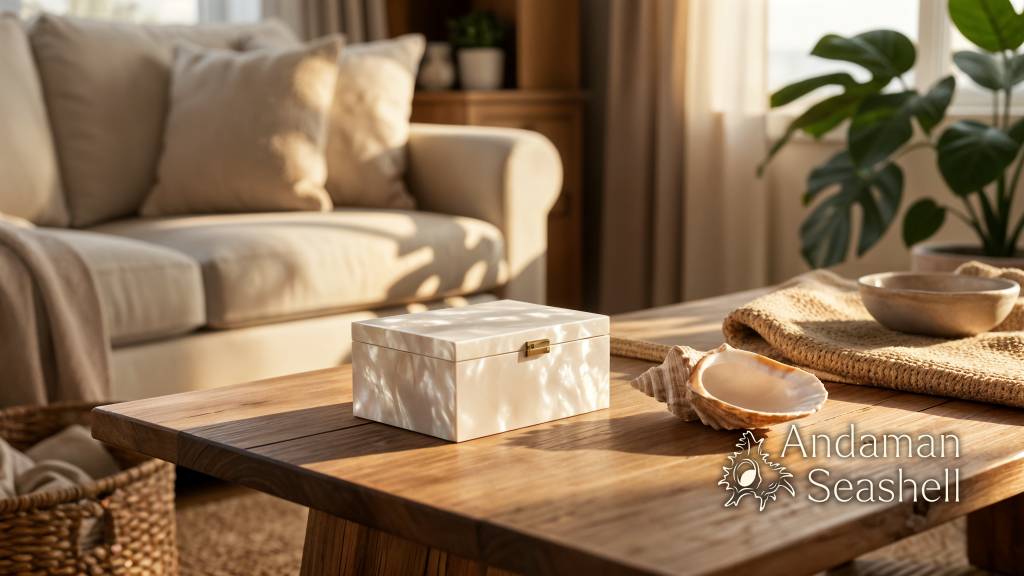
The best way to style shell is to think small, precise, and material-first. Start with one reflective object—a box, tray, frame, or inlaid panel—rather than a whole set. Let it sit near teak, oak, rattan, linen, or matte ceramic so the sheen has something quiet to play against. Mother-of-pearl works especially well where daylight arrives from the side, because the surface changes more gently than it does under harsh overhead lighting.
If you want a more contemporary look, pair shell with the exact materials 2026 designers are already favouring: darker woods, aged metal, textured plaster, or mineral-toned walls.[ref:1] The contrast keeps the piece grounded. A single shell-inlaid object on a deep timber console feels edited and grown-up; ten shell objects on one shelf can quickly become costume.
Humidity also changes how we should think about placement. Because traditional Thai lacquer prized surfaces that resist heat and moisture once dry,[ref:3] lacquered or sealed shell pieces can feel especially at home in tropical interiors—entry consoles, shaded living rooms, or bedrooms with soft indirect light. What matters most is care: avoid abrasive cleaners, wipe with a soft dry cloth, and give the piece visual breathing room so its shimmer remains the focal point rather than background noise.
Why this look has staying power
What makes shell and mother-of-pearl feel right in 2026 is not novelty. It is the opposite. These materials answer several current desires at once: natural texture, visible craft, slower decoration, and objects with memory. They can also connect a home to Thai artistry in a way that feels subtle rather than performative.
And perhaps that is the loveliest part. A shell object does not have to dominate a room to change it. It only has to catch the light, hold a little history, and remind us that thoughtful interiors are often built from surfaces people once took the time to finish by hand.


No comments yet. Be the first to share a thought.