



In a Milan exhibition hall this spring, the most talked-about piece of young furniture design had the strangest ingredient list of the year: the shells that restaurants throw away after dinner. The NIPPON pendant lamp, created by Danish studio RUSSO BETAK, took first prize at the 2026 SaloneSatellite Award — the young-designers honour judged, as it has been every year since 2010, by Paola Antonelli, senior curator of architecture and design at New York's Museum of Modern Art [ref:1].
That is the headline moment of a quiet shift in home design: the shells of eggs and nuts — the most ordinary waste in any kitchen — have become one of the most decorated home materials of 2026.
A lamp printed from last night's dinner
To make the winning lamp, part of a collection called Ark, the studio built its own large-format 3D printer, tuned specifically to turn discarded restaurant shell waste into a material the jury described as rigid yet fluid [ref:1]. The prize, now in its fifteenth edition, has recognised 45 designers from 24 countries — and the 2026 jury's eye landed squarely on shell waste as the future [ref:1].
What convinced them was the light. "We discovered that shells diffuse light in a unique way," the designers explained, crediting classic Danish and Japanese design for the form [ref:1]. The result is a shade that glows softly through thousands of tiny mineral flecks — the speckled, warm translucence that glass and plastic simply cannot imitate.
From breakfast table to workbench
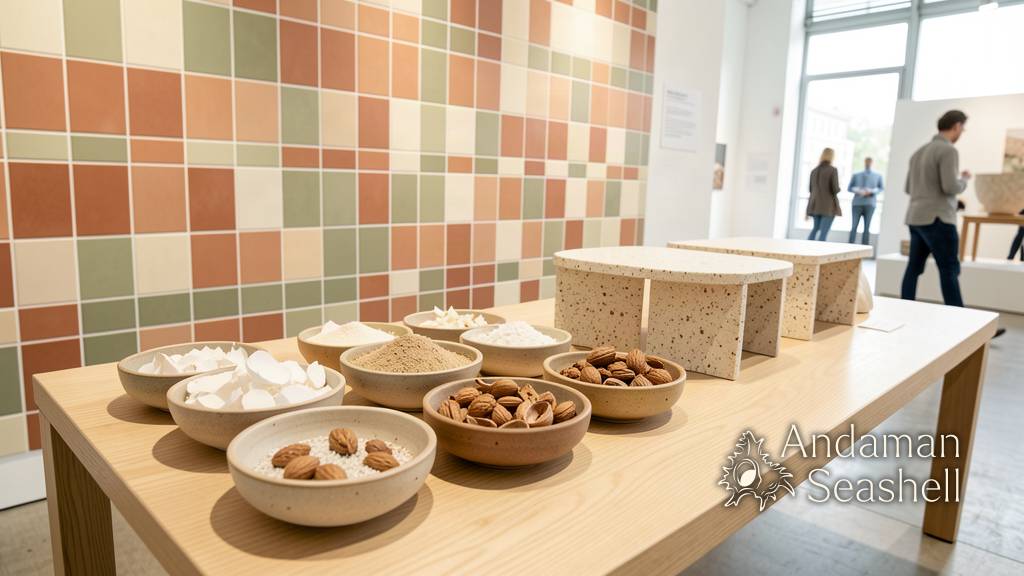
Half a continent away in Milan's design week, the Egyptian brand Shell Homage was telling the same story from the other end. Founder Rania Elkalla, who began the research during her design studies, turns eggshells and the shells of walnuts, peanuts, almonds and hazelnuts into a biodegradable composite bonded with plant-based binders — with no toxic chemicals at any stage [ref:2][ref:3].
Her 2026 installation walked visitors through every step of the making, from loose fragments to finished furniture, and even included a table made from argan waste from Morocco [ref:2]. Processed one way, the material reads dense as stone; processed another, it lets light peek through [ref:2].
One material, many lives
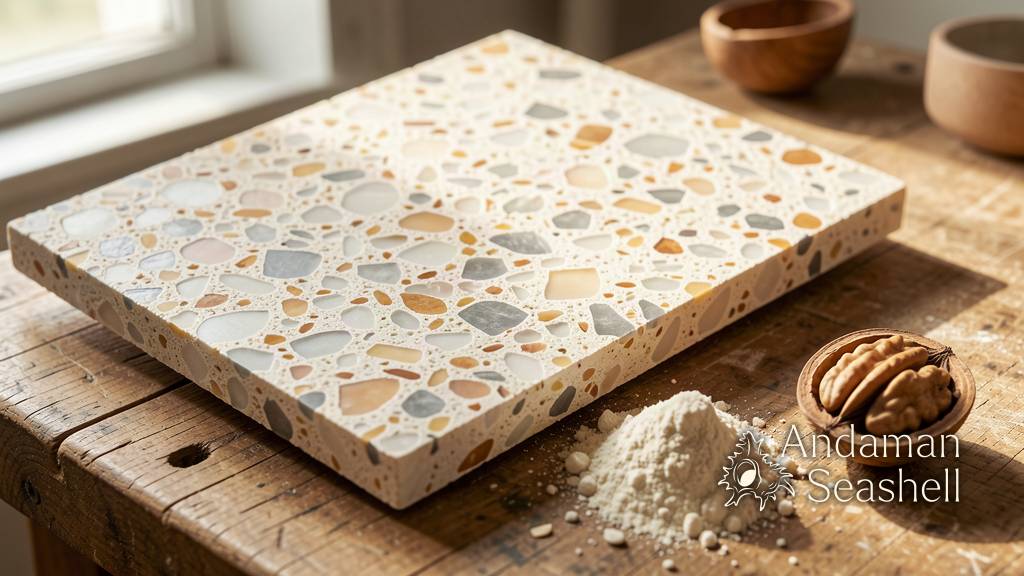
What makes shell composite genuinely useful, rather than merely charming, is how conventionally it behaves. Like stone or ceramic, it can be drilled, sanded, laser-cut and CNC-cut. It can be pressed, extruded, 3D-printed, thermoformed, heat-bent or injection-moulded [ref:3]. The colours come from natural dyes extracted from food ingredients, herbs and natural stones, so even the palette is compostable — and every piece ends its life returning to the soil, 100 percent compostable [ref:3].
The idea is already scaling beyond furniture. In Bologna this autumn, Berlin Packaging Beauty and the Milan startup Krill Design presented XOCO, a polypropylene compound in which ten percent of the content is hazelnut-shell flour rescued from confectionery waste, in front of more than 255,000 visitors at Cosmoprof Worldwide [ref:4]. The visible shell specks in the surface became the storytelling — packaging you can read with your fingertips.
Why it feels right at home
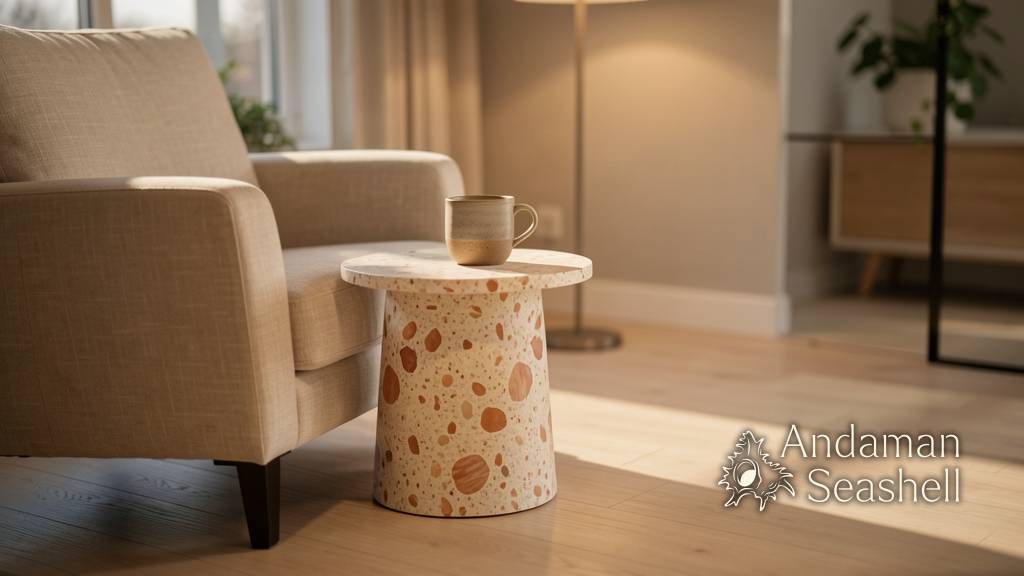
For anyone who loves natural materials in a living space, shell composite offers the familiar pleasures with a new story attached. Each surface carries a one-of-a-kind pattern, because crushed shell never arranges itself the same way twice [ref:3]. It is lighter than marble or natural stone, yet holds a similar quiet, matte dignity [ref:3]. A lamp or side table made this way gives a room exactly what a bowl of beachcombed shells gives a shelf: texture, warmth, and the pleasure of a material that clearly came from somewhere real.
Practically, treat it as you would fine ceramic or stone — keep it out of prolonged soaking, place it on felt pads, and let it take the gentle wipe of a damp cloth rather than harsh cleaners. And enjoy the light. That, in the end, was the discovery that won Milan: shells, ground to powder and re-formed by hand and machine, remember how to glow.
The next time you crush an eggshell for breakfast or crack a walnut, you are holding the raw material of an award-winning chair, lamp or table. In 2026, the most forward-looking homes are decorated with the most backward-looking materials — the ones the kitchen was already throwing away.


No comments yet. Be the first to share a thought.