



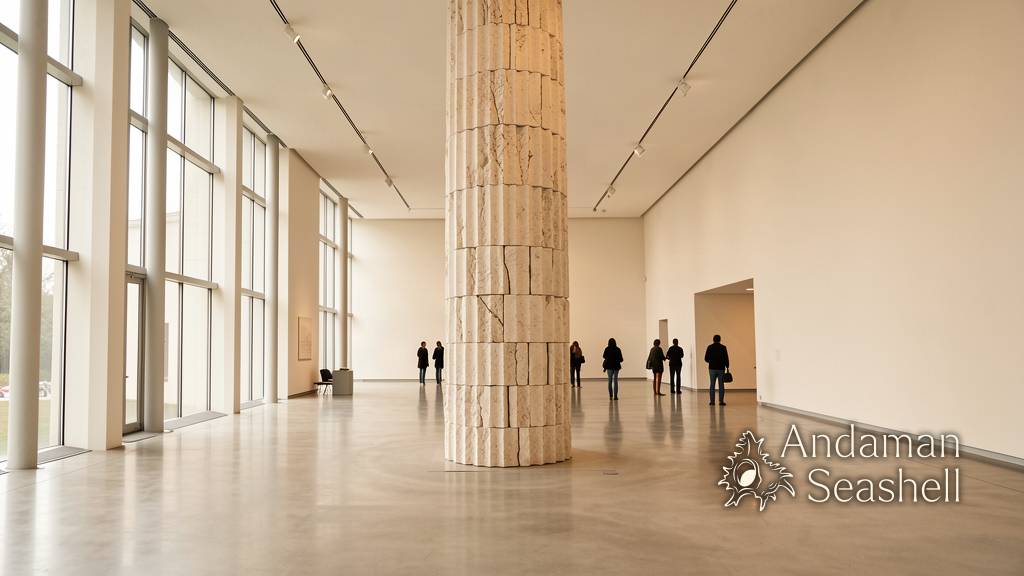
In a bright gallery at the Ian Potter Centre in Melbourne, a column almost three metres tall stands quietly in the light — and every block in it began life in the sea. The blocks are biomasonry: a brand-new building material pressed from more than a tonne of wastewater seaweed and scrubbed-clean oyster-shell waste, created by Sydney artist and material researcher Kate Scardifield with scientists at the University of Technology Sydney's Climate Change Cluster [ref:1][ref:2].
The work, Urgent Is The Rhythm, is one of the opening statements of Plant Life: The Nature of Design, the National Gallery of Victoria's world-premiere exhibition running 28 August 2026 to 7 February 2027 — and entry is free [ref:3]. It sits among more than 60 works that ask a delightful question: what if the materials of the future are already growing around us?
Two waste streams, one new material
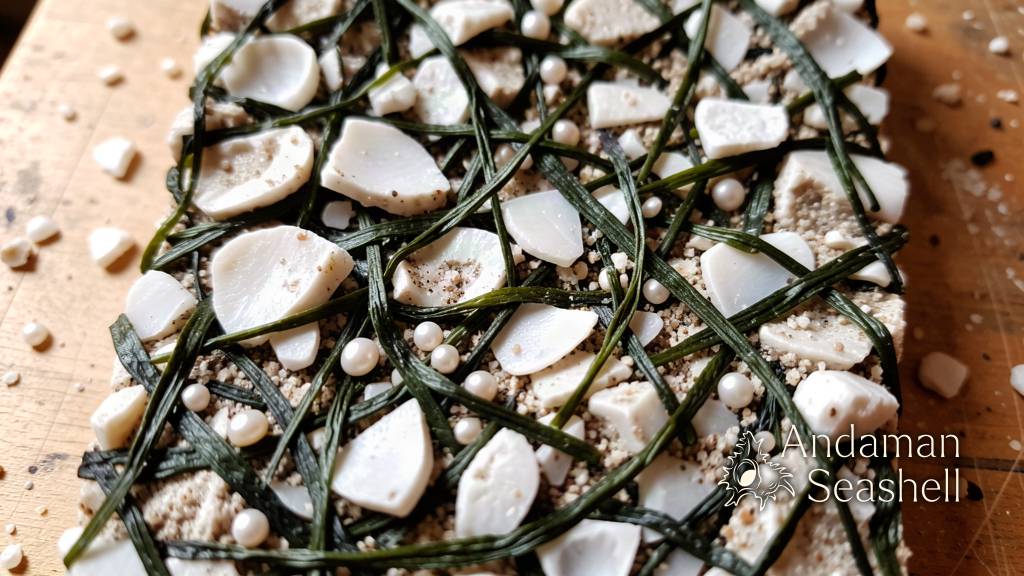
The recipe sounds almost too simple. On one side: residual seaweed biomass, grown to filter wastewater in aquaculture systems in New South Wales and Queensland — seaweed that drinks in carbon dioxide as it grows. On the other: oyster-shell waste from farms and dispatch centres along the NSW coast, shells that would otherwise be destined for landfill [ref:1].
Scardifield and her collaborators pressed and cured these two leftovers into interlocking blocks. In the original studio run they transformed roughly two tonnes of organic waste into more than one hundred solid, stable bio-bricks — enough to build the freestanding fluted column, 90 centimetres in diameter and nearly three metres high, that first appeared at the 2022 Adelaide Biennial of Australian Art [ref:2].
The sourcing detail is where the story turns tactile. A first batch of about 500 kilograms of shells — a mix of Pacific and Sydney Rock oysters — came from a commercial dispatch centre in southern Sydney, mostly flat shell lids left over after shucking. A second batch of around 600 kilograms came straight from the farms, bringing more of the rounded oyster cups, each needing its own washing routine. Between October 2021 and January 2022, the team processed over a tonne of wet, fermenting seaweed and scrubbed, cleaned and sun-bleached over a tonne of shells — by hand [ref:2].
A shell in the wall is an old idea
Here is the lovely surprise: shells in architecture are not new at all. Fragments of oyster, burnt for their lime, survive in the mortar of some of Sydney's earliest colonial buildings. The shell middens at Tubowgule — today's Bennelong Point, site of the Sydney Opera House — once towered an estimated ten to twelve metres high, marking ancient gathering places [ref:2]. Scardifield's blocks are, in a sense, a high-tech return to a very old craft: the sea has always lent us its calcium carbonate for building.
At NGV, the blocks are paired with speculative architectural drawings by Melbourne studio Edition Office, imagining whole buildings cultivated from algae — grown on site, processed into tiles and facade panels, storing carbon as the structure rises [ref:4].
The exhibition around it
Plant Life gathers fungi-grown leather, hemp fibreboard, plant-based bioplastics and even a pavilion mosque facade woven from 200 kilometres of reclaimed date-palm fibre — the walls rising 12.5 metres from the compressed waste of 150 date palms [ref:3]. A standout RMIT commission is a fire-retardant jacket grown from mycelium — fungal networks — which has achieved OEKO-TEX STANDARD 100 safety certification [ref:5].
The curatorial arc runs from ancestral plant knowledge through the petrochemical century to today's regenerative designers, and Scardifield's algae-and-shell masonry opens the show precisely because it makes an abstract idea physical. As she has put it, carbon talk is usually abstract; her blocks give carbon a weight you can stand next to [ref:6].
Why it matters for your home
Biomasonry is not on the shelf at the hardware store yet. But the design lesson travels anywhere the sea meets a kitchen table. Crushed shell adds sparkle and mineral hardness to composites; seaweed fibre binds. If you keep a bowl of beachcombed shells, you are holding the same raw ingredient museums are now celebrating — calcium carbonate, more than 90 percent of an oyster shell [ref:7]. Display them where low light can catch their edges, and you are styling with the very material architects are racing to reinvent.
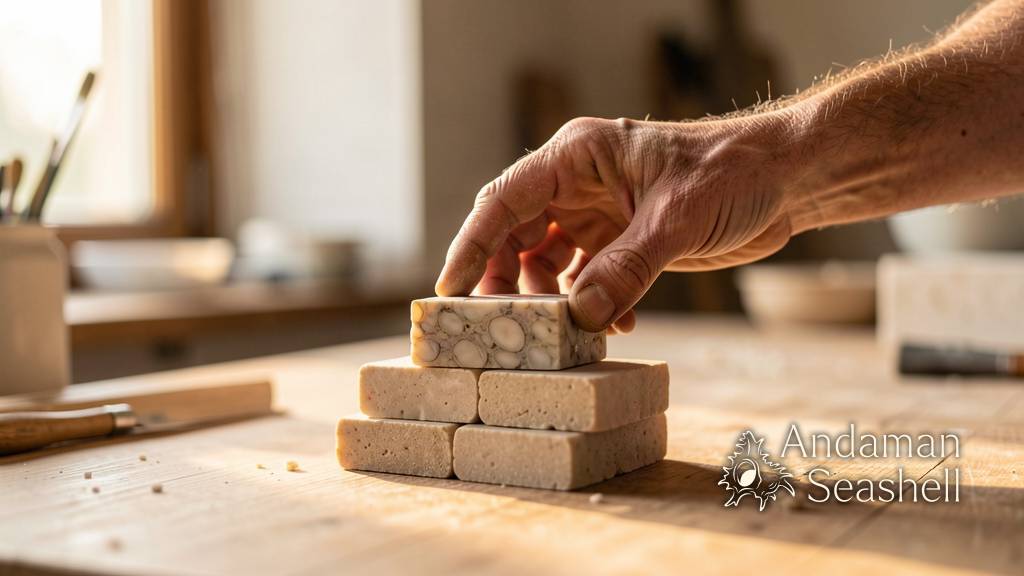
The next time a dinner ends with a pile of oyster shells, look twice. Somewhere between that plate and a free-entry gallery in Melbourne, a wall is waiting to grow.
References
- Dezeen — Plant Life exhibition imagines a future where plants return as the dominant source
- Kate Scardifield — Urgent is the Rhythm (artist project page)
- UTS research record — Scardifield, The Metabolic Museum
- Only Melbourne — Plant Life | The Nature of Design
- RMIT University — plant-based designs at NGV Plant Life
- Broadsheet — Studio Visit: Kate Scardifield
- Times of India / University of Brighton — oyster shell tiles research


No comments yet. Be the first to share a thought.