



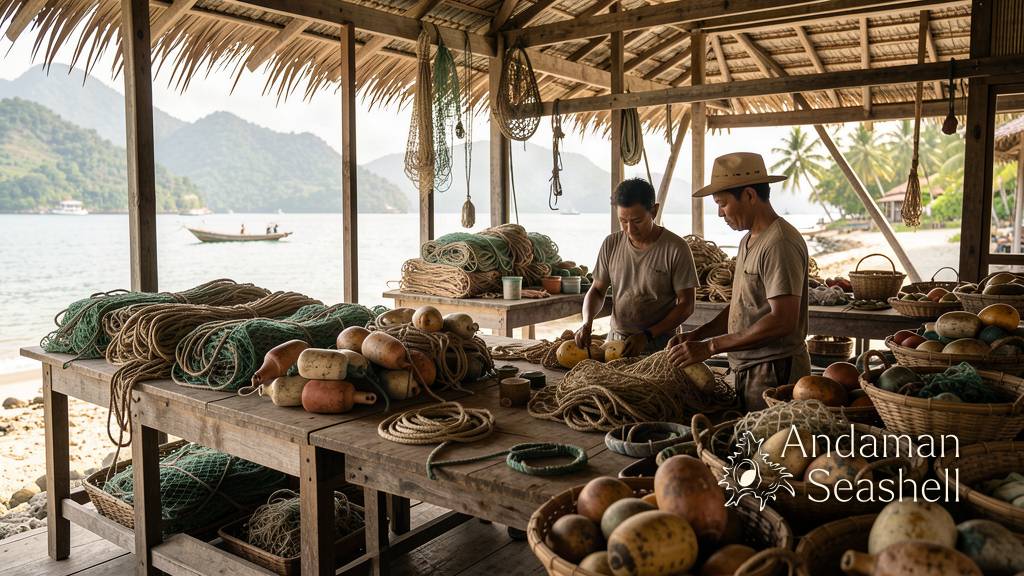
A washed length of turquoise fishing net can look surprisingly elegant once it is dried, sorted, and pulled across a wooden worktable in Rawai. This month, that familiar coastal material stepped into a bigger spotlight when Phuket brought its selected local products to the national OTOP showcase at IMPACT Muang Thong Thani, giving one upcycled craft story a warm new moment of attention.[ref:1]
From shoreline material to national stage
The national exhibition ran from 8-16 August 2026 and gathered more than 3,000 OTOP producers and entrepreneurs with more than 150,000 products on display.[ref:1] Phuket joined that event to show how local knowledge can travel well beyond the island, and one of the province’s standout selections was the fishing-net and shopper-bag work by the Live Like a Local group.[ref:2] For a home-and-decoration reader, that matters because this is not a trend invented in a showroom. It starts with real coastal material, real utility, and a design language shaped by the rhythm of working shores.
Phuket’s provincial KBO programme had already narrowed its attention carefully. Officials said 20 products developed under the 2026 Knowledge-Based OTOP initiative were evaluated before the province chose its top representatives for national competition.[ref:2] Alongside the fishing-net work were Phuket Signature scented candles by the Chomhom group and a hair serum by Arunrung Farm.[ref:2] That small shortlist makes the selection feel meaningful: the upcycled net pieces were not simply interesting, they were judged strong enough in innovation, quality, and market potential to carry Phuket’s identity outward.[ref:2]
What makes the material feel modern
Part of the appeal is visual. Old fishing nets, ropes, buoys, and other marine debris usually arrive with weathered color, salt marks, and a thickness that ordinary fabric does not have.[ref:2] When makers clean and sort those pieces, the result can become bags, household items, and souvenirs with a texture that already carries a story.[ref:2] In a coastal home, that kind of material reads differently from flat synthetic decor. It adds depth, knotting, and a slightly irregular surface that feels honest rather than over-finished.
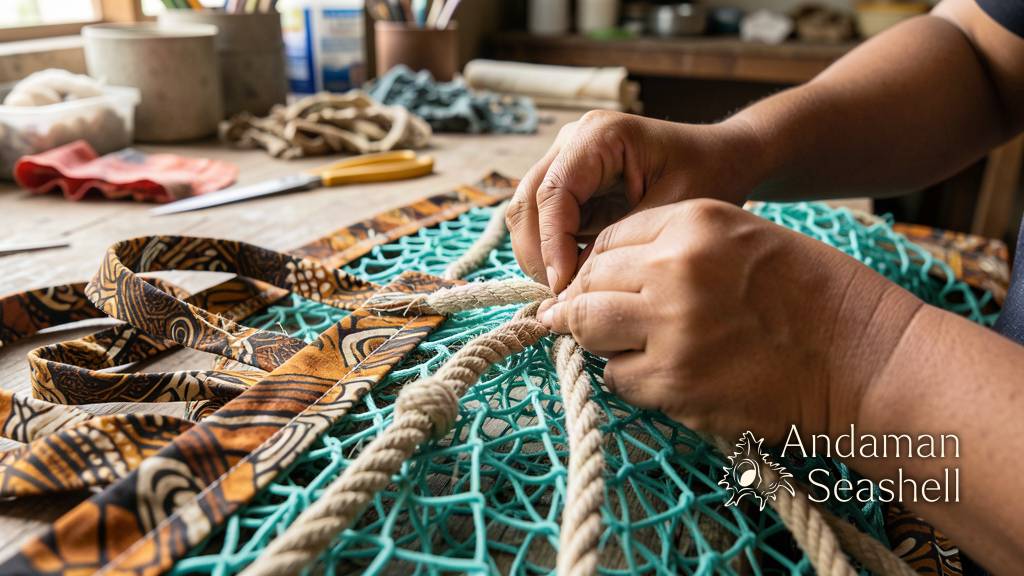
A provincial public-relations report from 24 April 2026 highlighted the same project as a circular-economy example in Phuket and noted that the products had already helped remove and repurpose more than 2,000 kilograms of marine waste.[ref:3] The report also described how traditional fishing knowledge, especially net-weaving skills, was being combined with modern design and batik fabric so the products could reach customers across age groups while keeping a clear local identity.[ref:3] That detail is the design key. The work succeeds not because it hides its origin, but because it edits that origin carefully.
The makerly logic behind the objects
Another Thai feature this spring explained that the brand had developed nearly 40 product designs over almost two years.[ref:4] That is enough time for a material experiment to become a true product family. Instead of one symbolic eco item, the collection can begin to explore proportion, durability, handle comfort, storage shape, and the balance between soft textile inserts and tougher marine fiber shells.
The same report described a business model that invites community participation: fishers contribute practical knowledge around net handling, while local women help produce handmade pieces such as bags and decorative sea-animal objects.[ref:4] That collaborative structure is worth noticing because good coastal decor is often strongest when it keeps one foot in utility. A basket, tote, or organizer feels more convincing when its structure comes from people who understand tension, load, and weather from lived experience.
For readers who love practical beauty, there is also a simple takeaway here. Upcycled coastal pieces work best when they are allowed to be functional first: a sturdy tote by the door, a woven storage basket for rolled towels, a textured container on open shelving, or a single statement piece against plain teak, white plaster, or natural linen. The material already has movement, so the styling does not need to shout.
Why this feels timely now
The bigger OTOP showcase itself offered another signal. Organisers said sales in the first two days exceeded 146 million baht, a reminder that craft with local character is not a niche whisper right now.[ref:1] People are clearly responding to objects that feel specific, useful, and rooted in place. Phuket’s upcycled net work fits that mood beautifully.
There is something especially satisfying about seeing a Rawai shoreline material move from working coast to living room shelf without losing its accent. The color stays marine, the knots stay visible, and the sense of handwork remains intact. That is what turns an object into decor with memory.
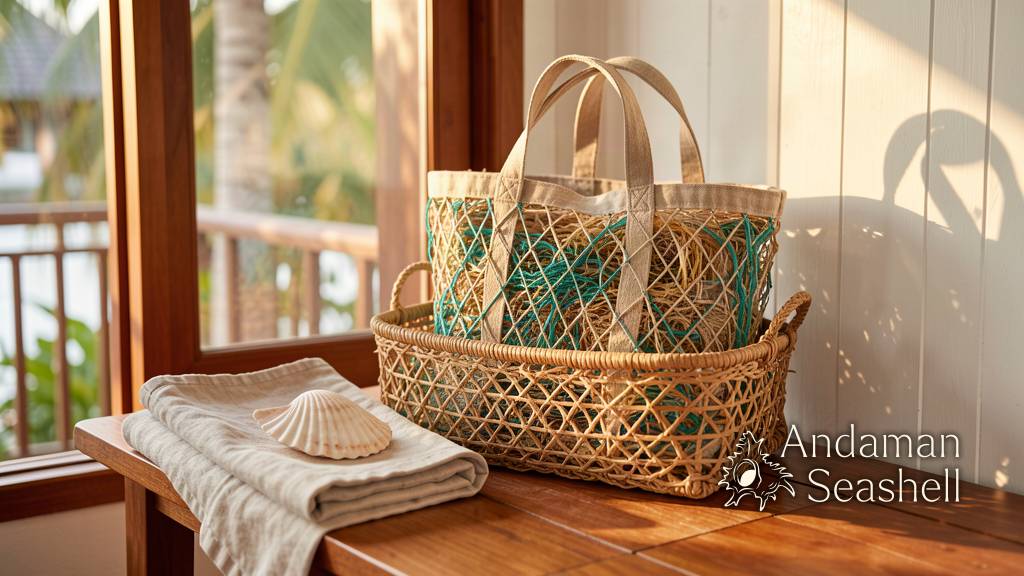
As Phuket continues widening market access for community producers, this kind of design may become one of the island’s most distinctive home signatures: coastal, practical, and unmistakably made from a place that understands the sea from the inside.[ref:2]


No comments yet. Be the first to share a thought.