



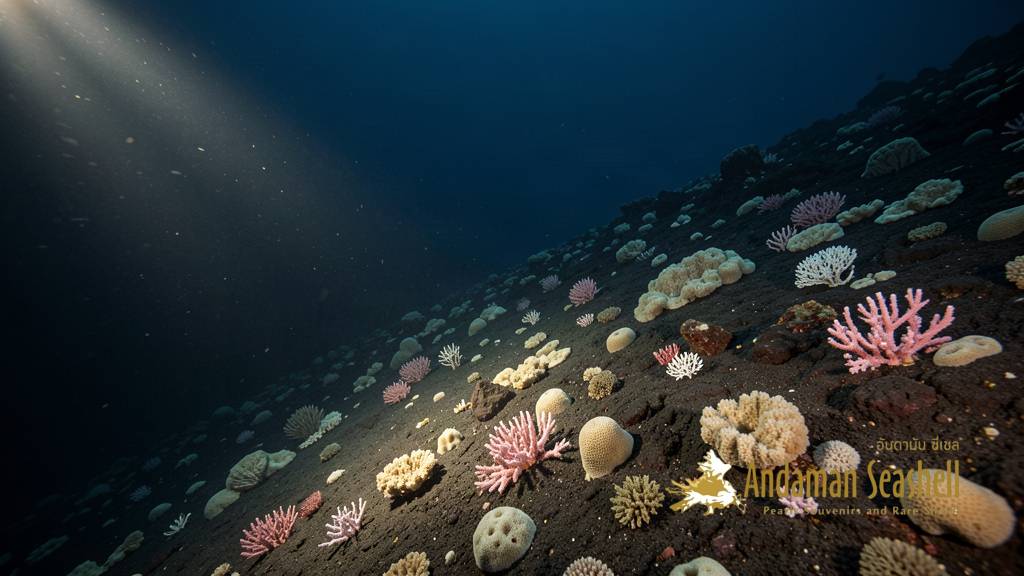
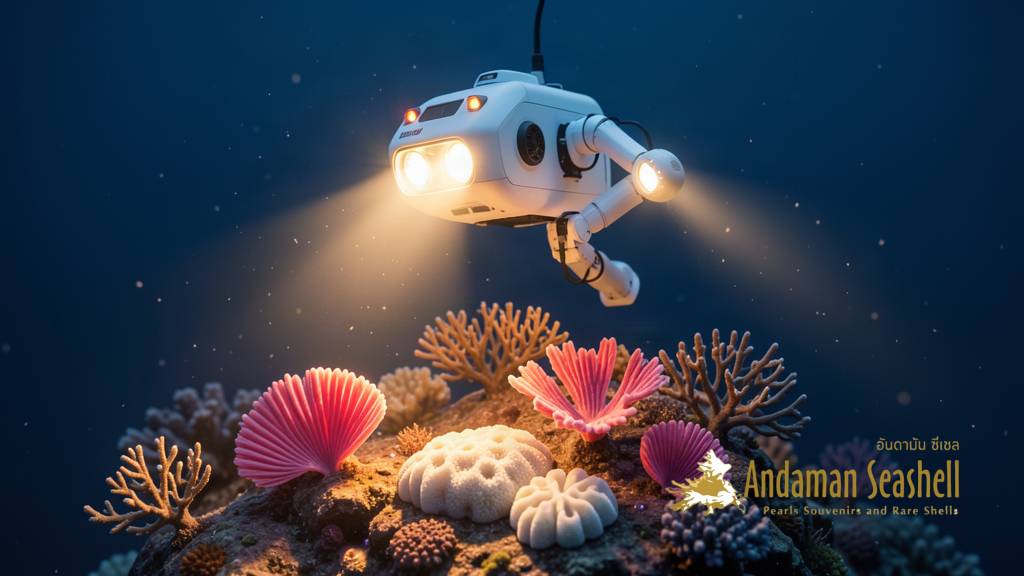
Six hundred and seventy metres beneath the surface of the southeastern Pacific, on the flank of the Nazca Ridge, a remotely operated vehicle from the research vessel Falkor (too) glides over a rocky slope and its lights catch something wonderful: a coral shaped like a bubblegum-pink fan, its branches fanning out as wide as a person's outstretched arms. On September 13, 2026, that coral officially received a name of its own — Paragorgia quitinosa — and with it, scientists announced the answer to a puzzle that has quietly puzzled coral biologists for more than a century [ref:1].
The coral that grew big without a skeleton
Bubblegum corals (the genus Paragorgia) are among the great architects of the deep sea. They form some of the largest branching colonies found anywhere in the ocean's depths, and yet — here is the strange part — they have no rigid skeleton inside their trunk. Most large reef-building corals pour calcium carbonate into a sturdy frame. Bubblegum corals instead rely on microscopic chalky studs called sclerites, each measuring on average just 0.095 millimetres, roughly the width of a human hair. Imagine pitching a family-sized tent with no poles at all, only the fabric stitched with grains of sand — and having it stand, flex and grow for decades in deep water. How?
The answer is a molecule you already know
The new study, led by Juan Armando Sánchez of Universidad de los Andes with Erin Easton and colleagues in Colombia, the United States and Chile, reports the first evidence of visible chitin in the tissues of any octocoral [ref:1]. Chitin is one of nature's great building materials: it is the tough polymer in crab shells, shrimp armour, butterfly wings and even mushroom cell walls. Inside P. quitinosa, chitin forms a laced network of canals running through the entire soft body of the colony — a hidden reinforcement web that behaves like the stitching inside that pole-less tent, giving the coral strength while keeping it flexible enough to sway in deep currents.
It is only the third time chitin has been found in the whole group Anthozoa — the animal class that includes corals and sea anemones — after sea anemones and black corals [ref:1]. The species name itself is a happy tribute: quitinosa points straight to quitina, the Spanish word for chitin, the very molecule that made the discovery famous.
How do you prove a coral is full of chitin?
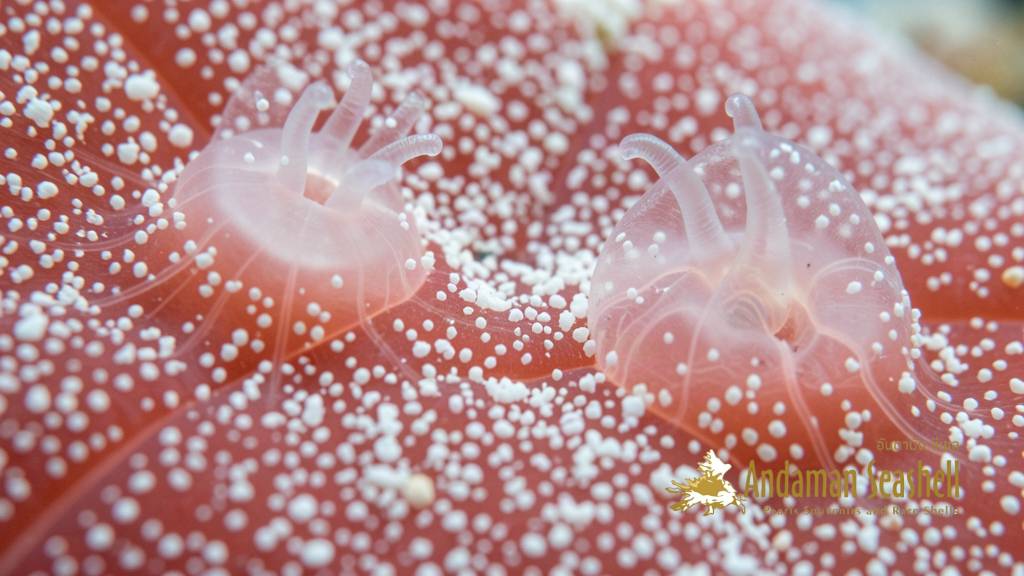
The team ran the specimen through an impressive gauntlet of instruments. The coral's canal walls refused to dissolve in dilute hypochlorite — essentially a bleach solution that destroys ordinary soft tissue — a first hint that something unusually sturdy was in there. Scanning electron microscopy with energy-dispersive spectroscopy, FTIR, RAMAN spectroscopy and TMS/GC-MS chemistry all confirmed it: chitin, sitting in the perforating and boundary canals of the colony's coenenchyme [ref:1].
A micro-CT scan delivered one more delight. The holotype — the single specimen that anchors the species' name — turned out to be a reproductively active female carrying multiple cohorts of eggs, tucked exclusively into her siphonozoids, the small helper polyps that never feed [ref:1].
A new branch on a very old family tree
Genetic analysis using ultraconserved elements and mitochondrial genes placed P. quitinosa within Paragorgia, as a close sister to P. johnsoni and P. jamesi — and revealed along the way that a related genus, Sibogagorgia, is actually polyphyletic, meaning it will need rearranging [ref:1]. The specimen was collected during Schmidt Ocean Institute expedition FKt240708, and the species now carries Ocean Census number OC-SP-0003448 as part of the Nippon Foundation–Nekton Ocean Census programme, the global effort to accelerate the discovery of ocean life [ref:2].
Why a soft coral matters
The discovery does more than add a name to a list. It explains, mechanically, how skeleton-less corals can reach remarkable sizes and still bend rather than snap — a lesson in lightweight, flexible engineering that materials scientists study with real enthusiasm. And it is a reminder of how generous the deep sea still is with its answers: a single colony, hauled up from one seamount ridge, solved a hundred-year question and rewrote a genus in the same paper. Somewhere below the waves, countless more stories like this one are simply waiting for a light to pass over them.


No comments yet. Be the first to share a thought.