



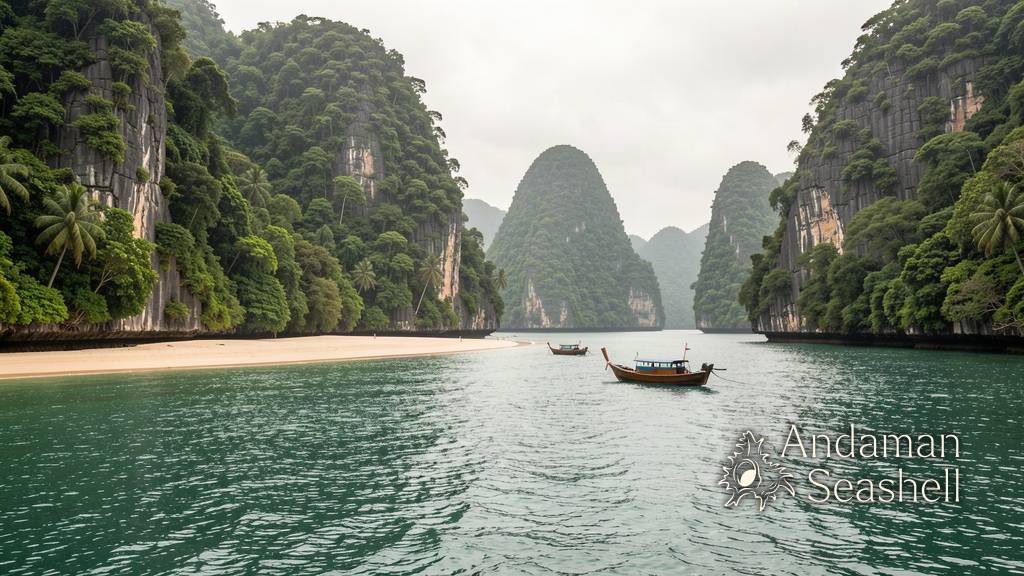
At first light on 2 September 2026, a survey drone lifted off above Maya Bay and looked down at a sight that would have been unimaginable a decade ago: 278 adult blacktip reef sharks cruising together in the shallow water near the shore — the highest single count ever recorded in the 2026 fiscal year survey dataset, and a quiet record for one of the Andaman Sea's most famous coves [ref:1].
The count was released by Thailand's Department of National Parks, Wildlife and Plant Conservation (DNP), together with Marine National Park Operation Center 3 (Trang) and Hat Noppharat Thara–Mu Ko Phi Phi National Park, which manages the bay. It came from marine resource surveys conducted throughout September — precisely the two months each year when the bay closes its beach to visitors so its ecosystem can rest [ref:1].
How you count 278 sharks
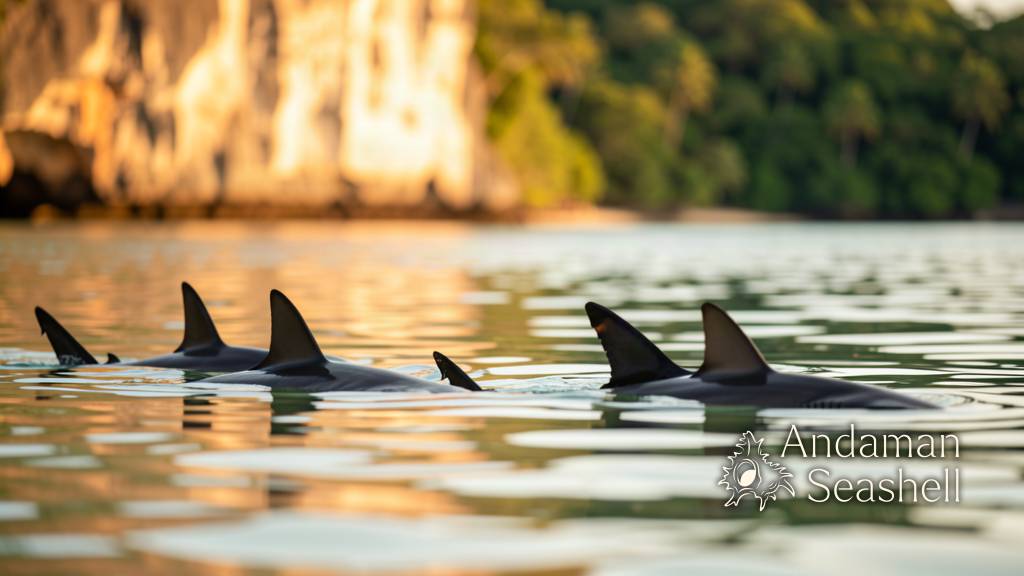
The method is delightfully precise. Researchers completed 15 aerial drone flights over the bay and found a striking daily rhythm: early-morning counts averaged 251.67 sharks (plus or minus 22.91), while evening counts averaged just 57.25 (plus or minus 15.42) [ref:1]. In other words, dawn is when the bay belongs to the sharks — they gather close to shore in the cool morning water, then disperse across the reef as the day warms.
Most of the sharks seen were mature adults measuring over one metre long, swimming near the shore. Observers also counted three to five juveniles under one metre patrolling the shallows — a small number that carries big meaning, because the bay is functioning as a nursery [ref:1].
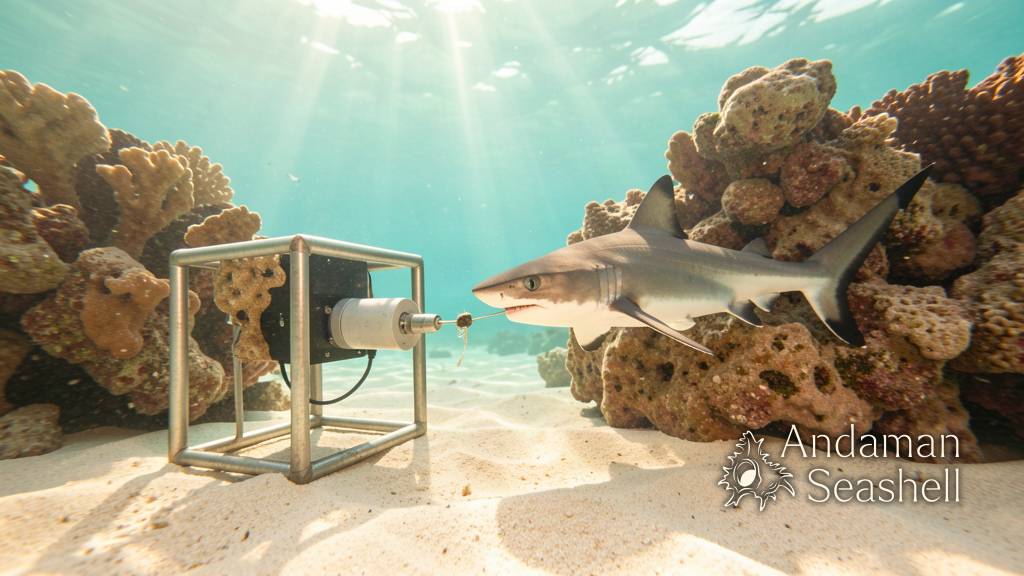
Underwater, the team deployed Baited Remote Underwater Video Systems (BRUVS) 23 times. These are camera frames with a bait arm that let researchers identify individual sharks and track behaviour without a diver present. In a single frame, up to four juvenile blacktips were recorded interacting with the bait at once [ref:1].
Why this record matters
Jinda Srisuppatpong, director of the DNP's Marine National Park Management Division, described the large gathering as a key indicator of the bay's ecological health and safety [ref:1]. For a species like the blacktip reef shark (Carcharhinus melanopterus), numbers like these do not happen by accident. These sharks reproduce slowly — a pregnancy lasts roughly 7–11 months, a litter is just 2–4 pups, and females don't mature until around age nine. A population can only climb this steeply if the habitat is genuinely protected, year after year [ref:2].
The trajectory tells the story. In July 2025, marine scientists from the Marine National Park Research Centre Region 3 used drones and BRUV cameras to tally 158 blacktips in the bay — then the highest count ever documented in a single survey [ref:2]. Just fourteen months later, the peak has jumped to 278. Maya Bay, on Ko Phi Phi Leh about 45 kilometres southeast of Phuket, has become one of the clearest conservation success stories in the Andaman Sea [ref:3].
The two months that make it possible
Every year from 1 August to 30 September, Maya Bay closes to landings during the southwest monsoon, reopening on 1 October [ref:3]. During those quiet weeks, coral restoration work continues and the ecosystem recovers on its own schedule — no boats inside the bay, no feet on the reef, no engines over the nursery shallows.
When visitors return, they meet a bay with clear and simple rules: access from the Loh Samah Bay side along a short boardwalk, no boats or anchoring inside the bay, timed visits of about an hour, and — crucially for the sharks — no swimming and no fish feeding. Rangers sometimes allow only knee-deep wading in one small designated area, which keeps a safe buffer around the young sharks while still giving everyone the view [ref:2].
If seeing blacktips is on your list, timing does the work: first light and late afternoon are when the fins appear in the shallows, and both windows come with soft, beautiful light for photographs — taken from the beach line, with your feet planted on sand [ref:2].
A promise the sea keeps
There is something deeply hopeful in a record like this. A bay once written about for its crowds is now written about for its sharks — 278 of them on one September morning, plus the next generation circling in the shallows. When Maya Bay reopens on 1 October, it will welcome visitors back to a place that is measurably wilder, healthier, and more alive than it has been in decades.
The sharks were here first. Thanks to two quiet months a year and a set of rules everyone can follow, they are here again — in record numbers.


No comments yet. Be the first to share a thought.