



At 22:15 on a Thursday night, under a sky full of stars, something quietly wonderful happened on Khao Na Yak Beach in Phang Nga. A leatherback sea turtle — one of the rarest creatures in Thai waters — hauled herself up the sand, dug a hole nearly a metre deep, and laid 123 eggs. Then, as quietly as she arrived, she slipped back into the Andaman Sea.
Her name is Mae Namo. And this was her sixth nest of the season.
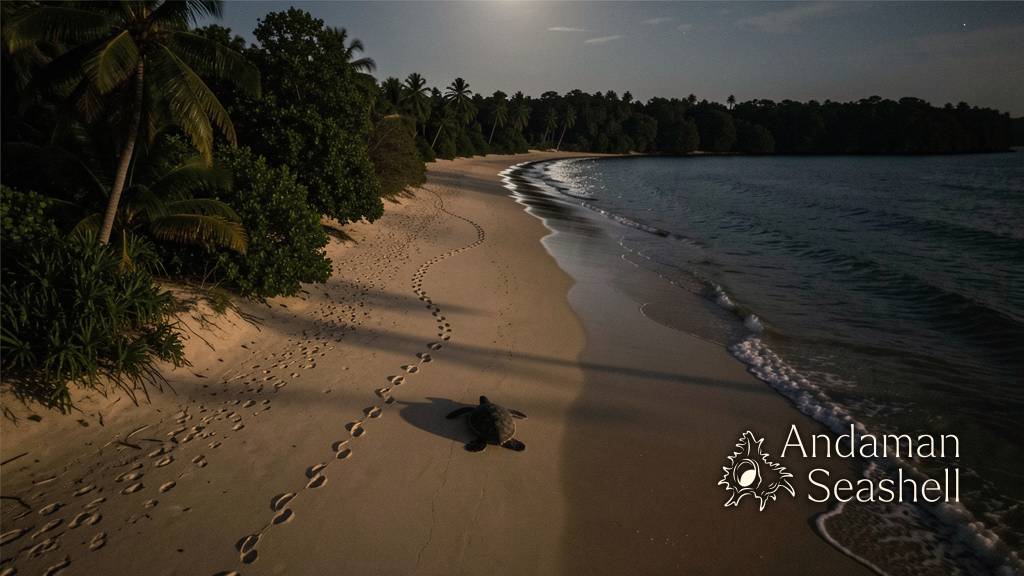
For the rangers of Khao Lampi–Hat Thai Mueang National Park and the Marine National Park Education and Research Center No. 2 in Phuket, Mae Namo is becoming a familiar presence. That June night, they spotted her coming ashore using a drone — a tool that has transformed how Thailand monitors its most vulnerable nesting beaches. They watched from above, patient and still, as she went about the ancient work her species has done for over a hundred million years.
What Mae Namo's nest tells us
The numbers from her sixth clutch tell a hopeful story: 123 eggs in total, of which 107 were viable — a remarkable fertility rate for a species that Thailand classifies as critically endangered. Each egg averaged 5.36 centimetres across, laid in a chamber 96 centimetres deep and 45 centimetres wide. In roughly 55 to 65 days, if all goes well, those eggs will hatch into tiny leatherbacks no bigger than the palm of your hand [ref:1].

But nature can be unpredictable, and the rangers were not taking chances. The original nest site sat in a zone vulnerable to tidal flooding — a risk that could overwhelm the developing embryos. So conservation staff did what they have become expert at: they carefully excavated every single egg and relocated them to the leatherback hatchery near the park's visitor centre. There, under round-the-clock supervision, the eggs will incubate naturally until they are ready to meet the sea.
A turtle named Mae Namo, and a coastline that learned to care
Leatherbacks are the giants of the turtle world — the largest sea turtle on Earth, capable of reaching 900 kilograms and 2.5 metres in length. They feed mainly on jellyfish, drifting with ocean currents across vast distances. But despite their size, they are fragile: scientists estimate that fewer than ten nesting female leatherbacks remain in all of Thailand [ref:2].
That makes Mae Namo's loyalty to Phang Nga's beaches all the more precious. Six nests in a single season, from one turtle, is an extraordinary contribution to her species' future. And her choice to return, again and again, to the same stretch of coast says something powerful: this beach feels safe to her.
That sense of safety is no accident. It is the product of years of patient work by the Phuket Marine Biological Center (PMBC), which launched a captive-rearing initiative in 2019 to nurse weak hatchlings through their most vulnerable first year — a programme so specialised that Thailand is among only five countries in the world capable of doing it [ref:2]. It is also the result of community partnerships like the one between Laguna Phuket and PMBC, which since 1994 has released more than 2,186 sea turtles back into the Andaman Sea, raised over 7.3 million baht for conservation, and engaged more than 4,800 participants in hands-on protection [ref:3].
The next sixty days
Sometime in mid-to-late August, those 107 eggs in the hatchery will begin to stir. The stronger hatchlings will instinctively scramble toward the surf, guided by the pale glow of the horizon. Weaker ones — the ones that need a little extra help — may be taken to PMBC for head-starting, where they will be cared for until they are strong enough to face the open ocean.
Under natural conditions, only about one or two hatchlings in a thousand survive to adulthood [ref:2]. That statistic might sound steep, but every nest protected, every egg relocated, and every hatchling given a head start improves the odds. And when Mae Namo returns next season — as the rangers hope she will — she will find a coastline ready to welcome her home once more.
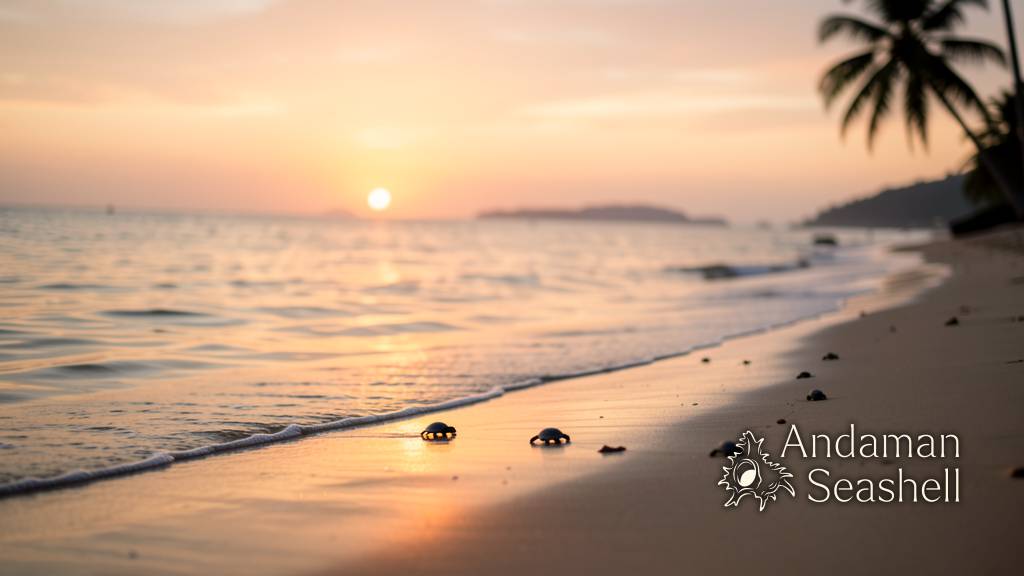
For the rangers of Khao Lampi–Hat Thai Mueang National Park, the next two months will be a quiet vigil. For the rest of us, it is a reminder that the Andaman coast's magic is not only in its shells and sunsets. Sometimes, it lives in the patient, devoted work of protecting creatures who chose, against all odds, to keep coming back.


No comments yet. Be the first to share a thought.