



On 17 August 2026, Thailand’s Department of Marine and Coastal Resources put a clearer shape around one of the Andaman coast’s gentlest residents: dugong protection. The updated SAVE OUR DUGONG programme names 12 high-risk areas across five Andaman provinces and turns them into a practical coastal map for boat crews, fishers, and families who know these waters well.[ref:1][ref:2]
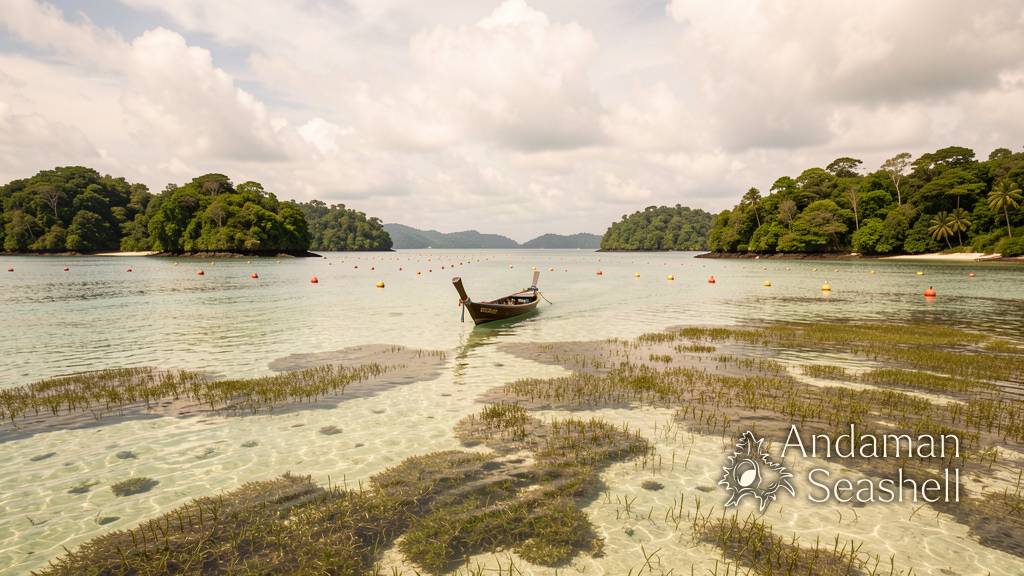
Instead of sounding like a wall of rules, the plan reads more like shared choreography for the sea. Public reporting says the 12 zones are split into six areas vulnerable to boat strikes and six where dugongs are at risk from fishing gear entanglement.[ref:1][ref:2] For readers in Phuket and Phang Nga, that matters immediately: Rassada Pier and Bang Rong Pier in Phuket, plus the Koh Yao Noi–Koh Yao Yai channel in Phang Nga, are among the places singled out in reporting on the new measures.[ref:1][ref:3]
A slower pace near shore
The easiest part of the update to picture is speed. In the designated zones, boats will be limited to 5 knots within 1 kilometre of shore, 10 knots within 2 kilometres, and 20 knots within 3 kilometres.[ref:1][ref:2] The limits become even gentler where dugongs feed: 5 knots over seagrass beds and 3 knots in seagrass areas inside national parks.[ref:1][ref:2]
That detail matters because dugongs are not fast, flashy animals. They spend long hours grazing in shallow seagrass meadows, often in the same kinds of calm coastal areas that small boats, local piers, and traditional fishing routes use every day. By adding buoys and route markers to define navigation lanes, the programme is trying to make those uses coexist more cleanly rather than pushing one out for the other.[ref:1][ref:3]
Fishing gear gets more dugong-friendly
The second half of the plan is just as concrete. In six risk areas, single crab traps attached to a single buoy will be prohibited in seagrass habitats.[ref:1][ref:3] Where fishers use strings of 15 to 20 crab traps on one buoy, the rope will need stones or lead weights so it stays straight in the water and is less likely to snag a passing animal.[ref:2][ref:3]
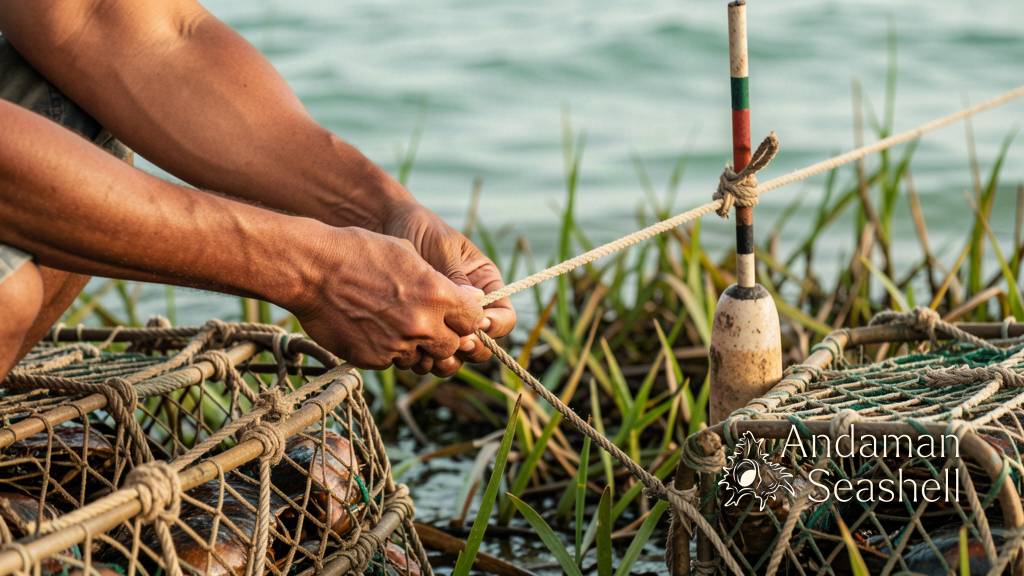
The programme also says bottom-set crab nets will be banned in seagrass areas.[ref:2][ref:3] Where nets are still allowed outside those zones, fishers will be expected to monitor them after deployment to reduce the chance of entanglement.[ref:1][ref:2] And large-fish floating gillnets, including those used for seabass or barramundi, must stay out of seagrass habitats and at least 1 kilometre from the edge of a seagrass bed.[ref:1][ref:2]
These are the kinds of specifics that make a policy feel real. You can imagine the rope, the buoy, the line angle, the shallows, the skipper checking speed. For coastal communities, that concreteness is useful: it turns a broad conservation message into actions people can actually do on an ordinary day at sea.
Why the update arrived now
The timing is recent and direct. Khaosod English reported that the DMCR stepped up the programme after recording 209 dugong strandings over the past decade.[ref:2] In fiscal 2026 alone, 15 dugong strandings had already been recorded, with five linked to human activity: two marine accidents, two fishing-gear cases, and one marine-debris case.[ref:1][ref:2]
That is also why the official language around the programme has been careful and practical. DMCR Director-General Pinsak Suraswadi said the goal is to reduce human-caused dugong deaths to zero while still allowing coastal livelihoods to continue.[ref:1][ref:3] Nation Thailand reported the message clearly: the department is not trying to stop fishing or navigation, but to organise marine space so safety and conservation can move together.[ref:1]
A six-month window for a better habit
There is also a useful sense of pace here. The navigation and fishing-gear measures are expected to be implemented within six months.[ref:1][ref:3] That gives operators, communities, and local officials a transition period rather than an overnight shock.
For Andaman readers, that may be the most encouraging part of the whole story. This is not a distant conservation slogan. It is a near-shore update shaped around real piers, real channels, real ropes, and real seagrass. It asks boats to slow down where dugongs feed, asks gear to become less risky where ropes hang loose, and asks everyone using the coast to notice the same living map.
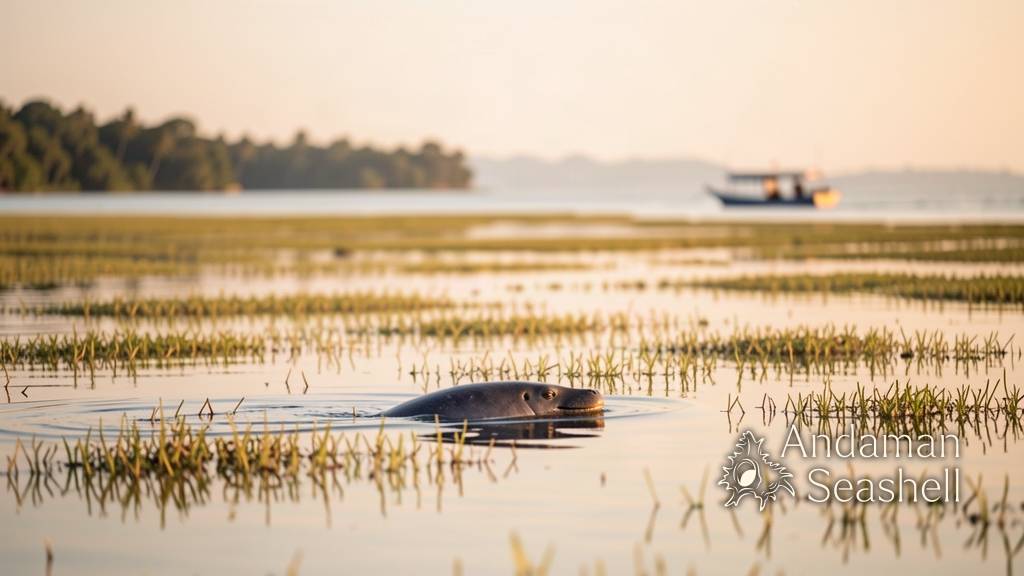
And if the community spots a dugong in trouble, the public hotline is already part of the plan: 1362.[ref:1] Sometimes care for the sea begins with something as simple as a slower throttle, a straighter line, and a quick call at the right moment.


No comments yet. Be the first to share a thought.