



The Shell That Runs on Sunlight
Float face-down over a shallow reef flat from the Andaman coast to the Philippines and you will meet a giant clam (Tridacna) — wedged into the coral like a half-buried treasure chest, its open lips glowing electric blue, emerald and gold, like stained glass left on the seabed.
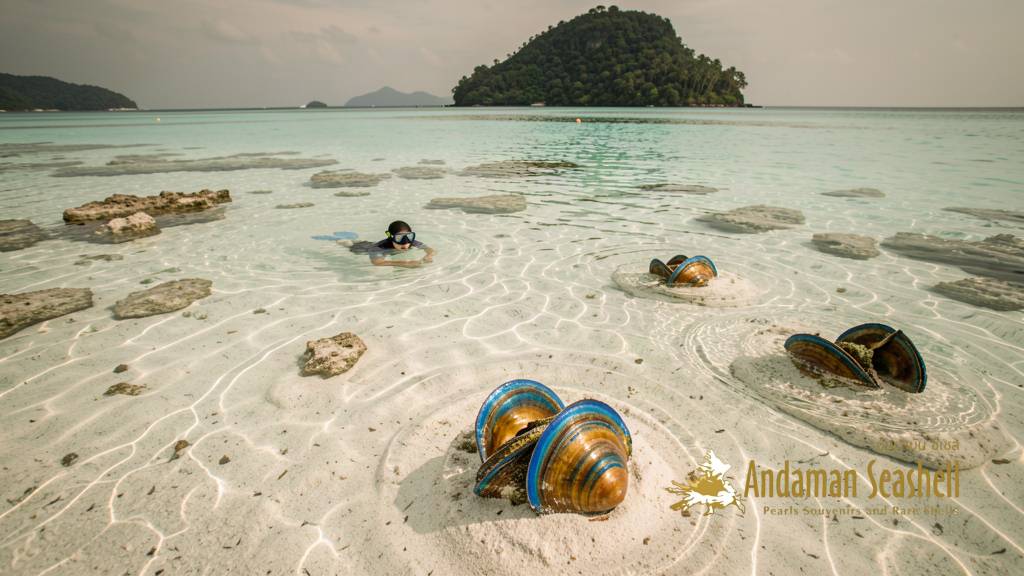
That glow is not decoration. Inside every giant clam's fleshy mantle live millions of single-celled algae called Symbiodiniaceae — the same partners that power reef corals. The algae harvest sunlight and share the sugars; the clam gives them a sunlit home and nutrients. Biologists call the pairing a holobiont — one body, two ways of making a living [ref:1].
The Gentle Giant of the Reef
Tridacna gigas, the true giant clam, is the largest living bivalve on Earth — up to 120 centimetres across, more than 200 kilograms, with wild individuals living over a hundred years [ref:4]. Linnaeus named it in 1758, but coastal peoples knew it far longer; explorer Antonio Pigafetta described the clams in 1521 [ref:4].
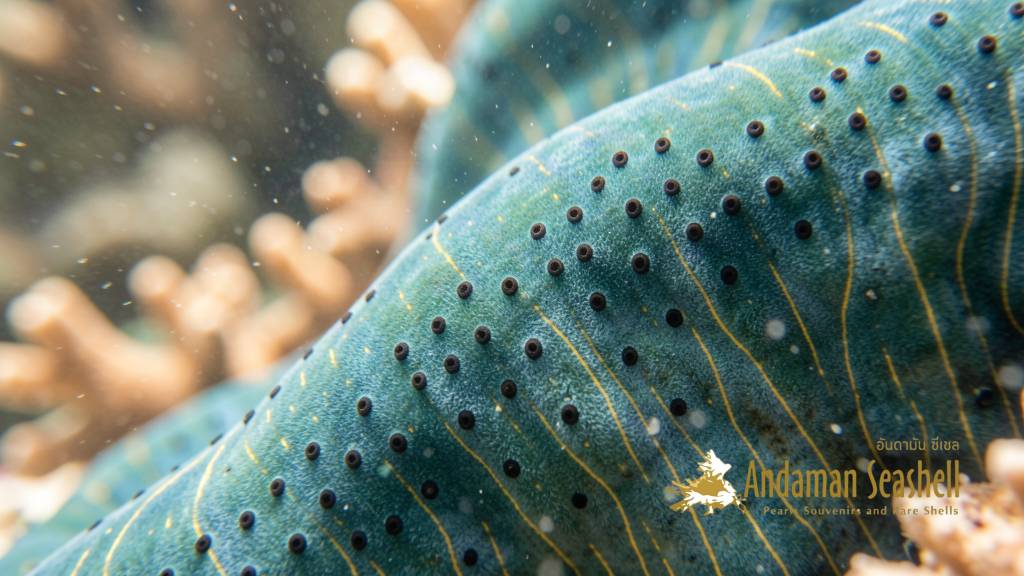
Despite old legends, it has no interest in catching divers. Its mantle carries hundreds of dark light-sensitive spots — ocelli — that read shadows and trigger the shell to close [ref:4]. It feeds two ways at once: filtering particles from the water, and farming its algae in sunlight, like a plant [ref:1].
Six Clams, One Lagoon
How much sunlight does each species actually run on? Dr Isis Guibert of HKU's Swire Institute of Marine Science, with University of the Philippines colleagues, built a common garden — a shared sandy nursery at 2 to 5 metres depth in the Tabunan lagoon, Semirara Island — and raised six species side by side: T. gigas, T. derasa, T. maxima, T. squamosa, Hippopus hippopus and H. porcellanus [ref:1].
They measured natural carbon and nitrogen isotopes in clams and algae, feeding the numbers into a model called HERS — Host Evaluation: Reliance on Symbionts. The six species fell neatly along a nutritional spectrum, from largely filter-feeding to overwhelmingly solar-powered. The biggest, fastest growers — T. gigas and T. derasa — proved the most sun-dependent of all [ref:1][ref:2].
There is a poetic trade-off: sunlight lets a clam grow into a 200-kilogram giant, but ties it to the light and warmth its algae need — and its size makes it an easy target for collectors. Knowing where each species sits on the spectrum gives conservationists a practical way to spot which clams need help first [ref:2].
A Map of the Invisible Garden
In August 2026, a second University of the Philippines team added a nationwide layer. Using ITS2 metabarcoding — DNA bar-coding of the algae themselves — they profiled symbiont communities of eight giant clam species across 11 sites spanning the archipelago [ref:3].
The finding is quietly hopeful: most clams host one dominant symbiont genus, with Cladocopium the most common partner, then Durusdinium and Symbiodinium. But clams are not locked to one partner — communities shift with host and environment, room to adapt as reefs change, and a direct guide for hatcheries raising clams with resilient gardens [ref:3].
Why It Matters for Every Shell Lover
Giant clams are ecosystem engineers: their shells become living foundations for coral recruits, sponges and small reef fish [ref:2]. Tridacna gigas is Critically Endangered on the IUCN Red List, and all giant clams are protected under CITES Appendix II — why responsible collections insist on provenance, and why hatchery-raised clams are the trade's future [ref:4].
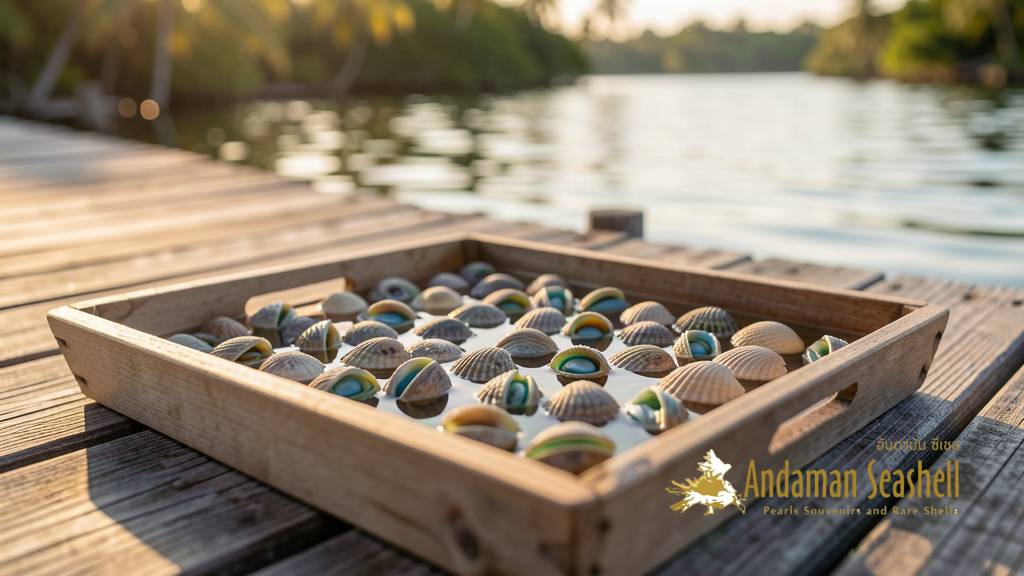
That future is being built now: hatcheries raise juveniles in trays and lagoon nurseries before transplanting them to restored reefs — the same pipeline that supplied the Semirara common garden. Next time you meet that impossible blue glow, you are looking at a solar-powered shell using a hundred-million-year-old trick: open to the light, and let the garden grow.
References
- Guibert et al. 2026, Trophic niche partitioning in giant clams, Communications Biology 9:48
- HKU Swire Institute of Marine Science press release: Giant clam feeding strategy could determine their future survival
- Quijano et al. 2026, Host and environment shape the giant clam-associated photosymbiont community, bioRxiv preprint
- Giant clam (Tridacna gigas) — taxonomy, size, lifespan and conservation status


No comments yet. Be the first to share a thought.