



The Reef That Waited 60 Years: Benin's 'Dead' Coral City Found Alive and Full of Fish
Off the coast of Benin in West Africa, more than fifty metres beneath the green-blue waters of the Gulf of Guinea, a coral city has been quietly living its life for sixty years while everyone assumed it was gone. In 2026, a Beninese-led research team sent cameras down to check an old rumour of a reef — and found it thriving, with eight types of coral and eight species of fish going about their business in the deep, dim light [ref:1].
It is one of those discoveries that feels like a small miracle of patience: a living ecosystem, first noted in the 1960s, finally greeted by human eyes.
A clue left behind by fishing surveys
The story begins in the 1960s, when scientists surveying the waters off Benin for productive fishing grounds detected what looked like a deep-water coral reef more than 50 metres below the surface. At that depth, they reasoned, coral could not possibly be alive — so the site was recorded and, essentially, forgotten [ref:1].
Decades later, Gérard Zinzindohoué, a researcher at Benin's Institut de Recherches Halieutiques et Océanologiques du Bénin (IRHOB), began to wonder whether the written-off reef might actually be something special: a mesophotic coral ecosystem. 'Meso' means middle, and 'photic' means light — these are corals that still need sunlight to survive, but make their living in the deeper, dimmer zone where light barely reaches. Unlike the continuous walls of shallow reefs, they grow as scattered patches and gardens spread across the seafloor [ref:1].
Sonar, patience, and a camera in a glass sphere
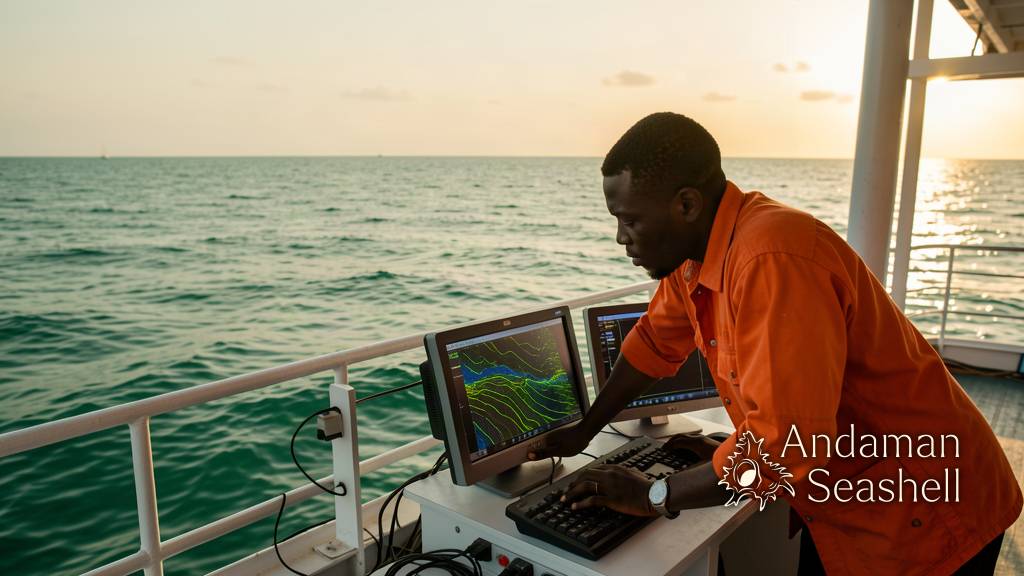
In 2025, Zinzindohoué's team — part of the Coral Reefs Rediscovering and Exploration project in Benin (COREB) — returned to the coordinates their predecessors had left behind. Guided by the decades-old records, they scanned 11.5 kilometres of seafloor with sonar until two areas lit up with reef-like signatures [ref:2].
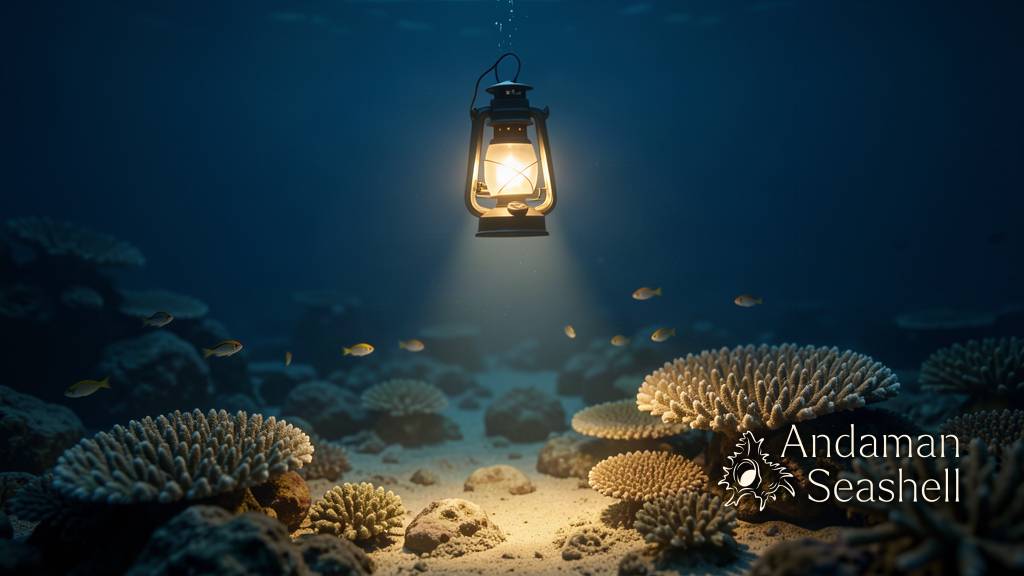
Then came the moment of truth. The team deployed an underwater drone together with the Deep Sea Camera System from the National Geographic Exploration Technology Lab — a low-cost autonomous rig that pairs a high-definition camera and lights inside a glass pressure housing, built to document seafloor biodiversity where research submarines rarely go [ref:2].
"That was a big moment for us, because suddenly we could actually see the seafloor," Zinzindohoué recalled. "I still remember seeing those first images. It was a mix of excitement and disbelief, because after all this time thinking about this reef, suddenly there was something real in front of us" [ref:2].
Who lives in the forgotten city
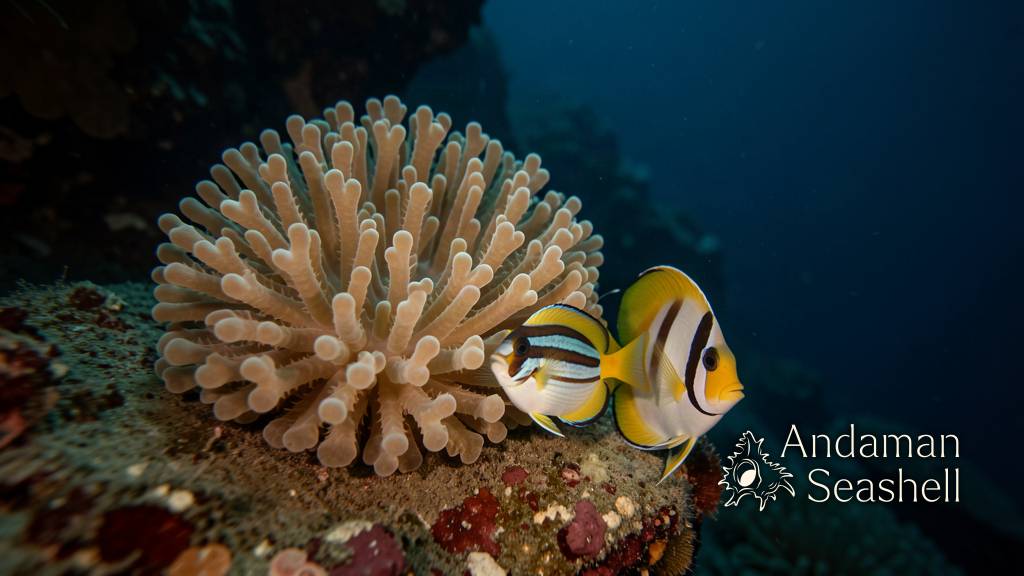
What the cameras revealed was a healthy, functioning community. The team recorded eight different types of coral growing in patches on suitable rock, and eight fish species using the reef for shelter and feeding: golden African snappers, blackbar soldierfish, Guinean angelfish, West African goatfish, the Monrovia doctorfish, three-banded butterflyfish, and two kinds of damselfish [ref:1].
To the researchers' knowledge, this is the first confirmed record of a living mesophotic coral ecosystem anywhere on the Gulf of Guinea continental shelf [ref:1]. And the best part? The historical reports suggest the reef may be part of a continuous coral barrier stretching roughly 40 kilometres parallel to the Beninese coast — of which the team has so far surveyed only a small section [ref:1].
An archive we have only just opened
The discovery, published in the journal Frontiers in Marine Science, is formally titled First evidence of live mesophotic coral reefs on the Benin continental shelf [ref:1]. The scientists are careful about what comes next: no physical samples have been collected yet, so the coral identifications still need confirmation, and further surveys will show whether neighbouring waters hide more forgotten gardens [ref:1].
"If we were able to find this reef again after 60 years, how many others are still undocumented or simply forgotten?" Zinzindohoué asked — adding, with a scientist's honesty, that each new reef must be confirmed by going back into the field, because without that, "we are really just guessing" [ref:1].
His closing image is the kind that stays with you: "It feels like we have only just started to read an archive that has been there for a very long time" [ref:2].
Somewhere in the world's overlooked corners, the ocean is holding its own quiet gatherings — patient, alive, and waiting for someone to come back and say hello.


No comments yet. Be the first to share a thought.