



A shopkeeper in Phuket Town sets three small things on a tray before sunset: a candle, three incense sticks, and a tight pink lotus bud. Around her, families in white shirts are doing the same, getting ready for wian tian — the gentle candlelight walk around a temple hall that makes late July feel beautifully human on the Andaman coast.
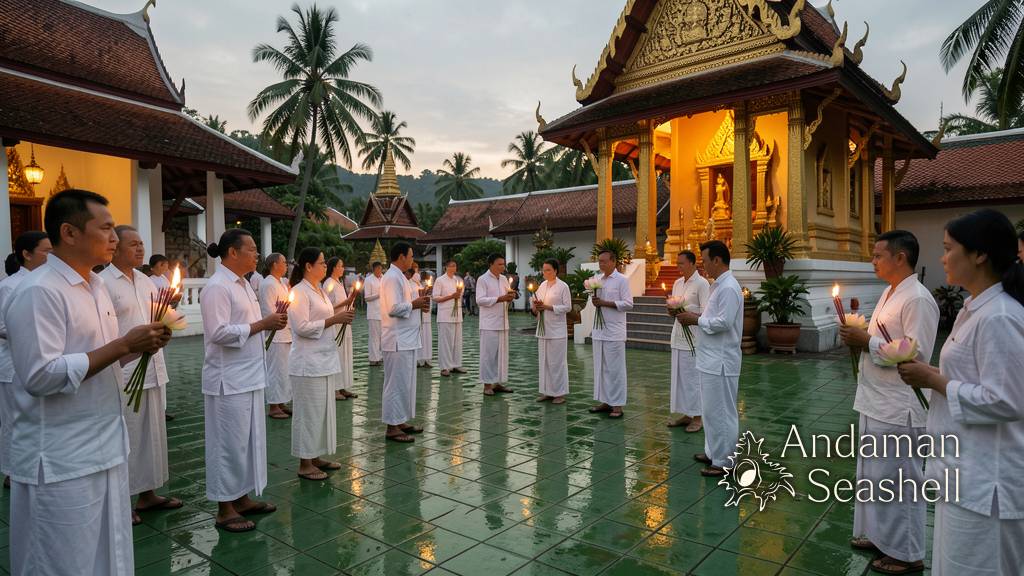
This year, the rhythm is easy to mark on the calendar. Asalha Bucha falls on Wednesday, July 29, 2026, followed by Khao Phansa on Thursday, July 30, the start of the three-month Buddhist Rains Retreat in Thailand [ref:1]. Phuket listings highlight temple ceremonies, merit-making, candlelight processions, and places such as Phuket Town and Wat Chalong as meaningful settings for visitors who want to observe with care [ref:2].
What the two days celebrate
Asalha Bucha, also written Asanha Bucha or Asahna Bucha, remembers the Buddha’s first sermon and the beginning of the monastic community. In everyday travel terms, it is one of the loveliest times to see how Thai families turn faith into shared gestures: arriving at the temple, offering flowers, listening quietly, and walking together by candlelight.
The next day is Khao Phansa, often called Buddhist Lent in English. It opens the Phansa or Rains Retreat, a three-lunar-month period when monks traditionally stay within their temple grounds for study, meditation, and community practice [ref:3]. The season fits southern Thailand beautifully: green-season showers, softer evenings, and an atmosphere that invites people to slow down.
The candle is the souvenir of the moment
For Andaman Seashell readers, the most beautiful detail is also the simplest: the candle. Long before electric lights, candles offered useful brightness during the rainy months. Today, giving candles to a temple remains a graceful act of merit. It is practical, symbolic, and handmade-feeling all at once.
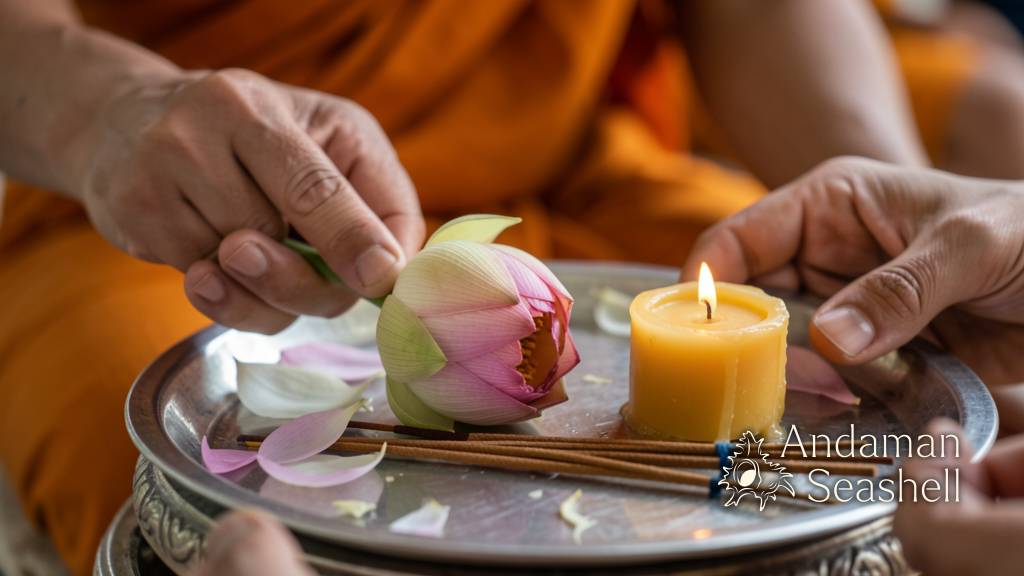
Look closely at the tray and you will see a whole design language: lotus petals folded into neat points, marigold orange against white wax, incense bundled like slender reeds, and the warm reflection of flame on polished metal. It has the same quiet appeal as a well-chosen souvenir — not loud, not expensive, just carrying the memory of a place and a moment.
Across Thailand, the candle tradition can become grand and sculptural. The Ubon Ratchathani Candle Festival is the famous example, with major 2026 dates listed around July 29–30 [ref:4]. Phuket and Phang Nga offer the more intimate version: temple courtyards, local families, soft voices, and a line of small flames moving together.
How to join respectfully
Visitors are welcome when they arrive with a light touch. Dress with shoulders and knees covered, step out of shoes where requested, and keep phones low and quiet. If a procession is moving, stand to the side until you understand the flow. If you join, walk calmly around the main hall with the group, usually three times, holding candle, incense, and flower.
A few practical notes make the evening smoother. Many businesses remain open, but government offices and some services may follow holiday patterns. Alcohol sales are commonly suspended around these important Buddhist days, so plan meals and evening expectations accordingly [ref:1]. The point is not inconvenience; it is the country making room for a shared sacred pause.
A gentle Andaman night to remember
In Phang Nga, the same spirit can be felt at local temples after a rain shower, when the stone paths hold a soft sheen and the air smells of leaves. In Phuket, Wat Chalong may draw more visitors, while smaller neighborhood temples can feel more local and spacious. Both versions are worth appreciating.
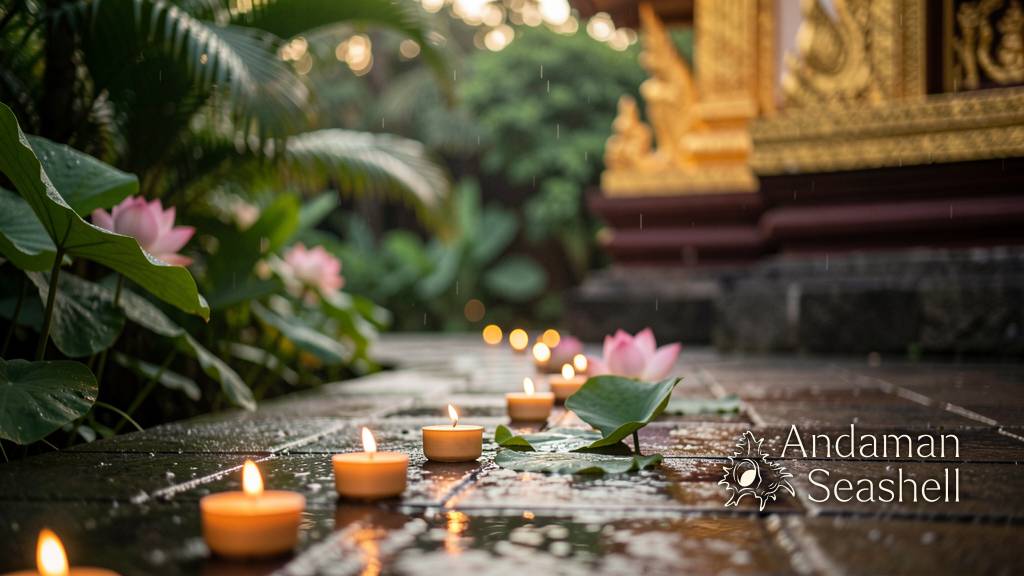
The best way to carry the evening home is not as a checklist of sights, but as a small memory: a flame sheltered by two hands, a lotus opening on a tray, a family walking slowly together. July’s candlelight reminds the Andaman coast that beauty often arrives softly — and stays with us because we were quiet enough to notice.


No comments yet. Be the first to share a thought.