



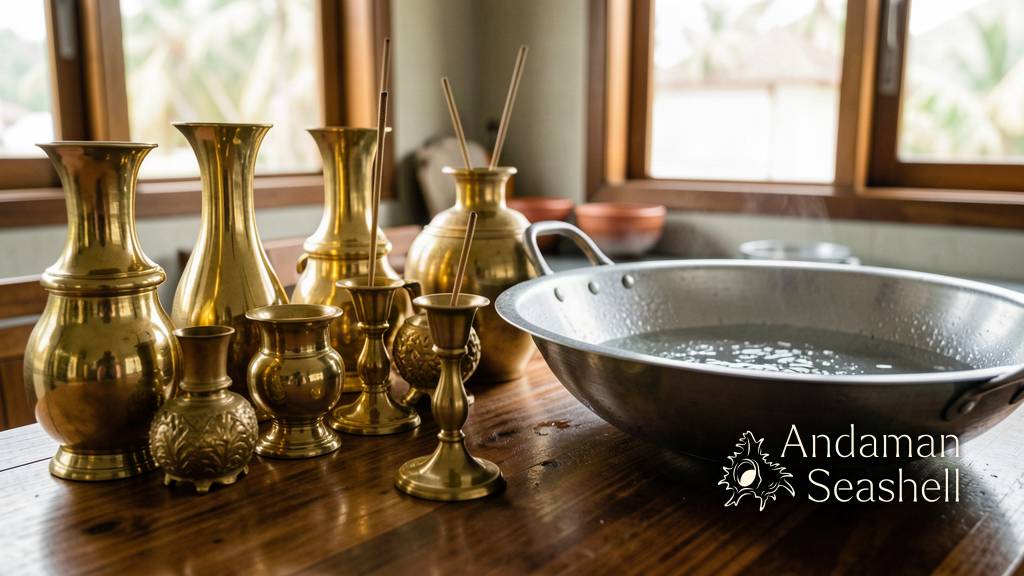
On Sunday morning, 4 October, the shrines of Phang Nga town smelled of brass polish and clean water. At Mae Ma Jor Po shrine and Seng Khi Than shrine, neighbours arrived with buckets and cloths to wash the courtyard floors, scrub the statues, and polish every brass vase, incense holder and candle stand until the whole hall gleamed [ref:1]. The festival they are preparing for — Phang Nga's own Vegetarian Festival, running 10–18 October 2026 — is still six days away, but in this province the celebration begins with a scrubbing brush.
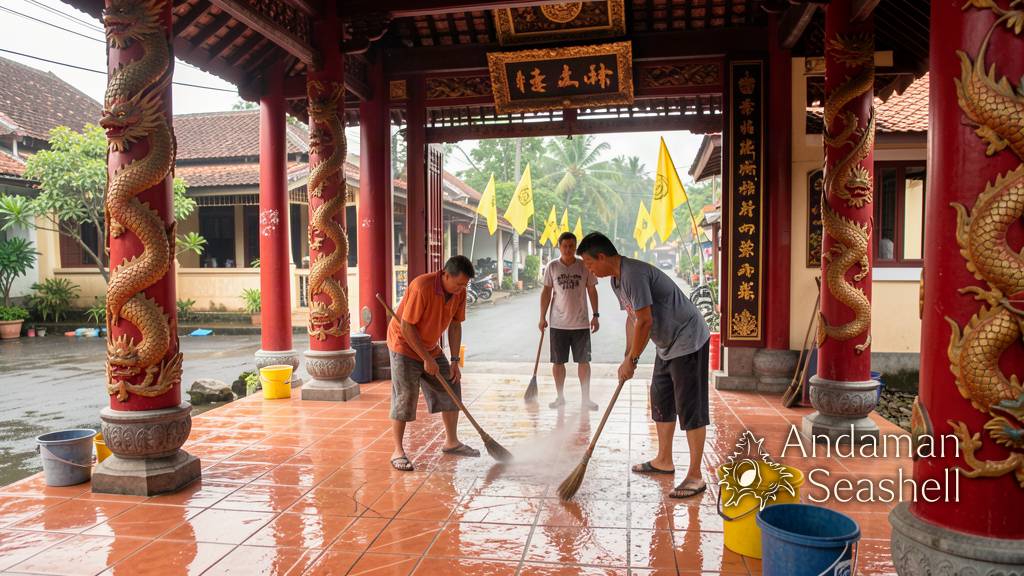
The washing of the shrines
Locals call it lam am — the washing of the shrine. Before the nine-day observance begins, every surface that will touch the rituals gets a fresh start: the ceremonial courtyard out front, the statues, and inside the halls, all the metalware is brought out and buffed to a shine. The shrine kitchens get the same care. Plates, bowls, ladles, pots and the great cooking woks are all washed and stacked, ready to prepare jay food that the shrines will hand out free to devotees for all nine days of the festival [ref:1].
It is preparation as devotion: nobody is paid, and everybody shows up.
Nine lanterns on a tall pole
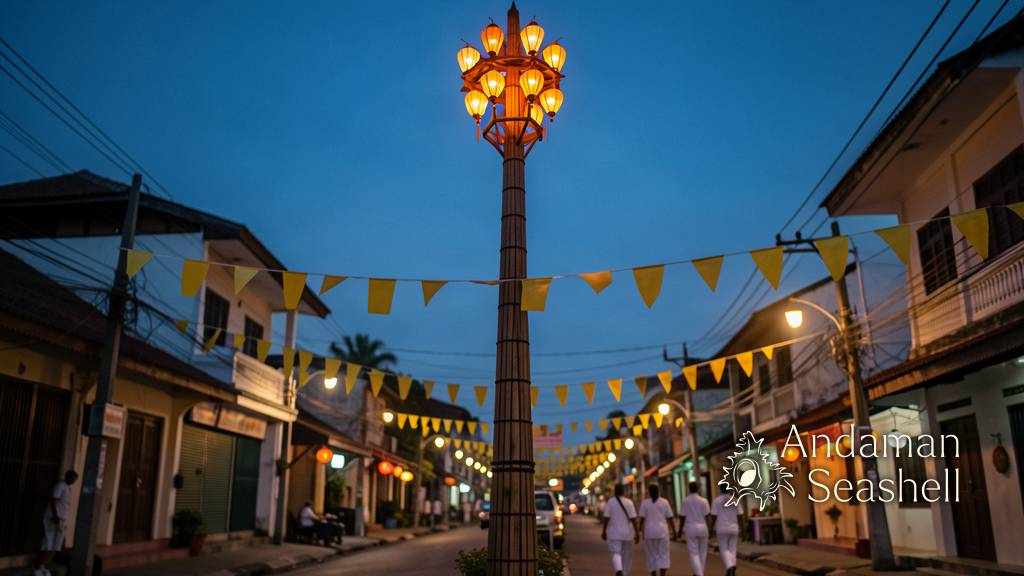
Out on the streets, the town is changing colour. Roads along the procession routes — where the iew keng ceremony will carry the gods through town — are already hung with yellow flags, the bright signal that the season of the Nine Emperor Gods has arrived [ref:1].
The official opening falls on Friday, 9 October at about 5pm, when the shrines raise the Go Teng pole: a tall lamp-post carrying nine lanterns, one for each night of the festival. For nine days that soft glow marks the heart of each shrine community, and the pole comes down on 19 October at around 3pm, closing the observance [ref:1]. The dates follow the first nine nights of the ninth lunar month, which is why the festival wanders across the October calendar each year.
Takua Pa: a hundred years of white clothes
The soul of the province's festival beats loudest in Takua Pa, the old tin-mining town just inland from Khao Lak. Here the tradition of the nine-day observance — known locally as jeea chai — has been carried on for more than a hundred years [ref:2]. In a recent festival, twenty-nine shrines and jay houses joined the town's programme, and the opening parade sent a procession of eighteen vegetable-and-fruit trucks circling the old town, past Wat Yan Yaw and the municipal office [ref:3].
The food is the memory of the festival. Takua Pa's shrine cooks are known for vegan phalo "pork" braised in spice, spicy tofu salad, and red-broth tofu — recipes handed down through generations of shrine volunteers [ref:2]. Even the tourism office joins in: in 2024, TAT Phang Nga welcomed visitors with free white festival trousers at 35 hotels across Khao Lak and the province, for the first 2,500 guests who checked in [ref:2].
How to be a good guest
Joining is wonderfully simple. Wear white if you can — the whole town does. Look for the yellow flags, which mark stalls serving certified jay food, free from meat and strong-flavoured ingredients. Eat slowly, greet the shrine volunteers, and if you visit a shrine, keep your voice gentle and your shoulders covered. Morning is when processions move and the kitchens are busiest; evening, under the Go Teng lanterns, is when the towns feel softest.
Phuket's festival is famous, and rightly so. But this October, the quieter version next door — brass polished by hand, woks scrubbed by neighbours, nine lanterns raised against the evening sky — is Phang Nga's own invitation.


No comments yet. Be the first to share a thought.