



Nine Days of Yellow Flags: Phuket's Vegetarian Festival Returns 10–18 October
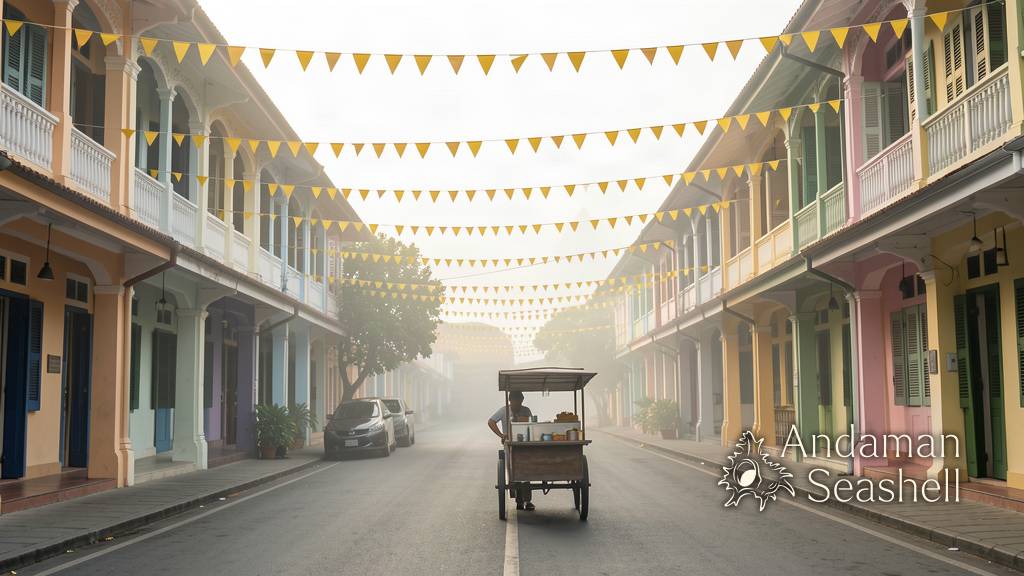
At six in the morning on Ranong Road, before the island has properly woken, a frying pan the size of a cartwheel is already singing. The vendor twists long ropes of dough in pairs and lowers them into hot oil, and within minutes Phuket's favourite breakfast — kanom see ka (ขนมสี่ขา), the island's own version of Chinese crullers — is gone, bought up by early risers who know the rule of festival season: the best mornings start before the sun clears the shophouses.
From 10 to 18 October 2026, Phuket hosts its famous Vegetarian Festival, nine days when the whole island leans into the aromas of mock-duck buns, jasmine rice congee and grilled banana-leaf parcels [ref:1]. The Tourism Authority of Thailand confirms the dates on its official festival calendar, and locals have been readying their woks for weeks.
A festival with a story — and a name only locals use
The festival's full name is the Nine Emperor Gods Festival, held in the ninth lunar month of the Chinese calendar. Its origin story is pure Phuket: in the early 1800s, a travelling Chinese opera troupe fell ill with malaria on the island. They credited their recovery to a strict plant-based diet and rituals honouring the Nine Emperor Gods — and a tradition was born that has shaped the island's calendar ever since [ref:3].
Here is a detail that will win you smiles from Phuket locals. In Bangkok, everyone calls it kin jay (กินเจ). On this island, many families still prefer kin pak (กินผัก) — "eating vegetables" — or jia chai, the Thai-Hokkien phrase carried over by the descendants of Chinese settlers [ref:2]. Say gin pak at a stall on Ranong Road and watch the vendor's face light up.
Follow the yellow flags
The festival has a simple built-in navigation system: small yellow flags with red Thai or Chinese characters, marked with the เจ symbol. Wherever you see one, festival-compliant food is being sold — no meat, no animal products, prepared with extra care [ref:3]. During festival week the flags multiply until whole streets glow saffron.
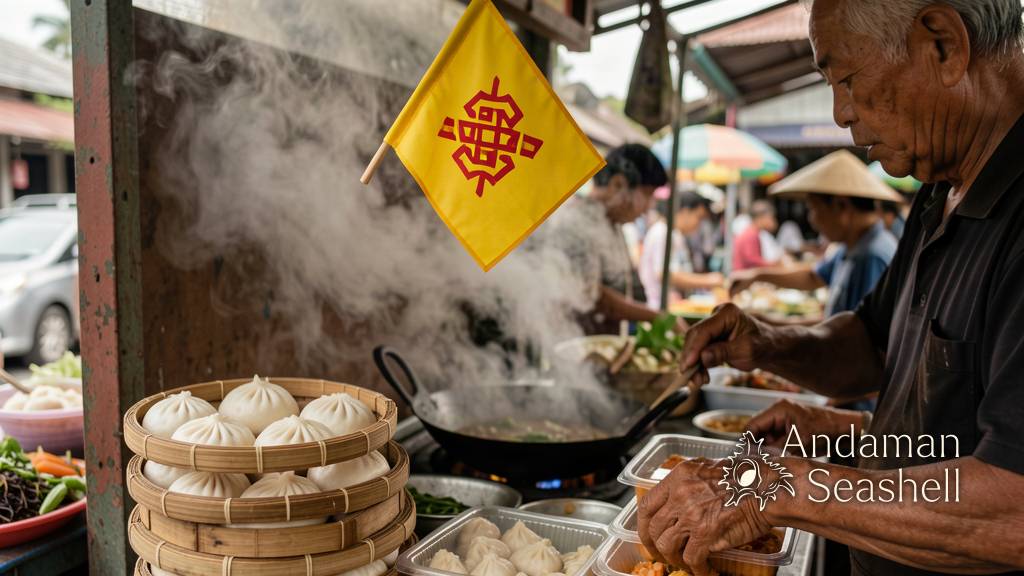
The heart of it all is Phuket Town. The largest cluster of vendors runs along Ranong Road, starting just past Ranong Main Market and stretching all the way to Patiphat Road, with more stalls tucked down side lanes like Soi Phuthorn near Jui Tui Shrine. Food appears from early morning until late at night — though the road turns pedestrian-only in the evenings, which is when the lanterns come on and the whole lane feels like a street party [ref:2].
Five shrines, five flavours of wonder
The festival lives around Phuket's Chinese shrines, each with its own character:
- Jui Tui Shrine — one of the most important festival shrines, where the pole-raising ritual opens the celebrations and many processions begin
- Kathu Shrine — considered the birthplace of the festival, a short ride from town, with food vendors lining the road outside
- Bang Neow Shrine — established in 1904, famous for its dragon pillars and a large statue of Kuan Yin, the Goddess of Mercy
- Lor Rong Shrine — known for its beautiful courtyard and murals of Chinese folklore
- Sam Kong Shrine — dedicated to Guan Yu, and home to one of the biggest fire-walking ceremonies [ref:3]
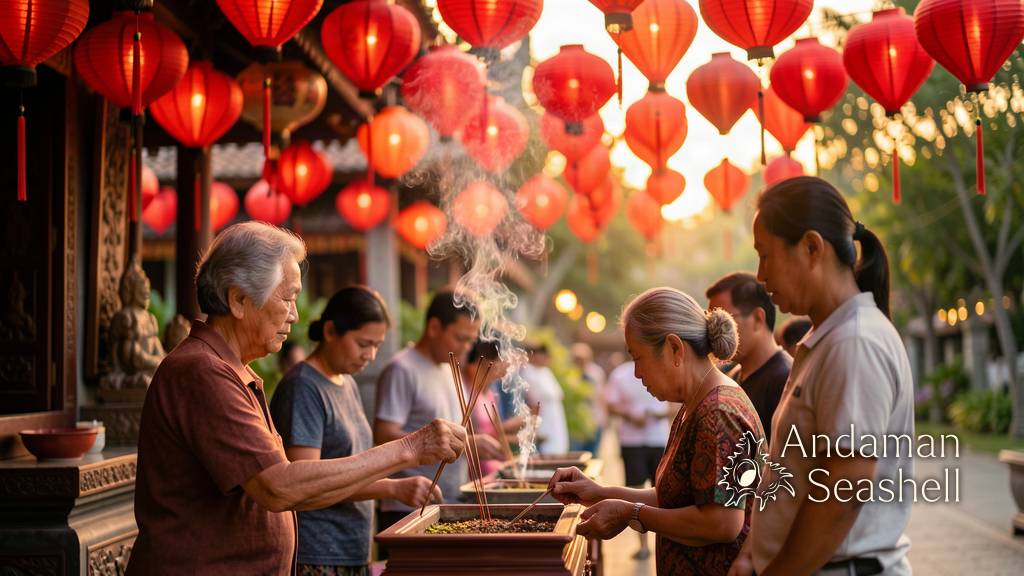
Alongside the food streets, these shrines host extraordinary displays of devotion — street processions, fire walking and ladder-climbing rites that draw communities together in drumbeat and incense. Even as a quiet observer, you are welcome to watch with respect and wonder.
An easy autumn trip from our coast
If you are based in Khao Lak, Phang Nga or anywhere along our stretch of the Andaman, this is one of the easiest festival trips of the year — an hour or so across the bridge, no flights needed. Come for a morning of crullers and congee, stay for the evening lanterns.
A few tips from festival regulars: go early for the best breakfast stalls; carry small notes; look behind the street stalls, where permanent jay restaurants offer sit-down meals; and in the beach towns, temporary jay stands pop up in the evenings — Patong's Rat-U-Thit Road, Karon's Soi Old Phuket and Kata's night market, roughly from five to eleven at night [ref:2][ref:3].
However you join in — nine days of yellow flags, or just one golden morning on Ranong Road — the festival's gift is the same: a taste of a community honouring its heritage, one warm bowl at a time.


No comments yet. Be the first to share a thought.