



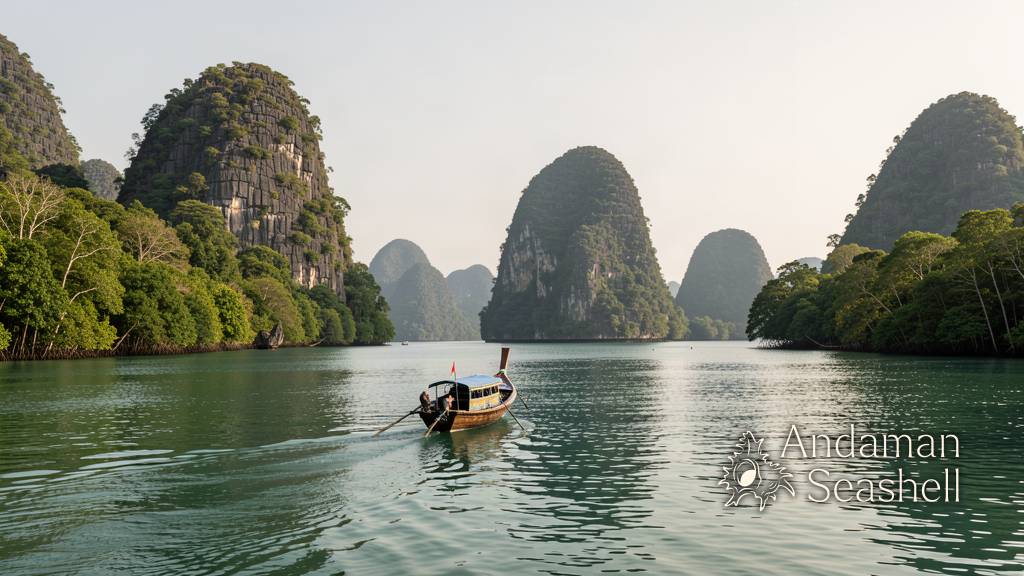
Samet Nangshe is at its kindest just before sunrise. The bay is still dark blue, the limestone peaks look like folded paper against the horizon, and little fishing boats begin their morning lines below the viewpoint. It is exactly the sort of moment that helps explain why Booking.com included Phang Nga among its Most Welcoming Regions on Earth for 2026, based on its Traveller Review Awards.[ref:1]
That recognition was not a small lifestyle list. Booking.com said the 2026 awards drew on more than 370 million verified traveler reviews and honored 1.81 million partners across 221 countries and territories.[ref:1] In Thailand alone, 16,692 travel partners received awards, with an average review score of 8.8, according to Booking.com’s Thai-market summary carried by The Nation.[ref:2] Numbers like that do not tell you everything about a place, but they do suggest that Phang Nga’s warmth is showing up consistently in real stays, real rides, and real arrivals.
A welcome you can see at dawn
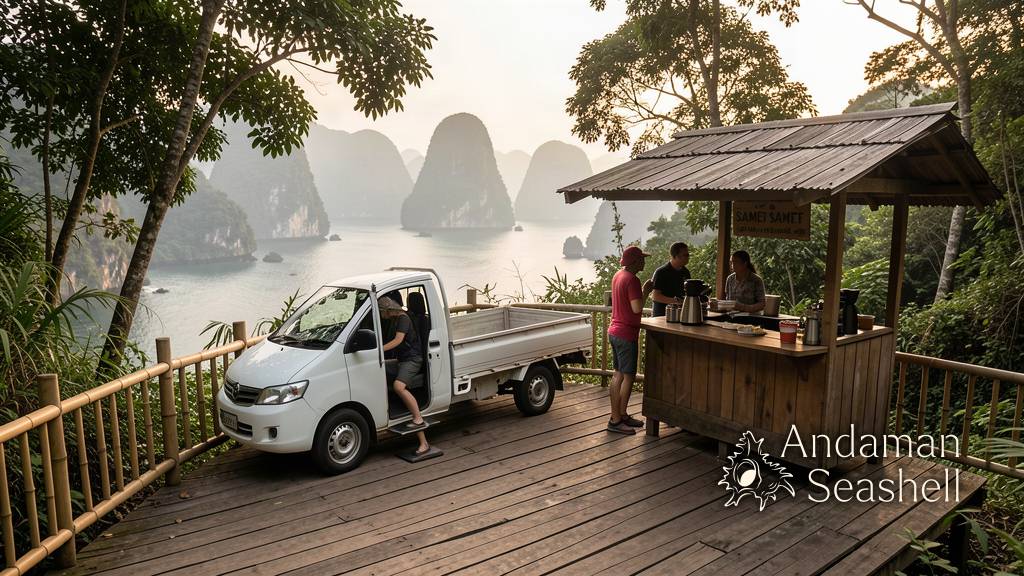
One of the clearest examples is Samet Nangshe Viewpoint in Takua Thung. The official Tourism Authority of Thailand page describes it as an 800-metre-high viewpoint above Phang Nga Bay, with two main viewing spots.[ref:3] The first is only a 300-metre walk from the boutique campsite area, while a second viewpoint sits another 500 metres farther on.[ref:3] If you do not want to walk the steep slope, there is a local shuttle system: 60 baht to the first viewpoint, 90 baht to the second, or a 30-baht conservation fee for visitors who choose to walk up themselves.[ref:3]
That combination of beauty and practical care matters. A welcoming destination is not only photogenic; it helps people arrive gently. In Phang Nga, even the logistics feel human-scaled. The shuttle trucks, hillside coffee stops, and easy sunrise rhythm make the morning feel shared rather than staged.
The bay is grand, but it stays personal
The next reason Phang Nga feels generous is the shape of the bay itself. Ao Phang Nga National Park covers about 250,000 rai, or roughly 100,000 acres, across Mueang Phang Nga, Takua Thung, and Ko Yao districts.[ref:4] It was declared a national park on 29 April 1981.[ref:4] TAT also notes that the bay is known for large and small islands, white-sand pockets, clear water, and archaeological traces believed to be more than a thousand years old.[ref:4]
Yet the most charming fact may be the one about pacing: the destination guidance includes a tourist limit of 1,600 people per day.[ref:4] That detail turns hospitality into something practical. The bay is not being treated as a place to rush through; it is being protected so that the quiet, the kayaking routes, and the sense of space can still be felt. Even the standard foreigner entrance fee — 300 baht for adults and 150 baht for children — signals that this is an organized national-park visit rather than a vague scenic stop.[ref:4]
Then there is Khao Lak, where the welcome stretches out
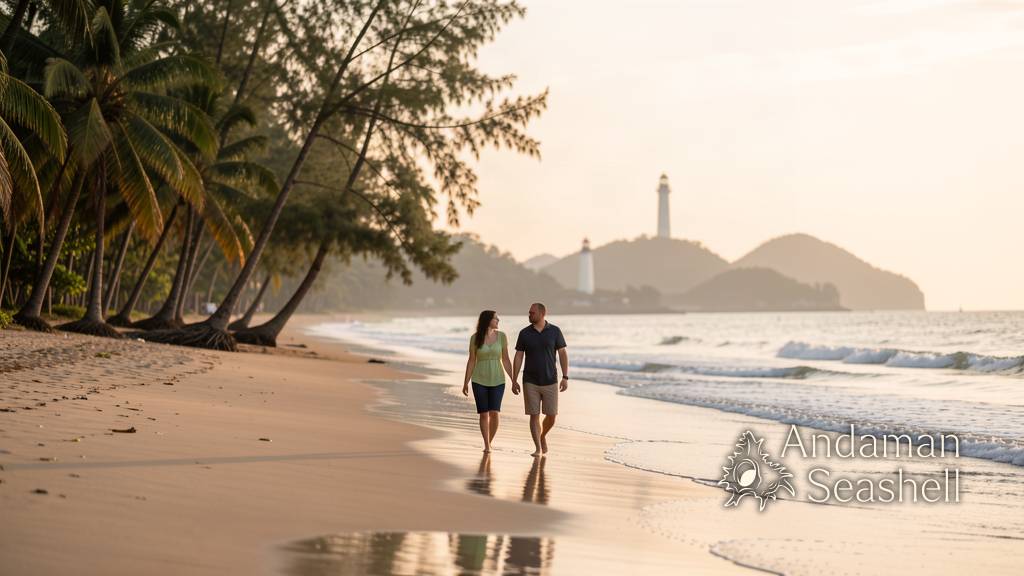
If Phang Nga Bay feels like an embrace of islands and mangroves, Khao Lak feels like a long exhale. TAT describes the Khao Lak Coast as a long stretch running from the bottom of Ban Nam Khem to Khao Lak-Lam Ru National Park.[ref:5] The coast is lined with wide sandy beaches, fir and coconut trees, and rock formations that break up the shore in soft intervals.[ref:5] The same page notes that the water is good for swimming and paddling, and that the area is widely known as Thailand’s “Surf Town.”[ref:5]
That helps explain why welcoming can mean different things here. For some travelers, it is a dramatic sunrise deck above the bay. For others, it is the simple comfort of a broad beach at Khao Lak, where you can walk, paddle, pause for coffee, and stay as long as the light is good. TAT’s wider province guide also reminds readers that Phang Nga sits 788 kilometres from Bangkok and is celebrated for both spectacular bay scenery and island groups such as Similan and Surin.[ref:6] In other words, this is not a one-view destination. It is a whole rhythm of coast, forest, caves, islands, and community hospitality.
A useful way to enjoy the award
The nicest way to read Phang Nga’s 2026 recognition is not as a trophy, but as an invitation. Go early to Samet Nangshe for the softest light. Choose one bay outing instead of trying to conquer the whole park in a hurry. Leave time for Khao Lak in the late afternoon, when the shoreline opens up and the day stops asking anything from you.
That is probably why the award feels believable. Booking.com’s methodology required accommodation partners to hold an average review score of 8.0 or higher from at least three reviews, and city or region lists also needed at least 200 award recipients.[ref:1] Phang Nga did not land on the 2026 list by accident. It earned its place by making travelers feel looked after in many small, repeatable ways.
And that may be the region’s real souvenir this year: not only lovely views, but the calm feeling that a place has made room for you.


No comments yet. Be the first to share a thought.