



Thailand Just Picked Its Favourite Phuket–Phang Nga Weekend — and You Can Copy It in Two Days
On 30 August 2026, a small group of writers, creators and tourism professionals climbed the Samet Nangshe viewpoint in the dark and waited. As first light spilled over Phang Nga Bay, dozens of limestone islands emerged from the mist below them like a mountain range set down in the sea. They were standing on the opening stop of a route the Department of Tourism has chosen to show the world how Thailand thinks modern travel should feel: a little wonder, a little work, and a lot of community.
The occasion was the launch of the 10+10 MICE Adventure: Work Hard × Play Smart campaign, which pairs Thailand's biggest business-travel destinations with nearby nature and community-based experiences. The Phuket–Phang Nga pilot was previewed on a two-day, one-night trip at the end of August, charmingly titled "Cruising Phang Nga Bay and Exploring Bang Rong Village Gardens" — and every single stop on it is something an ordinary traveller can do this weekend, no conference badge required [ref:1].
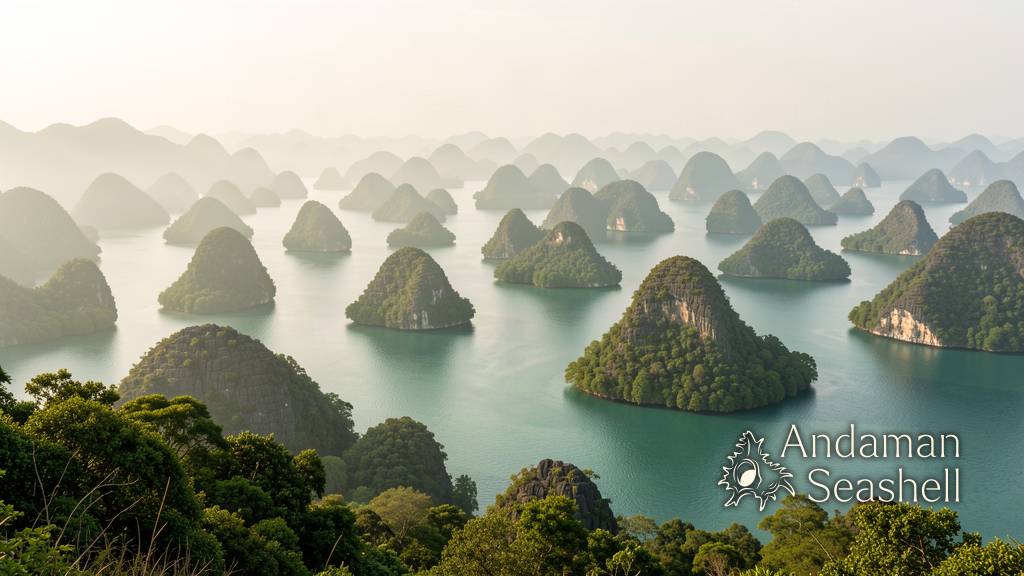
A route chosen for the world, built by villagers
Ten pilot routes are being promoted under the campaign, from Chonburi–Rayong in the East to Phitsanulok–Sukhothai in the North. But the Andaman coast's entry is the one that reads like a love letter to the region: a viewpoint, a fishing village, a bay full of islands, and a farm village on Phuket — all within about an hour of each other [ref:2].
The first day belongs to Phang Nga. After the sunrise at Samet Nangshe — arguably the most photographed dawn on the Andaman coast — the group drove down to Ban Sam Chong Nuea, a community-based tourism village in Kalai subdistrict, Takua Thung. This is a Muslim fishing community of roughly 100 households on the cliff side and about 250 more on the island side, named after the three canals — khlong sam chong — that meet there. Village life has revolved around the bay for more than two centuries [ref:3].
Into the green tunnels
The village's signature experience is the one the tourism officials came for: slipping into a kayak and paddling through a tunnel cut naturally through the mangrove forest, roots arching overhead, sunlight flickering on the shallow water. The group also took part in a mud crab release at the village's conservation area — a small, joyful ritual in which crabs raised in the community's crab bank are returned to the mangroves to grow [ref:1].
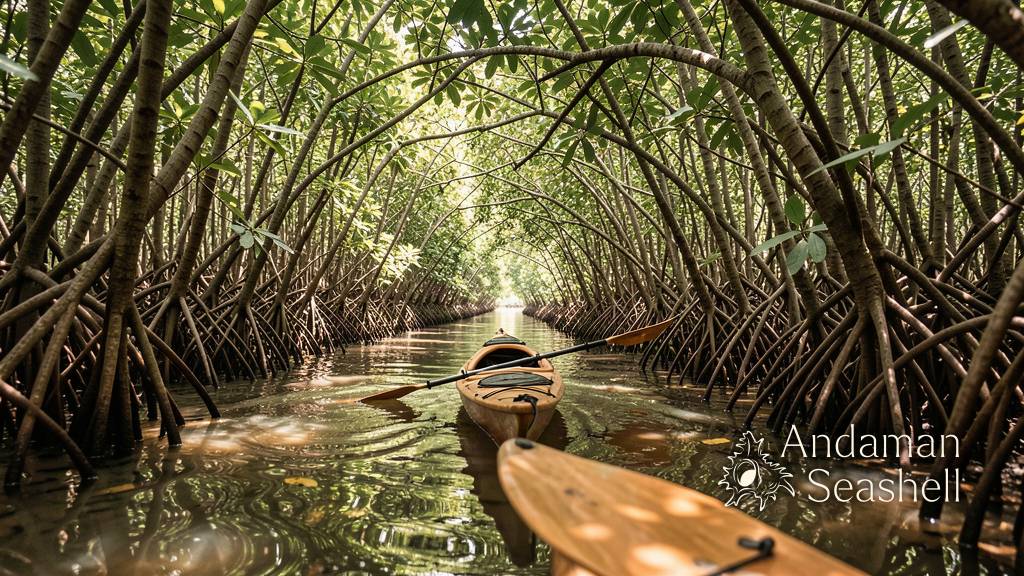
Back on the water, a longtail boat carried everyone across the bay past Diamond Coral Cave, the twin peaks of Khao Song Phi Nong, the famous nail-shaped Khao Ta Pu, and Nakaya Island — one of the filming locations of Jurassic World: Rebirth. Keep an eye out, too, for the village's beloved "love trees": two mangrove trees standing alone in the sea, visible at low tide for around 70 years now, then quietly disappearing under the water for six to eight hours when the tide rises [ref:2][ref:3].
Pineapples, rubber and golden jam
Day two crossed to Phuket and the Ban Bang Rong community in Thalang, where the group learned to tap rubber the traditional way, harvest Phuket pineapples — a geographical-indication product famous for their sweetness — and simmer their own pineapple jam, followed by coconut-based desserts made from a local family recipe [ref:1]. The programme ended at The Lake Phuket Elephant Home, where participants prepared food for the elephants and watched them bathe.
How to copy the route yourself
The beauty of this itinerary is that none of it needs a delegation. A few local notes from the villages themselves:
- Getting there: Ban Sam Chong Nuea's pier at Hua Thanon is about 43 kilometres — roughly 40 minutes — from Phuket airport, and the island-side village is a short boat hop from the shore.
- Stay over: Homestays by the water let you catch both the sunrise and the sunset over the bay, which locals sum up with a smile as "stay one night, live longer by a year" [ref:4].
- Bring home: The village makes soaps, shampoo, tea and balm from the sea-holly herb (acanthus), a product line that won first prize among 14 southern provinces — and hand-dyed fabrics coloured with natural dyes from three mangrove species [ref:4].
Whether Thailand's meeting planners take up the offer or not, the route has already given the rest of us a gift: a two-day plan, tested by the people whose job is to know, through villages that have been perfecting their welcome for generations.
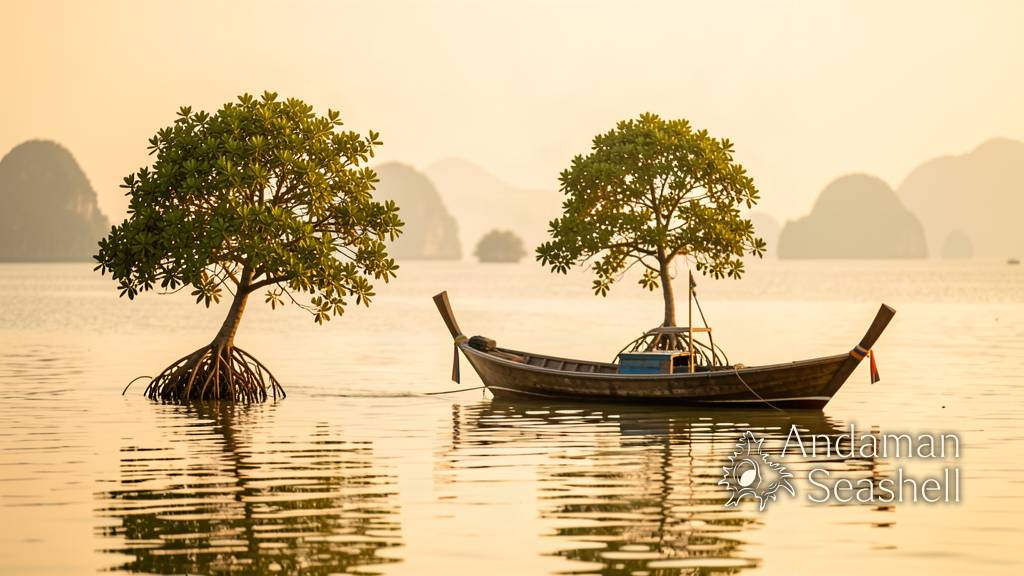
The tide will come in, the love trees will vanish for a few hours, and the bay will keep its quiet appointment with tomorrow's sunrise. All you have to do is be standing at Samet Nangshe when it happens.


No comments yet. Be the first to share a thought.