



The easiest Phang Nga Bay upgrade is an early alarm
At 7am, Phang Nga Bay feels less like a checklist and more like a living landscape. The cliffs hold the first soft light, the water stays calmer inside the limestone ring, and famous viewpoints still have room to breathe. That simple shift in timing is now one of the most useful travel tips for visitors who want the bay’s beauty without the mid-morning squeeze of tour traffic.[ref:1]
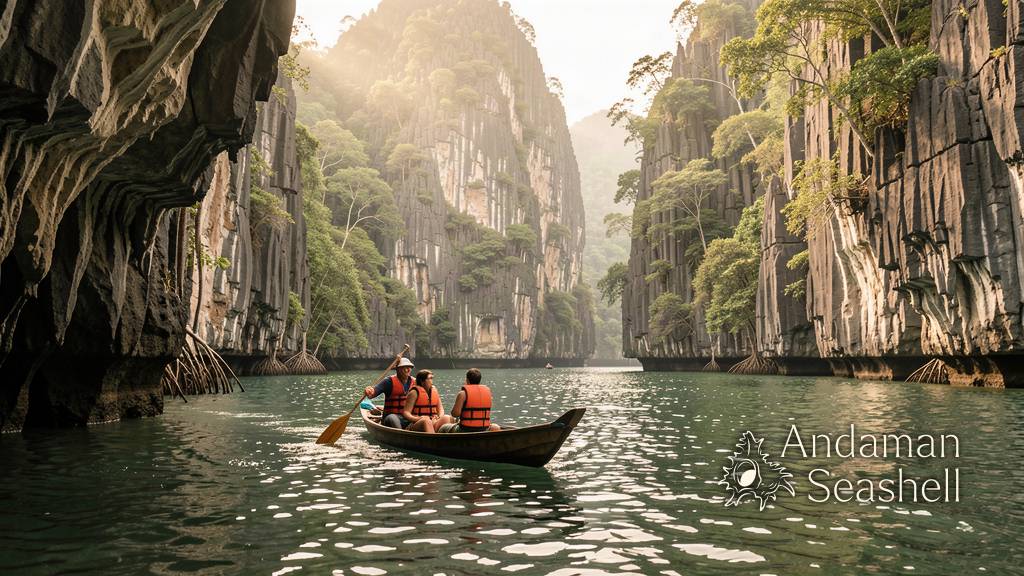
Ao Phang Nga National Park already gives travelers a remarkable setting to work with. The protected area covers about 250,000 rai, or roughly 100,000 acres, across Mueang Phang Nga, Takua Thung, and Ko Yao districts, and it has been a national park since 29 April 1981.[ref:2] The Tourism Authority of Thailand also notes a daily visitor cap of 1,600 people, which shows just how carefully managed this famous bay has become.[ref:2] In other words, timing is not a gimmick here. It is part of how the place is experienced.
Why the clock changes the whole journey
A recent Phuket News travel feature described a route that leaves Boat Lagoon Marina at around 7am and reaches the bay in about 45 minutes by speedboat.[ref:1] That matters because Ko Tapu, the nail-shaped limestone pillar most travelers know as James Bond Island, is one of the most photographed points in southern Thailand. By mid-morning, many boats are aiming for the same angle. Earlier arrivals get something better than a photo slot: they get space to walk, pause, and actually look around.[ref:1]
The same report says some early-start trips cap groups at 18 adults, while larger boats on comparable routes may carry 30 to 60 passengers.[ref:1] That difference changes the rhythm of the day. Smaller groups move through short boardwalks and narrow viewpoints faster, and they spend less time queuing behind one another when the bay’s best-known stops are still quiet.
Ko Tapu itself is worth seeing with fresh eyes. TAT describes it as a limestone column around 20 metres high, with a base worn slimmer than the top by sea and weather.[ref:3] It became globally famous after appearing in The Man with the Golden Gun in 1974, but it still rewards close attention as a natural form, not only a movie landmark.[ref:3]
What you notice when you arrive early
The opening sections of many bay trips are often the most memorable. The Phuket News feature describes a mangrove-lined cave explored on foot before it opens into a hidden hong, then a canoe stage through sea caves and lagoons guided by local paddlers who understand the tides around the low entrances.[ref:1] That sequence explains why early departures feel so different: the bay is not only about one famous island, but about moving from shade to open lagoon, from mangroves to cliffs, from broad scenery to small details.
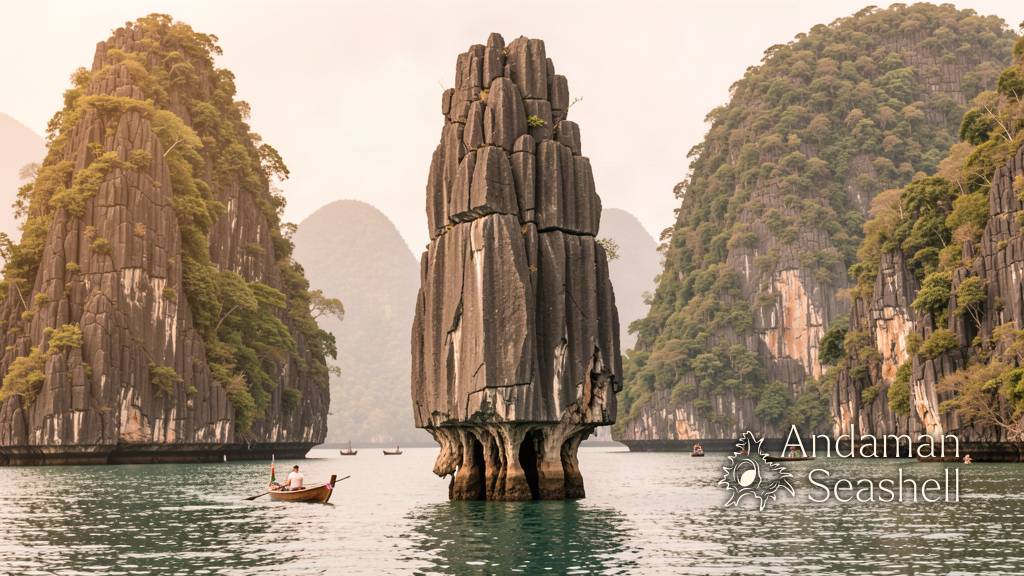
Nearby, Ko Phing Kan adds another geological surprise. According to TAT, it lies only 40 metres from Khao Tapu, and one of its twin rock masses leans toward the other at about 75 degrees.[ref:4] Seen together, the pair feel almost sculptural. One rises like a nail from the sea; the other tilts as if paused mid-motion. If you arrive before the later rush, you can appreciate those shapes as landscape first and landmark second.
There is a seasonal layer, too. The Phuket News report notes that November to April usually brings calmer seas and clearer views, while May to October trades some visibility for greener cliffs and softer light.[ref:1] That is a lovely reminder for green-season travelers: you are not visiting the bay in the “wrong” months. You are seeing a different version of it.
Practical details worth knowing before you go
Visitors who like to plan ahead should note that TAT lists the foreigner entrance fee for Ao Phang Nga National Park at 300 baht for adults and 150 baht for children.[ref:2] On the Khao Tapu attraction page, TAT separately lists adults at 300 baht and children at 100 baht, a reminder that package inclusions and attraction pages do not always present fees in exactly the same way, so checking the operator details before departure is smart.[ref:2][ref:3]
The Phuket News feature also says one all-inclusive early-start package was priced at ฿4,500 per person and included hotel transfers, a light breakfast, lunch, national park fees, and free cancellation up to 24 hours before departure.[ref:1] The same operator has run day tours since 2005 and holds TAT licence 34/02111.[ref:1] Even if you book elsewhere, those details are useful benchmarks when comparing routes.
The best tip is wonderfully simple
Phang Nga Bay does not need a secret island to feel special. It needs a little head start. When the cliffs are still pale with morning light, the water is gentler, and the famous stops have not yet filled, the bay shows its quieter side — one built from mangroves, limestone, tide-shaped passages, and the pleasure of not having to hurry.[ref:1][ref:2]
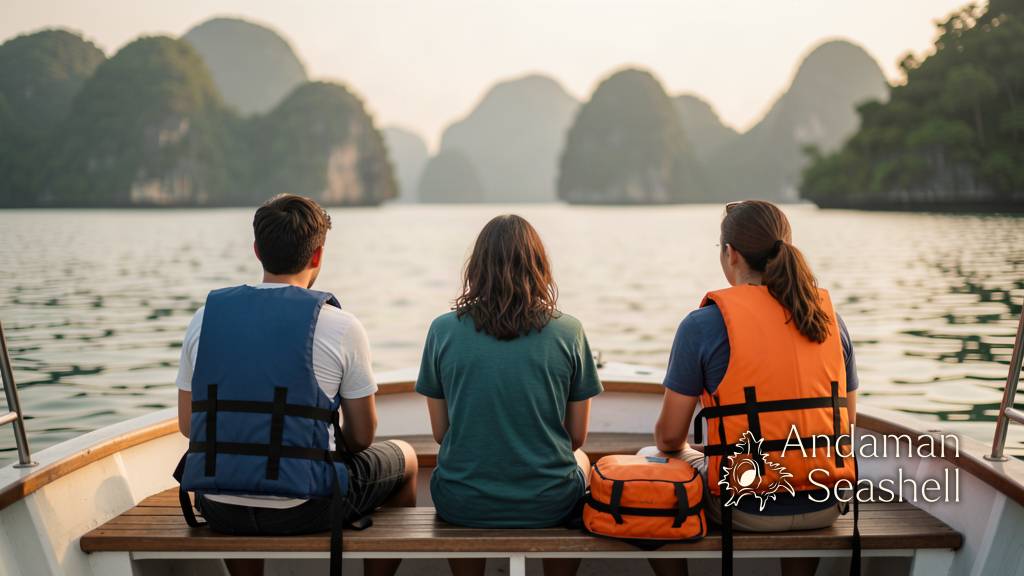
For visitors planning a 2026 trip from Phuket or Phang Nga, that may be the most valuable idea of all: choose the route that gives you time before the crowds, not just the route that promises the most names on an itinerary. In a place as photographed as this one, a calmer first hour can still make the whole day feel brand new.


No comments yet. Be the first to share a thought.