



On the morning of 2026-08-30, NASA plans to send the Nancy Grace Roman Space Telescope into space on a SpaceX Falcon Heavy from Launch Complex 39A at Kennedy Space Center. It is the kind of launch that feels instantly legible even if you do not follow every mission: one observatory, one bright window, and a promise to see the sky in a wider, richer way than before.[ref:1][ref:4]
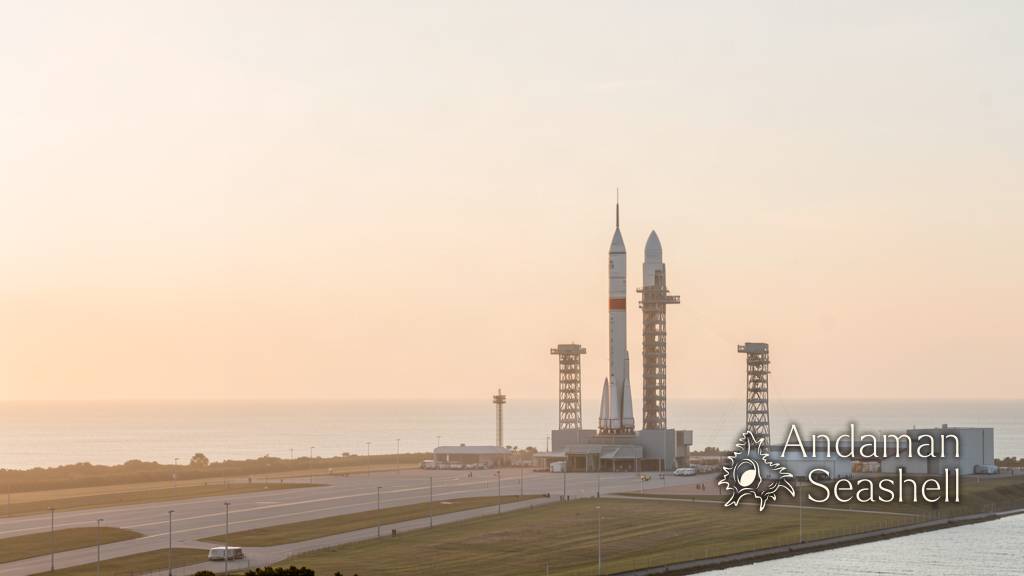
Roman’s charm begins with scale you can picture. NASA says the observatory will launch with a 2.4-metre primary mirror, the same size as Hubble’s, but with a field of view at least 100 times larger than Hubble’s. ESA’s Roman factsheet puts that wide look at 0.28 square degrees and notes that the mission can deliver Hubble-quality images across a dramatically broader patch of sky.[ref:1][ref:3]
A launch story already full of milestones
Part of the excitement is that Roman already feels real, not hypothetical. On 2026-07-25, technicians completed loading 290 gallons of hydrazine into the observatory at Kennedy’s Payload Hazardous Servicing Facility, a major step toward flight.[ref:2] NASA also says the mission is aiming to lift off nine months ahead of schedule, which is a lovely sentence to read in any space story.[ref:2]
After separation from the rocket, Roman will travel toward Sun–Earth L2, about one million miles from Earth — roughly four times the distance to the Moon. That is where several modern observatories like to work: far enough for a calm, stable view, close enough to stay in conversation with Earth.[ref:2][ref:4]
NASA’s FAQ adds another practical detail that makes the mission feel durable: Roman is designed for a five-year primary mission and carries enough fuel to support a possible five-year extended mission as well. The telescope uses that propellant not only to hold its orbit around L2, but also to keep its six solar array panels properly facing the Sun.[ref:2][ref:4]
Why astronomers are smiling about the camera
Roman is not just large; it is built to work wide. Its Wide Field Instrument is a 300-megapixel visible and near-infrared camera.[ref:3] ESA describes it as capable of producing images with Hubble-like quality while covering a much bigger area in a single look, which means Roman can do survey work with a kind of sweep Hubble was never designed for.[ref:3]

That matters because some of the universe’s biggest questions are not hiding in one perfect postcard frame. They are spread across huge star fields, giant galaxy maps, and long comparisons over time. NASA says Roman is built to tackle dark energy, the still-mysterious influence linked to the universe’s faster expansion, while also opening new routes into infrared astrophysics and exoplanet science.[ref:1][ref:4]
ESA adds another wonderfully concrete number: Roman could gather up to 20 petabytes of data during its five-year prime mission — the agency compares that to 10 million HD movies. That is not just a big archive. It is an invitation to pattern-hunting on a massive scale.[ref:3]
The planet-hunting trick that feels almost magical
Roman also carries a second instrument that gives the mission extra sparkle: a Coronagraph Instrument technology demonstration. Its job is to suppress a star’s glare so that much fainter worlds and dusty disks nearby can come into view.[ref:1][ref:3]
ESA says the coronagraph is designed to see planets a billion times fainter than their stars.[ref:3] NASA frames the same idea as a key step toward the future search for habitable worlds, because learning to directly image large exoplanets and planet-forming disks is part of learning how one day to study smaller, more Earth-like targets.[ref:1][ref:4]
There is another reader-friendly detail here: Roman’s data will not sit behind a velvet rope. NASA’s FAQ says there will be no proprietary period for the data and that 100% of observing time will be competed, which means astronomers around the world can get to work quickly and creatively.[ref:4]
A more panoramic decade ahead
What makes Roman feel especially joyful is that it is not replacing Hubble or Webb. It is widening the ensemble. Webb is brilliant at going deep. Roman is built to go wide. ESA even notes that Roman and Euclid will complement one another, with Euclid mapping very large regions and Roman digging deeper in infrared across a somewhat smaller but still expansive survey area.[ref:3]
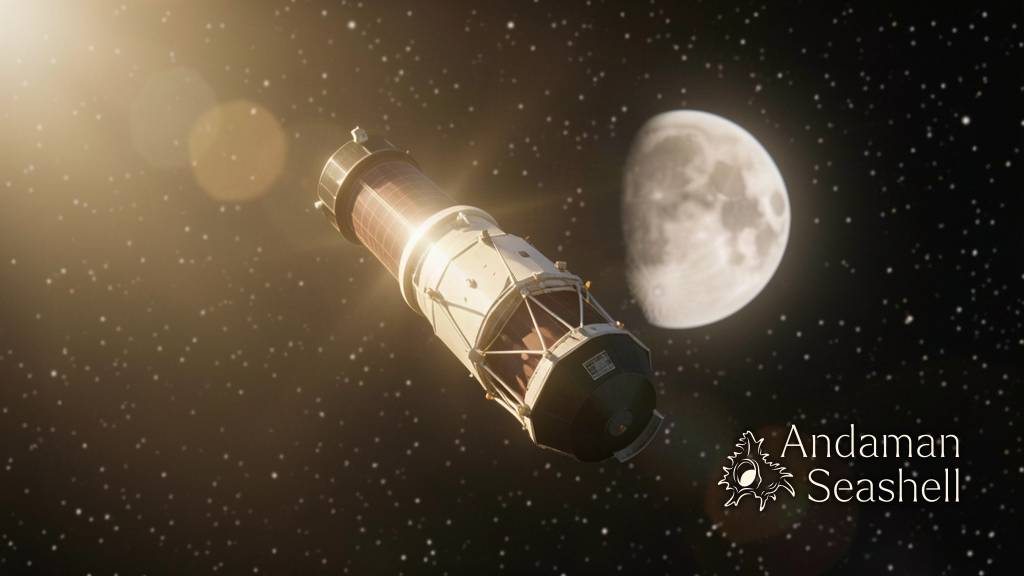
So when Roman finally rises at 7:26 a.m. EDT on Aug. 30, the emotional headline is simple: astronomy is about to gain a panoramic mode.[ref:1][ref:4] A Hubble-sized mirror, a 300-megapixel survey camera, a home a million miles away, and the patience for years of discovery add up to something beautifully modern — a telescope designed not just to capture a few famous pictures, but to help us notice how gloriously full the universe really is.


No comments yet. Be the first to share a thought.