



A late-summer evening is about to become a little bit magical. On 12 August 2026, the Moon will slide across the face of the Sun and draw a narrow path of totality across Russia, Greenland, Iceland, Portugal, and Spain—while a much larger partial eclipse spreads across most of Europe and even reaches parts of North America and northwestern Africa [ref:1][ref:2].
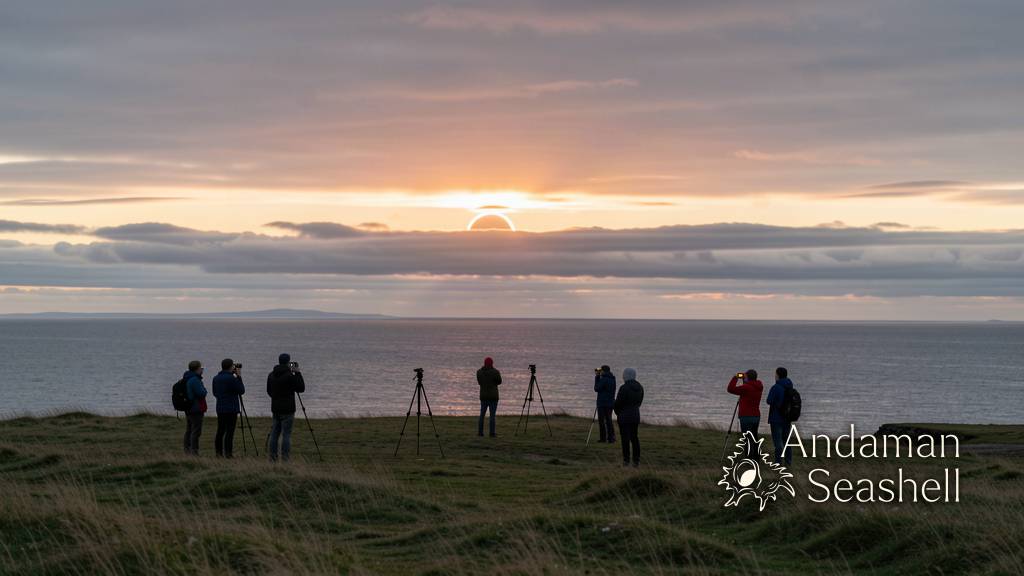
For many readers, that headline fact is already enough to make the date worth circling. But this eclipse has extra charm. It will be the first total solar eclipse visible from mainland Europe since 1999, and the first totality anywhere on Earth in 28 months [ref:2]. That long wait gives the event a lovely sense of reunion: one sky, one moving shadow, and millions of people stepping outside at roughly the same moment to look up.
Why this eclipse feels bigger than a single line on a map
The path of totality is narrow, but the audience is enormous. Timeanddate calculates that around 980 million people live in places that will get at least a partial view, and about 15.2 million live along the path of totality itself [ref:2]. In Spain, some viewers will come astonishingly close to totality even outside the center line: Madrid is forecast to see 99.9% coverage, while London gets 91.4%, Paris 92.1%, and Dublin 94.0% [ref:2].
That kind of near-total eclipse is visually dramatic. The daylight softens, shadows sharpen into strange crescents, and familiar landscapes suddenly feel theatrical. Royal Observatory Greenwich notes that from the British Isles this will be the deepest eclipse in nearly 27 years, with parts of the southwest seeing around 95% of the Sun covered [ref:3].
A low Sun makes the whole thing feel cinematic
This is also what astronomers call a polar eclipse, because the Moon’s shadow only skims the top of the Northern Hemisphere [ref:2]. The geometry creates one of the event’s most memorable qualities: the Sun will sit unusually low in the sky for many viewers.
At the point of longest totality—2 minutes 19 seconds, just off Iceland’s west coast—the Sun will stand only 26 degrees above the horizon when totality begins [ref:2]. Near the end of the path in Valencia, totality starts at 20:32 local time, with the Sun just 4.6 degrees above the horizon [ref:2]. In practical terms, that means eclipse chasers need one simple thing: a clear western view.
That low-angle light is part of the appeal. Instead of a high midday blackout, this eclipse arrives like an evening performance. ESA is actively guiding audiences toward the event and reminding observers that proper eclipse glasses are essential during all partial phases; only during true totality is it briefly safe to look without them [ref:4].
Scientists are not just watching—they’re working inside the shadow
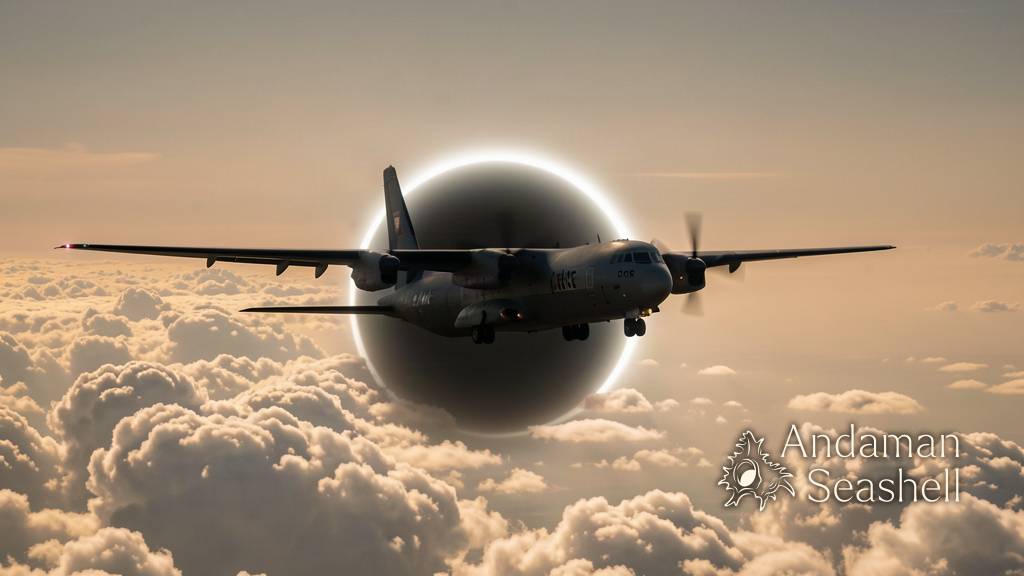
NASA is treating 12 August as a flying laboratory. A NASA-funded team plans to chase the Moon’s shadow with a WB-57 high-altitude research aircraft to study the Sun’s corona, the faint outer atmosphere that becomes visible during totality [ref:4]. Another project, the Nationwide Eclipse Ballooning Project, is sending students from several U.S. universities to Iceland and Spain to launch balloons before, during, and after the eclipse to measure how the temporary darkening affects Earth’s atmosphere [ref:4][ref:5].
There is also a generous public side to the science. NASA’s live broadcast is scheduled to begin at 1:15 p.m. Eastern, with totality beginning at 1:45 p.m. in Iceland and 2:28 p.m. in Spain [ref:5]. So even people far from the shadow line can still join the moment in real time.
And then the sky offers an afterparty
One final detail makes this eclipse especially delightful: the night of 12–13 August also coincides with the Perseid meteor shower peak [ref:2]. So for some travelers, the same date may deliver a solar eclipse in the evening and meteors after dark.
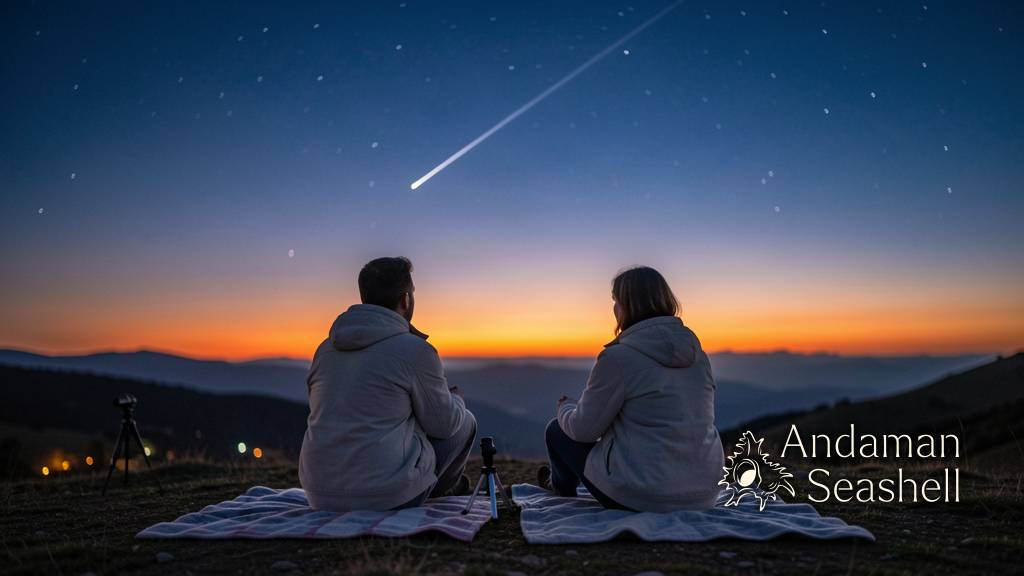
That is a lovely way to think about this event. Not as a rare thing that vanishes too quickly, but as a full day of celestial choreography: sunlight narrowing to a crescent, totality dropping a brief hush over the landscape, and then the night sky opening again. If the weather cooperates, 12 August could become one of those dates people remember not because it was loud, but because it made the universe feel beautifully close. [ref:2][ref:4]


No comments yet. Be the first to share a thought.