



At around 150 feet beneath the Aegean, the water turns a deep, quiet blue. For 2,000 years, almost nobody could reach the place where a Roman-era trading ship lay folded into the seabed off the tiny Greek island of Antikythera. Then, in October 1900, a crew of sponge divers led by Captain Dimitrios Kondos slipped into that blue — and surfaced holding the ancient world's most astonishing lost treasure: bronze statues, marble gods, luxury glassware, and a corroded lump of bronze gears that would later be recognised as the world's first known analog computer [ref:1][ref:2].
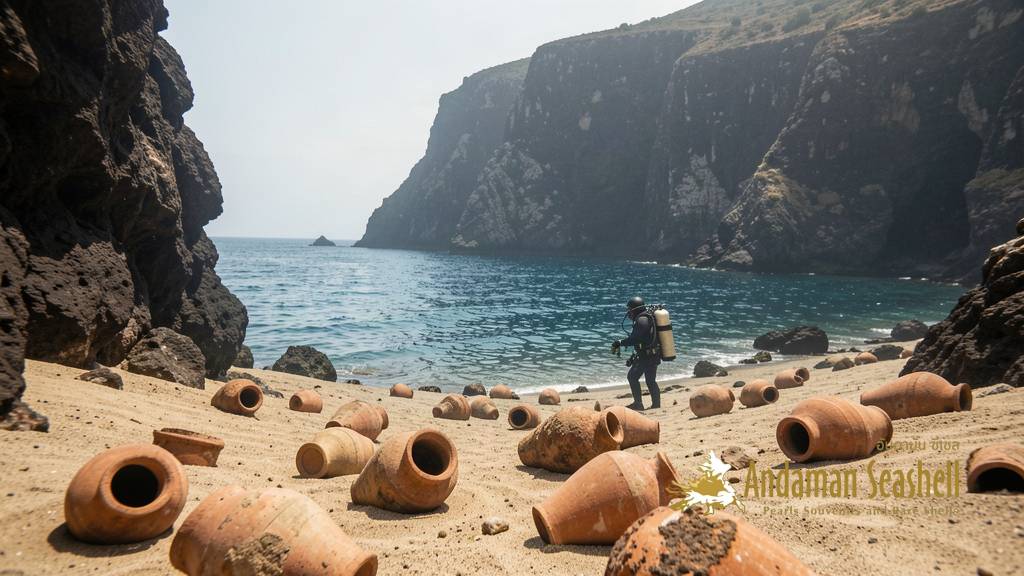
A computer under the sea
The story begins with wonder. When that crusted bronze lump was finally X-rayed and studied, researchers found interlocking gears, precisely cut to predict the movements of the Sun, the Moon, and possibly the planets, along with the timing of solar and lunar eclipses years in advance [ref:2]. Constructed between 150 and 100 BCE, the Antikythera Mechanism mechanised astronomical cycles — it didn't just record the sky, it computed it [ref:3]. Nothing comparably complex appears again in the historical record for more than a thousand years. The device has rewritten what historians thought ancient technology could do.
But here is the beautiful part: the mechanism was never the whole story. The ship that carried it kept far quieter secrets.
The wreck that keeps answering
Divers have been visiting the site for two decades, and for a long time the wreck stayed stubbornly silent about its own identity. The 2021–2025 excavation programme, run by the Swiss School of Archaeology in Greece (ESAG) together with Greek partners, changed that by focusing not on treasure but on the ship itself [ref:4].
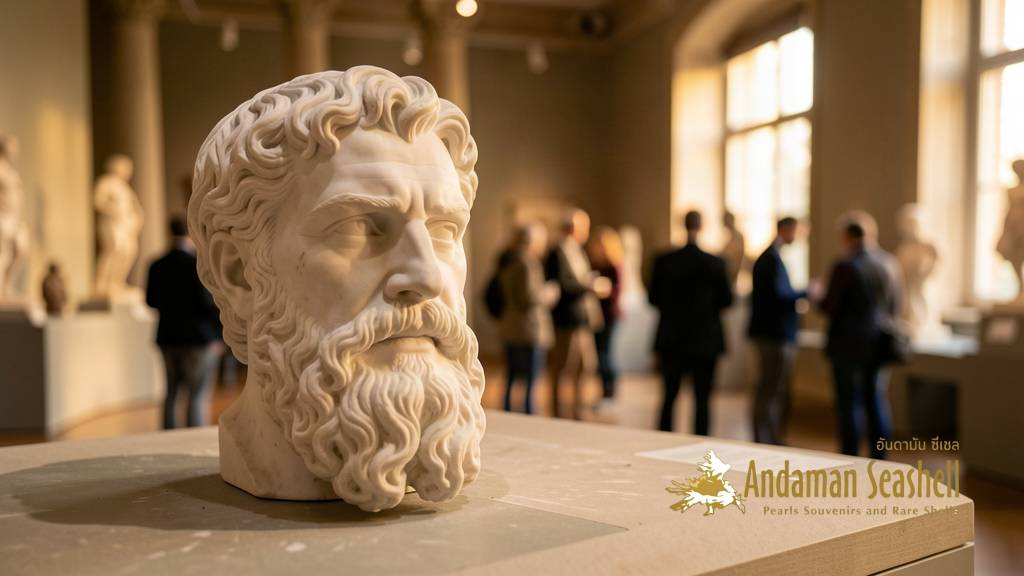
In 2022, the team shifted natural boulders weighing up to 8.5 tons each, opening a part of the site nobody had ever explored [ref:3]. Among the finds that season was a marble head of a bearded figure, larger than life — at first sight matching the famous headless Herakles statue the sponge divers had pulled up in 1900. A reunion more than a century in the making [ref:3].
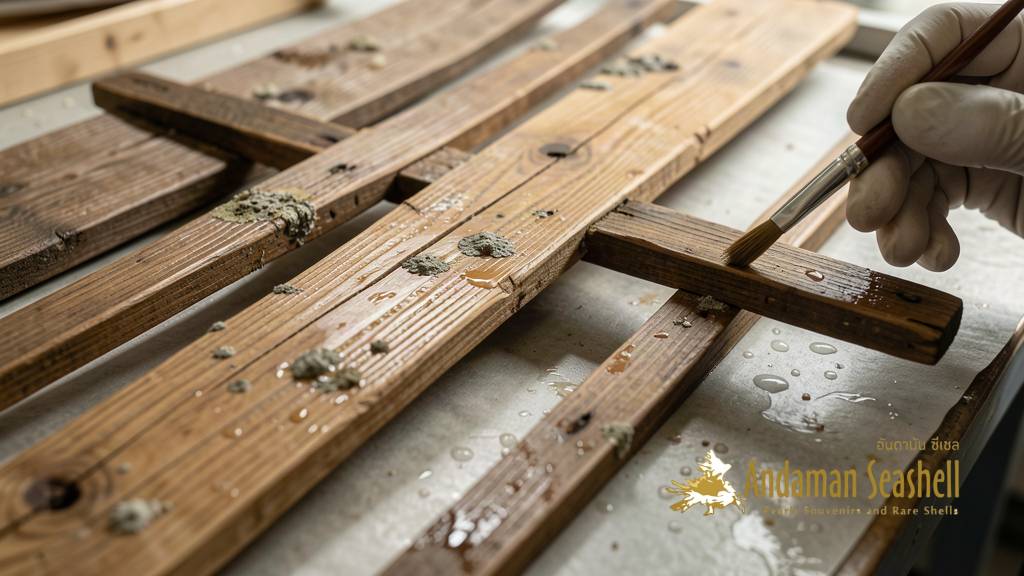
Then, in May and June 2025, something remarkable: archaeologists recovered three planks and a crossbeam still joined together — the first complete section of the ship's hull ever excavated from the site [ref:4]. The wood, both elm and oak, is tentatively dated to around 235 BCE, decades before the ship itself sank in the mid-1st century BCE. The assemblage confirms the ship was built "shell-first" — the outer skin of the hull laid before the internal frame, a method typical of the Mediterranean between the 4th and 1st centuries BCE [ref:4]. The ship was finally speaking in its own voice.
Two teeth and a kitchen
What moves us most, though, are the smallest finds. A clay mortar for mashing and mixing food — an ancient ship's kitchen tool, now being studied to understand what the crew actually ate [ref:4]. And two human teeth, discovered inside a solid agglomerate of marine deposits, copper fragments and wood [ref:3]. Genetic and isotopic analysis of those teeth may reveal where the people on board came from — the crew of the ancient world's richest wreck may soon have names and homelands again.
The cargo of a floating city
The amphorae tell their own story. Chian amphorae — produced on the island of Chios, often used to carry wine — turned up in two different locations on the ship, hinting the cargo was far more diverse than anyone knew [ref:4]. The ship was something like an ancient container ship, threading a network of Mediterranean trade routes between ports like Miletus and Delos, carrying purple cloth, spices, carved beds, and possibly looted treasures bound for a Roman triumph [ref:3][ref:5].
The story is still being written
For 125 years, the Antikythera wreck has been the ancient world's greatest slow-reveal mystery — and the current chapter may be its most generous yet. Archaeology Magazine's September/October 2026 cover feature, "2,000 Years Under the Sea," declared that the story of the famed wreck is finally being revealed [ref:5]. Locals on the island still tell tales of more giant marble statues lying beyond the old sponge divers' reach [ref:6]. And the deepest layer of wonder is this: a ship that sank carrying a machine which predicted the heavens has itself become a message from the past, delivered one plank, one tooth, one bronze gear at a time.
The sea kept its secret for two millennia. Now, at last, it is telling us everything.


No comments yet. Be the first to share a thought.