



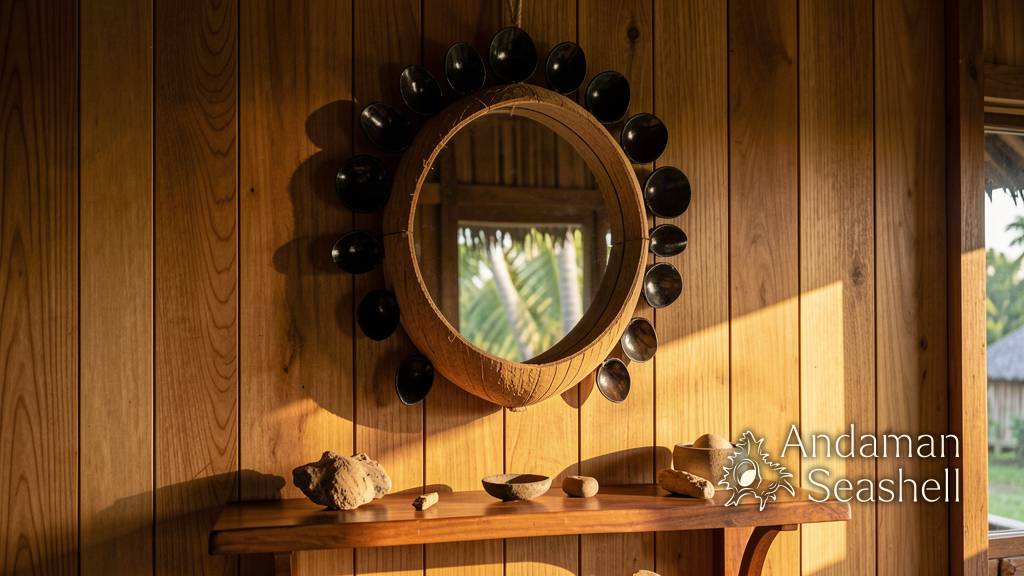
On a teak shelf in a Phuket living room, a coconut-shell mirror catches the late-afternoon light. The shell pieces — dark, polished, fitted edge to edge — were carved from ordinary coconuts, the kind that fall every day along the Andaman shore. In a workshop, someone spent hours cutting each curve, sanding each face, setting each piece into a frame that now holds a reflection and a story. This is what 2026 interior design is asking for: real materials, made by hands, with a past you can feel.
The new design year has a clear direction, and it points toward the natural. Trend reports describe a shift away from stark "beach house white" toward warm neutrals — soft taupes, sea-foam greens, deep forest tones — anchored by Pantone's 2026 Color of the Year, Cloud Dancer (11-4201 TCX), a soft, weightless white that pairs with grounded, earthy hues [ref:3]. Designers are reaching for tactile finishes: limewash walls, ribbed tiles, woven cane, and sisal rugs — surfaces you want to touch as much as look at [ref:1].
The recycled surface that was never new
Among the most talked-about materials of 2026 is terrazzo — and the remarkable thing is how old its principles are. Terrazzo originated in 15th-century Venice, where workers set discarded marble offcuts into flooring rather than letting them go to waste, making it one of the earliest recycled flooring systems in existence [ref:2]. Today's versions follow the same logic: post-consumer glass chips, reclaimed marble, and construction debris become smooth, speckled surfaces — and because terrazzo can be ground back and refinished rather than replaced, it earns its place in a circular design economy [ref:2].
What makes this relevant here is that the Andaman coast has its own version of this thinking. Thai artisans have always worked with what the sea and the forest provide — and they have been doing it for far longer than "sustainability" has been a design word.
Shell, lacquer, and a craft older than the nation
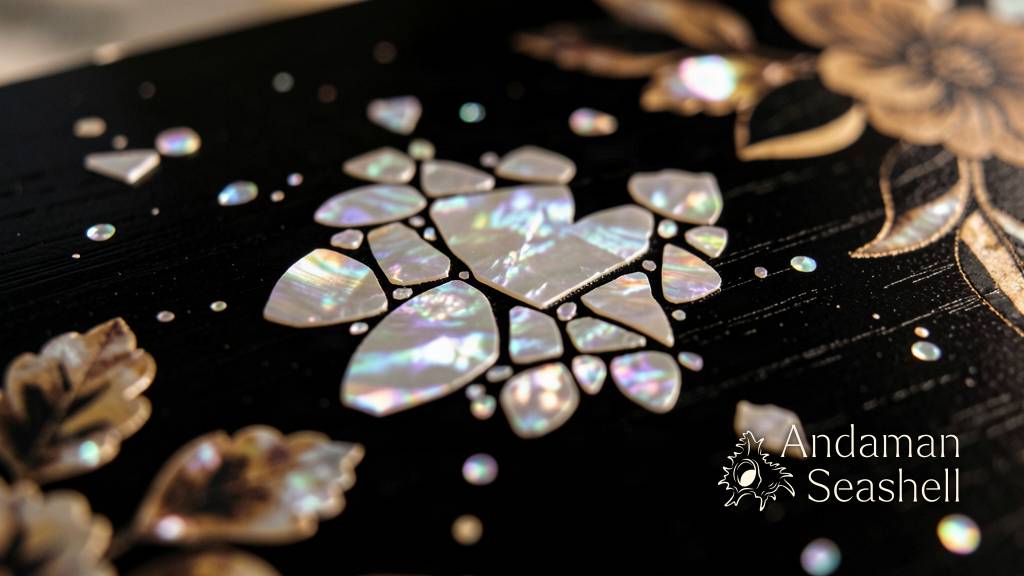
Consider pradup mook — Thai mother-of-pearl inlay. The craft first appeared in the region during the Dvaravati period, roughly 600–1000 CE, and was documented at temples dating to the late Ayutthaya period (1351–1767) [ref:4]. Master artisans like Jukkit Suksawat, who has practiced the art for thirty years, still rely on entirely natural materials: yangrak, a quick-drying black lacquer made from the sap of the lacquer tree (Melanorrhoea usitata) mixed with charcoal powder from burnt coconut shells and banana leaves [ref:4].
The labour is staggering. According to records from 1885, a single pedestal tray just 25.5 centimetres wide required 1,500 to 2,000 individually cut shell pieces — and a skilled artisan could cut only 30 to 35 pieces a day, meaning the shell cutting alone took nearly two months [ref:4]. The result, though, is a surface that has lasted for centuries: temple doors at Wat Pho and the scripture hall of the Temple of the Emerald Buddha still carry their original inlay, shimmering against black lacquer like constellations in the night sky.
Light that passes through a shell
If terrazzo is about recycled stone, and mother-of-pearl is about patient inlay, capiz shell is about light. The shell of the windowpane oyster is naturally translucent — light passes through it, giving off a soft, luminous glow that has made it a traditional material for lanterns, window panels, and lampshades across Southeast Asia. In a 2026 home, a capiz-shell pendant or a screen of fitted shell squares turns an ordinary bulb into something closer to filtered sunlight.
The same instinct drives the coconut-shell mirror on that Phuket shelf. The coconut's hard shell, normally discarded after the meat and water are taken, becomes a durable, textured surface — dark, warm, and entirely reclaimed. It is decor made from what would otherwise be waste.
How to bring it home
A few principles travel well from workshop to living room:
- Start with one material. A single capiz pendant, a coconut-shell tray, or a mother-of-pearl frame is enough. Let the material be the statement.
- Warm the palette. Pair natural textures with soft neutrals — sand, mushroom, warm taupe — rather than stark white. The 2026 direction favours grounded, earthy tones [ref:3].
- Let surfaces age. Tactile finishes like limewash, microcement, and woven cane look better with use. Designers are choosing materials that patina beautifully over time rather than staying pristine [ref:1].
- Honour the maker. Every piece of shell inlay or woven rattan carries hours of someone's attention. Display it where that care is visible.
A homecoming, not a trend
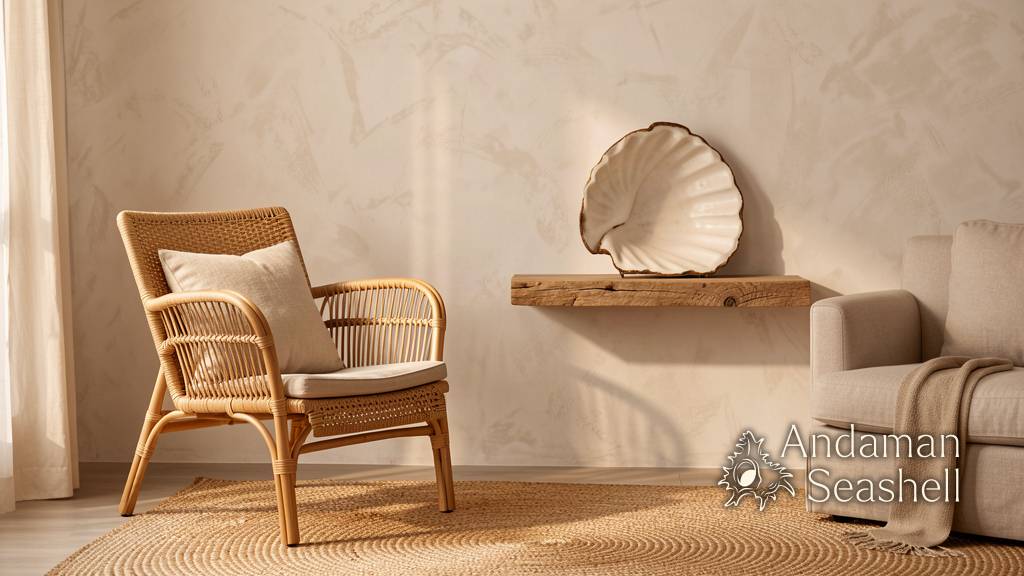
What feels newest about 2026 decor is, in some sense, the oldest idea in the room: that the best surfaces are the ones the world already made. Terrazzo's recycled marble, capiz's translucency, mother-of-pearl's patient inlay — these are not inventions of a trend cycle. They are traditions, and along the Andaman coast, they are still being practiced by hands that learned them from the hands before.
The design world is, in its own way, coming home.
References
- Coastal Design Trends 2026: Warm Neutrals, Texture & Calm — Echoes of the Sea
- Why Terrazzo Is One of the Most Sustainable Surface Finishes in 2026 — Paolo Interiors
- Enduring Style: Coastal Decor Embraces 2026 With a Fresh Perspective — Beach Homes
- Thai Mother-of-Pearl Master Shares the Essence of Soft Power — Thailand NOW


No comments yet. Be the first to share a thought.