



A mother-of-pearl box does something lovely in a room before anyone even opens it. On a dark teak shelf, the surface catches morning light in silvery pinks and greens, and suddenly one quiet corner feels brighter, calmer, and more handmade. That is why this material still feels so modern in 2026: it brings light without shouting.
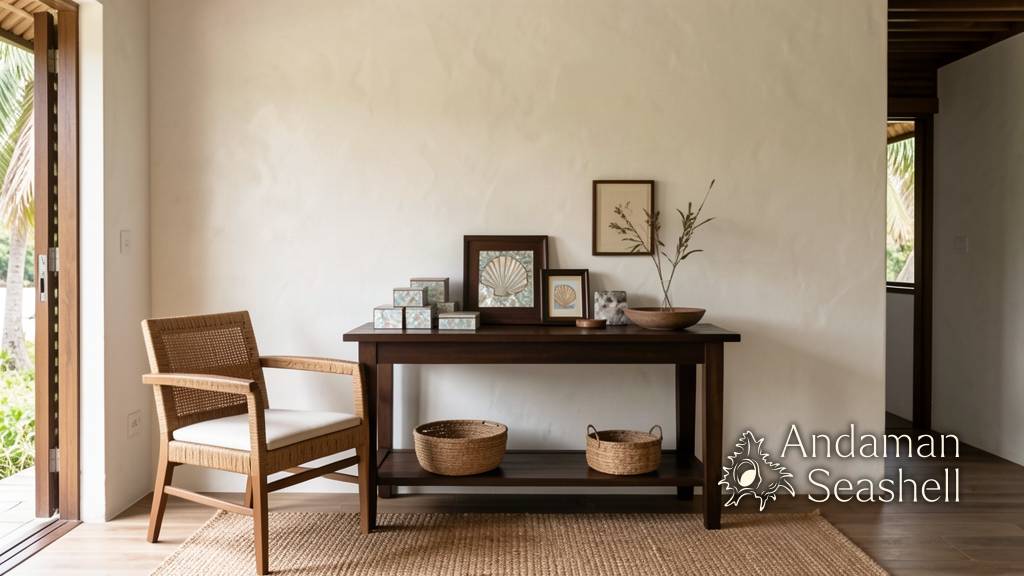
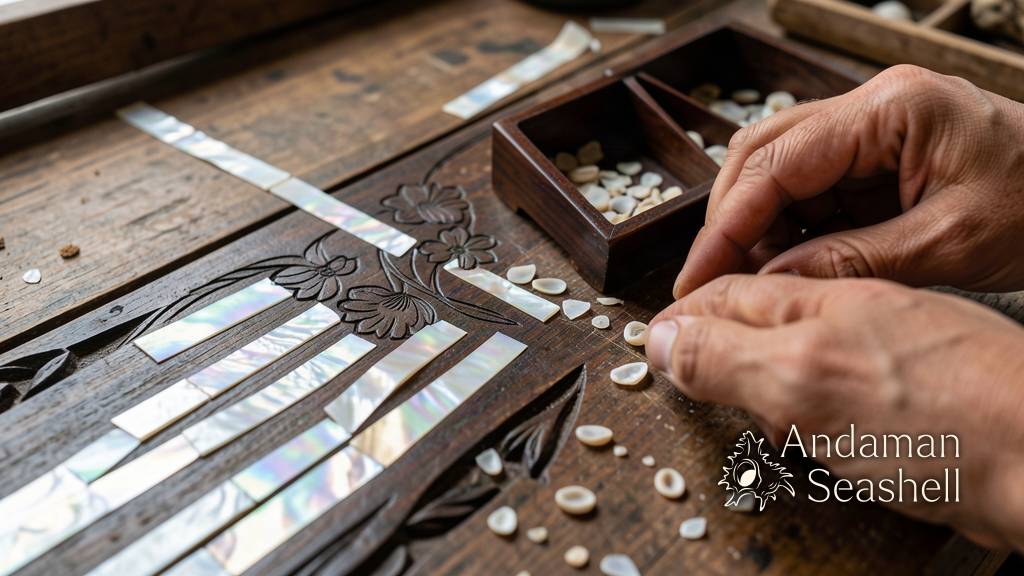
What looks like a simple decorative finish is actually a deeply layered craft. UNESCO added the craftsmanship of mother-of-pearl inlay to its Representative List in 2023, describing a process that begins with cutting the inner shell of molluscs into shapes, drawing motifs onto wood, carving the outlines, fitting the shell into the surface, then polishing, colouring, and varnishing the finished piece [ref:1]. That sequence matters. The beauty comes from precision, not from excess.
What the shine is really made of
The glow we call mother-of-pearl is the lustrous interior of certain shells, and The Met notes that the term has been used since at least the sixteenth century [ref:2]. In lacquer traditions across Asia, that shimmer is often paired with a darker body for a reason. UNESCO’s heritage note says craftspeople commonly choose walnut, ebony, and mahogany because dark woods make the pale shell read more clearly [ref:1]. Good design sometimes begins with contrast that simple.
Lacquer contributes more than color. The Met explains that lacquer comes from the sap of trees in the Toxicodendron genus and hardens when exposed to oxygen and humidity, becoming a natural plastic and a durable protective surface [ref:2]. In other words, the shell supplies the light, and the lacquer supplies the depth. Together they create the familiar effect of a piece that seems to glow from inside.
Museum collections show how long this pairing has lasted. The Met’s Shell and Resin exhibition gathered nearly thirty Korean lacquer objects and began with a rare twelfth-century trefoil box before moving forward to contemporary artists [ref:2]. An earlier Met exhibition on Asian lacquer traced related mother-of-pearl traditions from the eighth to the nineteenth century across China, Korea, Japan, India, and Thailand [ref:3]. This is one reason a well-made inlaid box still feels current at home: it already carries centuries of visual proof.
One object can teach a whole room
One of the most useful examples comes from the V&A. Its Korean side-dish lacquer box dates to 1550–1599 and is built as a five-tiered wooden form measuring 26.2 by 16.2 by 20.4 centimetres [ref:4]. Before lacquering, the surface was covered with hemp. Vines were made from thin strips of mother-of-pearl, while flowers and leaves were cut as separate pieces and finished with incised detail [ref:4]. Even the rim uses broken shell fragments intentionally.
That object is a design lesson disguised as storage. First, scale matters: a compact piece can hold visual attention without taking over a console or bedside table. Second, pattern matters more than quantity. Peony scrolls, orchid leaves, and narrow vine lines create rhythm across the surface, which is why one small object often looks better than a whole shelf of random shell souvenirs. Third, texture matters. Mother-of-pearl is strongest when it sits beside matte plaster, woven rattan, linen, or oiled wood rather than glossy clutter.
For a modern coastal home, the best styling is restrained. Let one inlaid box or frame sit against a near-white wall or a deep wood backdrop. Give it breathing room. Echo its colors with soft sand, smoke, shell pink, or leaf green elsewhere in the room. If you want a group, keep it to two or three pieces with related materials so the shimmer reads as a quiet thread, not a theme-park effect.
How to keep the glow beautiful in humid weather
Beautiful objects also like practical care. The Canadian Conservation Institute recommends a steady relative humidity between 40 and 60 percent for delicate painted objects and advises avoiding fluctuations; it also notes that about 50 lux is usually enough light for display [ref:5]. You do not need museum equipment to learn from that. In everyday terms, it means avoiding the hottest, wettest corners of the house, skipping harsh window glare, and not placing shell-inlaid pieces where air-conditioning blasts or direct sun keep forcing expansion and contraction.
The V&A’s conservation team offers an even more vivid reminder. When conservators studied a rare mother-of-pearl frame, they found 81 elements had become loose before treatment [ref:6]. After careful stabilisation and cleaning, the frame became legible again. The lesson for a home is gentle: if a piece looks dry, lifting, or dusty in the grooves, do less, not more. Keep handling minimal, dust softly, and let a conservator deal with real repairs.
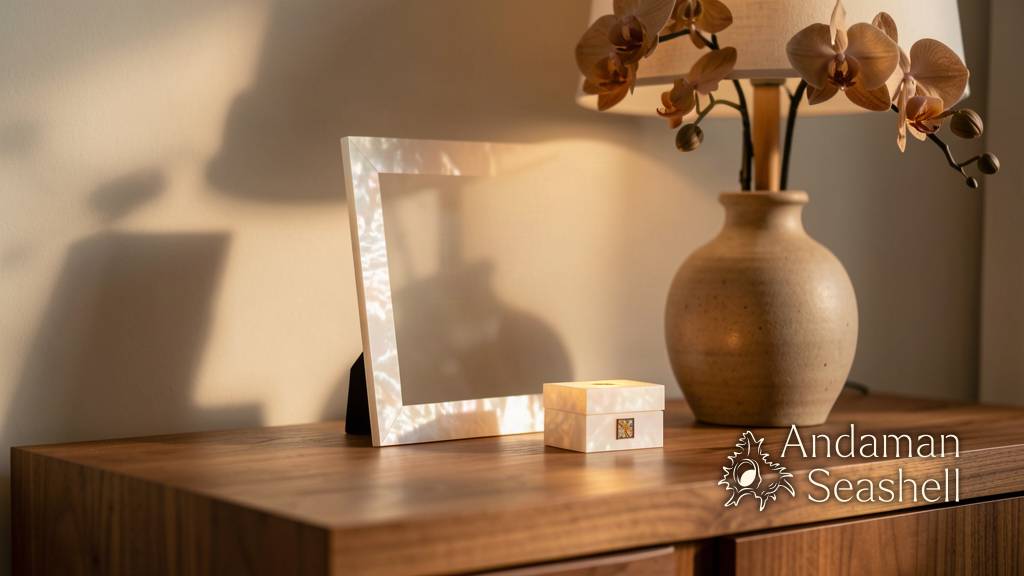
That is the real charm of mother-of-pearl. It is not flashy beach décor. It is shell turned into surface, craft turned into atmosphere, and history turned into something you can live with every day. A good piece does not fill a room with objects. It simply changes the quality of the light—and sometimes that is the most elegant design move of all.
References
- UNESCO — Craftsmanship of mother of pearl inlay
- The Met — Shell and Resin
- The Met — Mother-of-Pearl: A Tradition in Asian Lacquer
- V&A — Side-dish Lacquer Box with Mother-of-Pearl
- Canadian Conservation Institute — Care of Paintings on Ivory, Metal and Glass
- V&A — Conservation of a rare mother-of-pearl frame


No comments yet. Be the first to share a thought.